Judgment Against Property With Find In Clark
Description




Get your form ready online
Our built-in tools help you complete, sign, share, and store your documents in one place.
Make edits, fill in missing information, and update formatting in US Legal Forms—just like you would in MS Word.
Download a copy, print it, send it by email, or mail it via USPS—whatever works best for your next step.
Sign and collect signatures with our SignNow integration. Send to multiple recipients, set reminders, and more. Go Premium to unlock E-Sign.
If this form requires notarization, complete it online through a secure video call—no need to meet a notary in person or wait for an appointment.
We protect your documents and personal data by following strict security and privacy standards.

Make edits, fill in missing information, and update formatting in US Legal Forms—just like you would in MS Word.

Download a copy, print it, send it by email, or mail it via USPS—whatever works best for your next step.

Sign and collect signatures with our SignNow integration. Send to multiple recipients, set reminders, and more. Go Premium to unlock E-Sign.

If this form requires notarization, complete it online through a secure video call—no need to meet a notary in person or wait for an appointment.

We protect your documents and personal data by following strict security and privacy standards.
Looking for another form?








Form popularity
FAQ
Generally, the party seeking to sell or transfer the property will need to satisfy the judgment by paying the amount owed to the judgment creditor, or negotiate a settlement or release with the creditor.
Here are four ways to avoid paying a judgment: 1) Use asset protection tools such as an asset protection trust, 2) use legal exemptions, 3) negotiate with the creditor, 4) file for bankruptcy.
You can look at your credit report at .annualcreditreport or you can go to the local clerk for the courts and search the county database. If there are judgments in other jurisdictions you would have to look there as well.
Nearly all household goods, furniture, family heirlooms, clothing, personal jewelry and retirement accounts are also exempt from creditors in bankruptcy. Life insurance policies are usually exempt, as well as 529 college savings plans. As to wages, Nevada law allows you to shield 75% of your income from creditors.
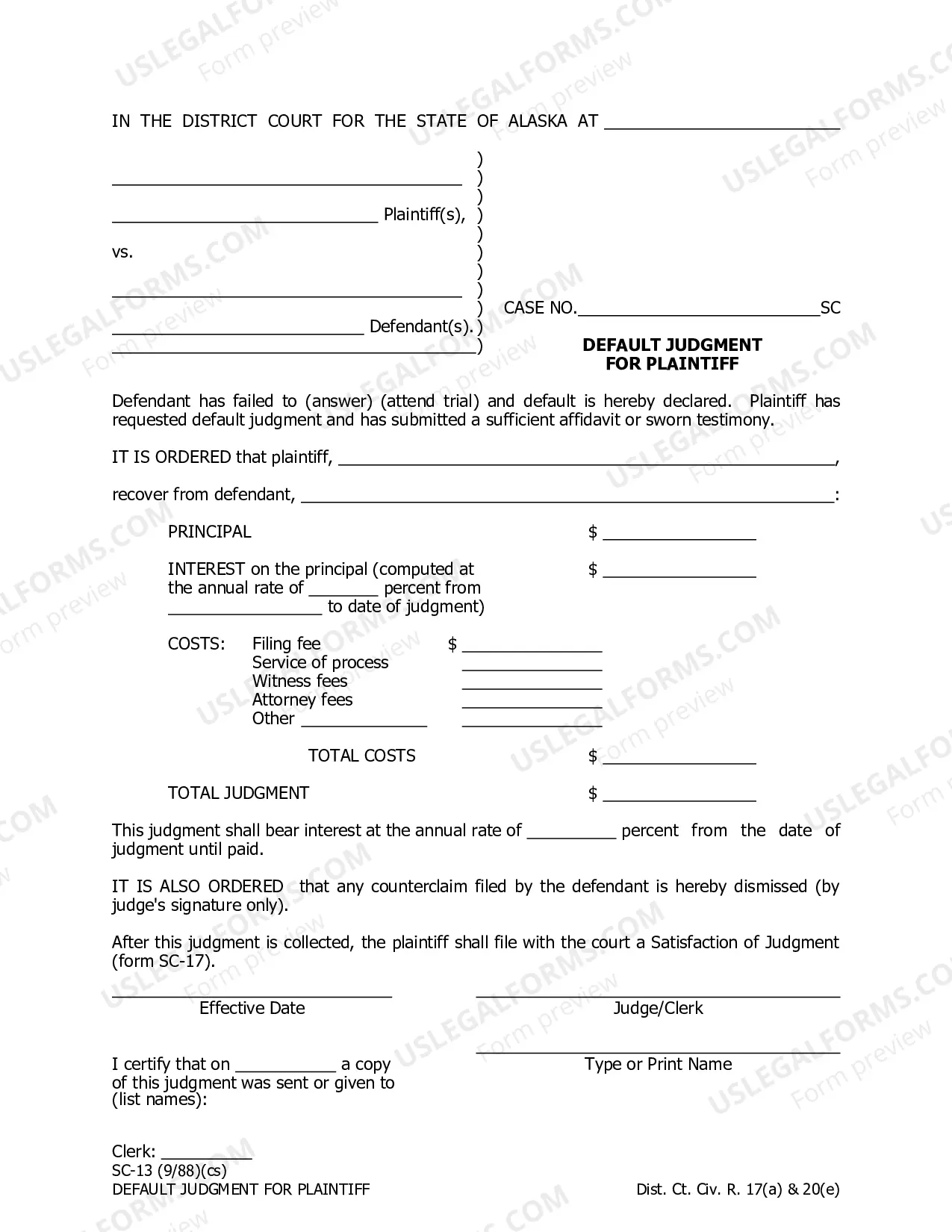
The easy definition is that a judgment is an official decision rendered by the court with regard to a civil matter. A judgment lien, sometimes referred to as an “abstract of judgment,” is an involuntary lien that is filed to give constructive notice and is to attach to the Judgment Debtor's property and/or assets.
Nevada laws carve out a long list of property exempt from execution. Below are some examples of exemptions: Necessary household goods, furnishings, electronics, clothes, yard equipment, and other personal effects up to $12,000 in value.
The judgment becomes a matter of public record, and is indexed with the clerk of the court. It shows up on your credit report as well as on any background checks. The judgment is considered a lien against your property, including any real estate that you have, in the state in which the judgment is filed.

