Accident Report File Format In Sacramento
Description

Get your form ready online
Our built-in tools help you complete, sign, share, and store your documents in one place.
Make edits, fill in missing information, and update formatting in US Legal Forms—just like you would in MS Word.
Download a copy, print it, send it by email, or mail it via USPS—whatever works best for your next step.
Sign and collect signatures with our SignNow integration. Send to multiple recipients, set reminders, and more. Go Premium to unlock E-Sign.
If this form requires notarization, complete it online through a secure video call—no need to meet a notary in person or wait for an appointment.
We protect your documents and personal data by following strict security and privacy standards.

Make edits, fill in missing information, and update formatting in US Legal Forms—just like you would in MS Word.

Download a copy, print it, send it by email, or mail it via USPS—whatever works best for your next step.

Sign and collect signatures with our SignNow integration. Send to multiple recipients, set reminders, and more. Go Premium to unlock E-Sign.

If this form requires notarization, complete it online through a secure video call—no need to meet a notary in person or wait for an appointment.

We protect your documents and personal data by following strict security and privacy standards.
Looking for another form?








Form popularity
FAQ
Reporting a Car Insurance Claim If you're filing a first-party insurance claim, call the number on your insurance card or go online to report the accident. If you're filing a third-party insurance claim, you should obtain insurance information from the other driver to contact their insurer.
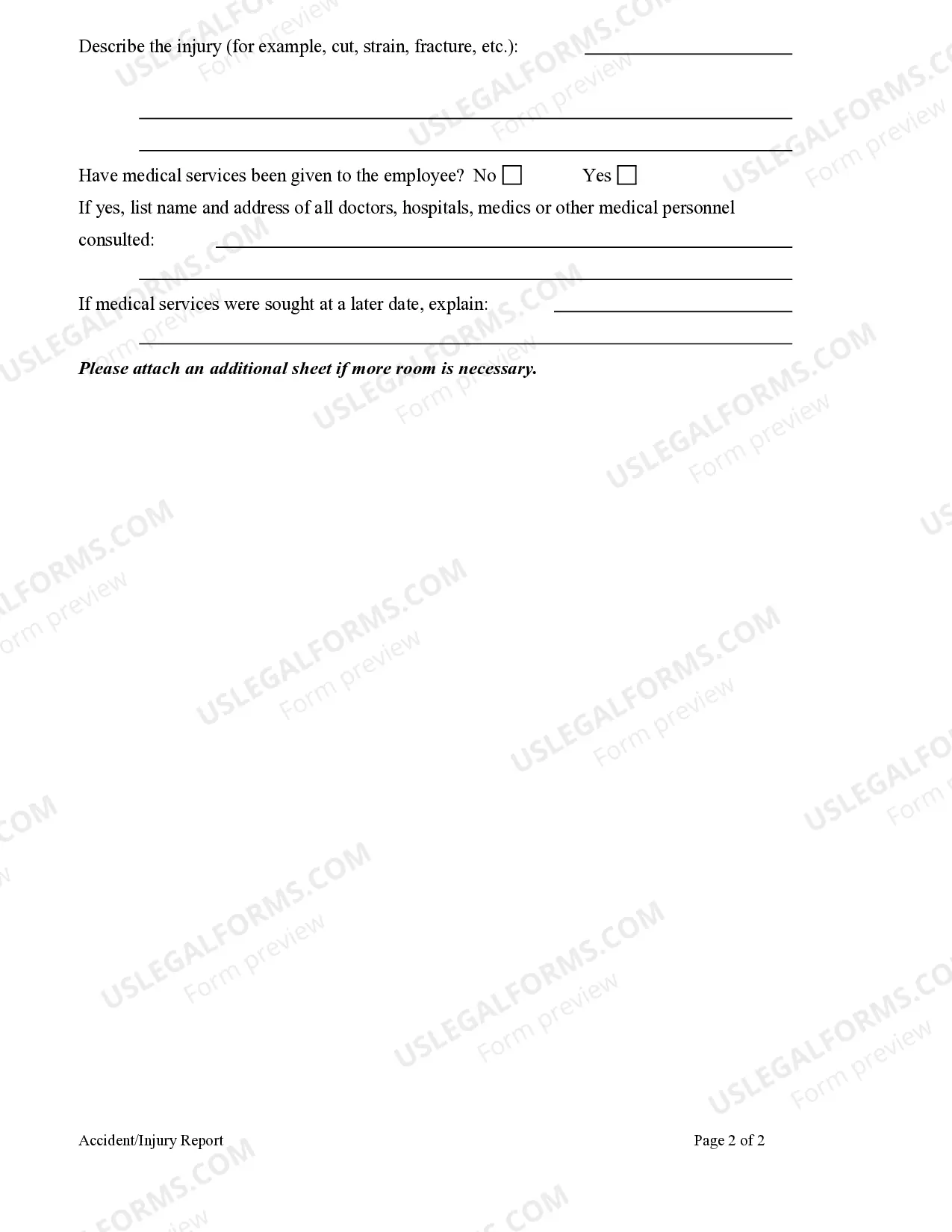
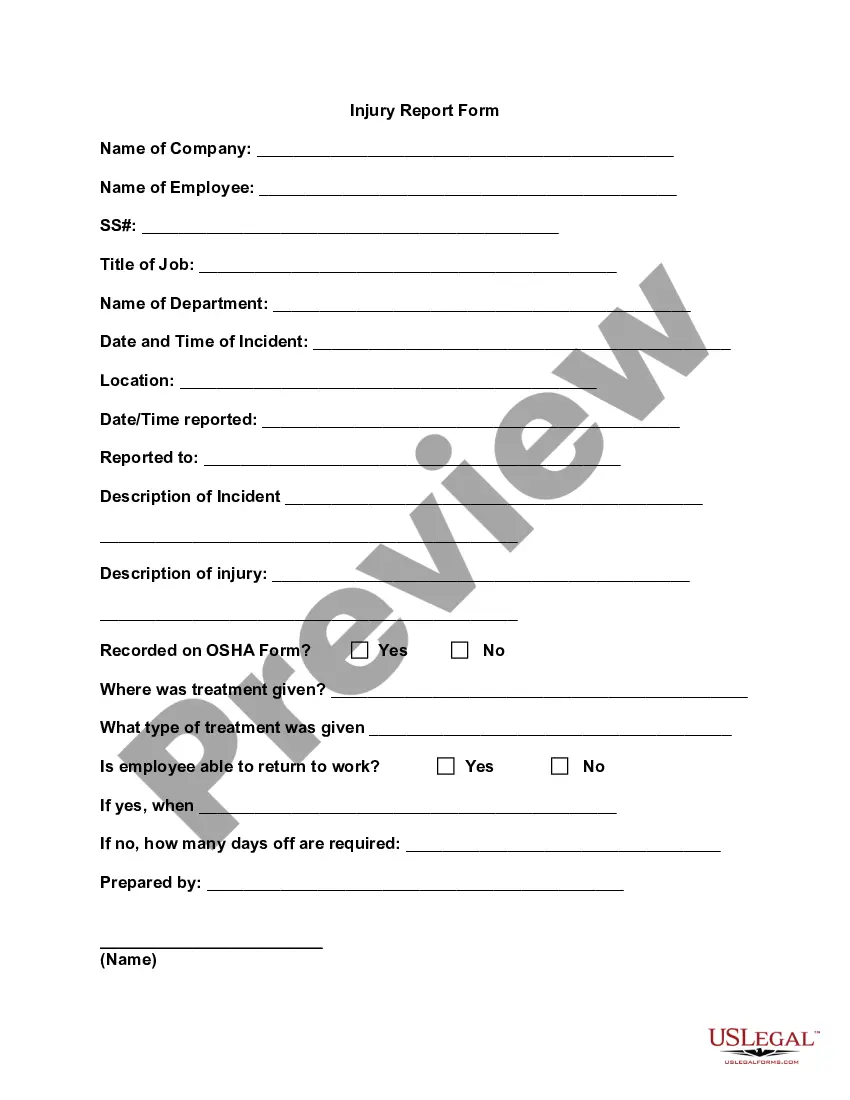
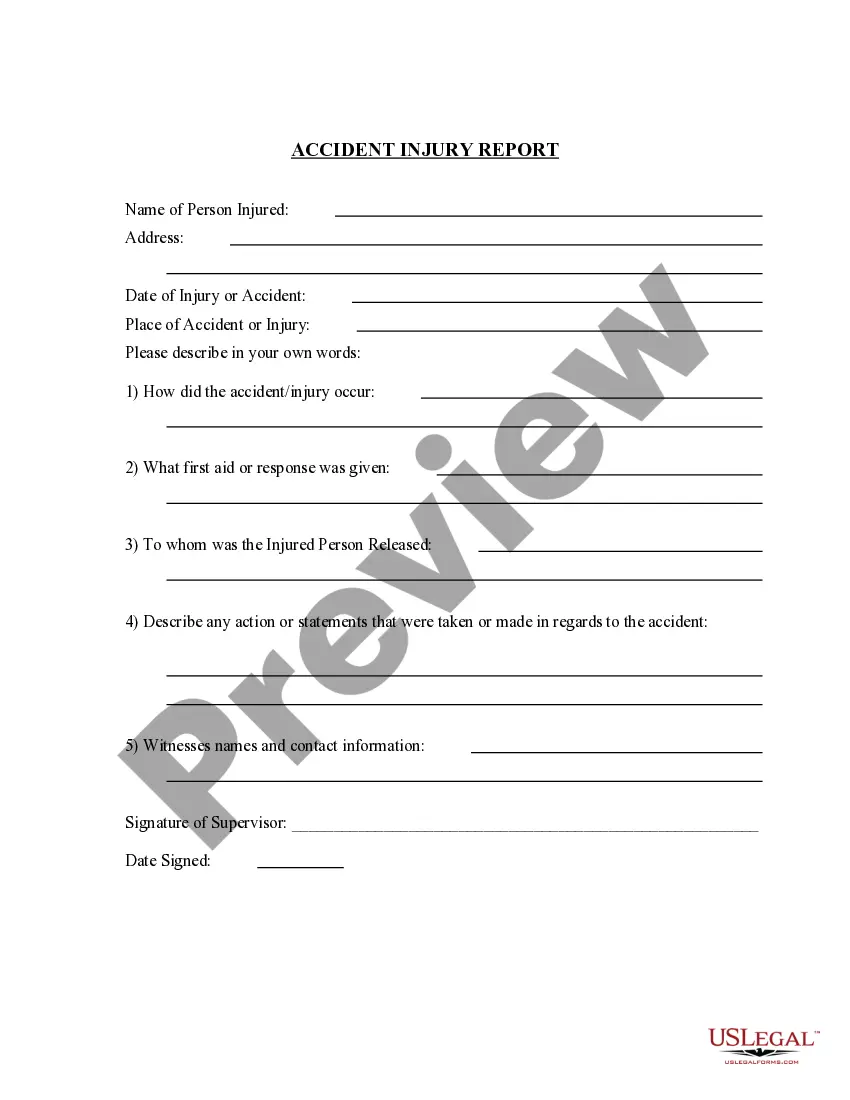
Accident report forms should include fields for names and contact information of the individuals and witnesses involved, the type of accident, the date and time the accident occurred, the location of the accident, a detailed description of the accident, and room for any additional comments.
There are five key details of accidents legally required: Full name, address and occupation of the injured person (a) Date and time of the accident (b) Location of the accident (c) Cause and nature of the injury (d) Name, address and occupation of the person giving the notice, if other than the injured person (e).
The California Department of Motor Vehicles (DMV) requires all crashes file an SR-1 form within ten days of the accident. Failure to submit the DMV form can result in a suspension of your driver's license for one year.
Information to Include When Writing a Car Wreck Report The Other Driver's Identity. The Time and Location of the Collision. Vehicle Information. Insurance Details. Eye-Witness Information. An Explanation of How the Collision Occurred. Seek Medical Attention. Document the Accident Scene.
The driver must sign and date the completed form, and file it with the Department of Motor Vehicle in California. You can file the DMV SR 1 form online at the DMV official website.
Report accidents to your insurer within the stipulated period, often 72 hours, to avoid claim denial. The California statute of limitations for auto accidents is two years. However, there may be exceptions that would permit you to move forward with your case even if more than two years have passed.
Accident report forms should include fields for names and contact information of the individuals and witnesses involved, the type of accident, the date and time the accident occurred, the location of the accident, a detailed description of the accident, and room for any additional comments.
How to Write an Incident Report: A Step-by-Step Guide (with Examples) Step 1: Provide Fundamental Information. Step 2: Take Note of Any Damages and Injuries. Step 3: Identify Affected Individual(s) ... Step 4: Identify Witnesses and Take Their Statements. Step 5: Take Action. Step 6: Close Your Report.
