Accident With Injury In Middlesex
Description

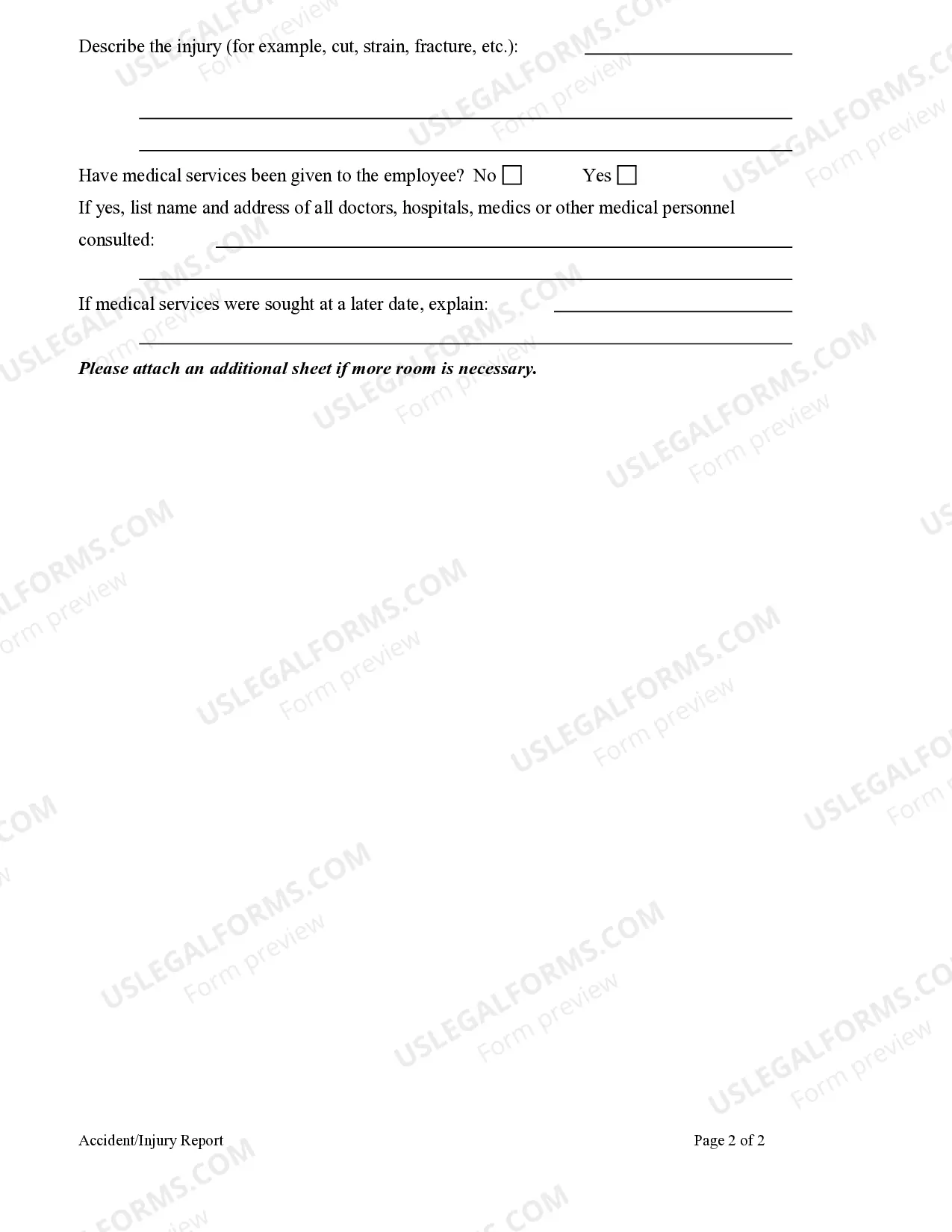
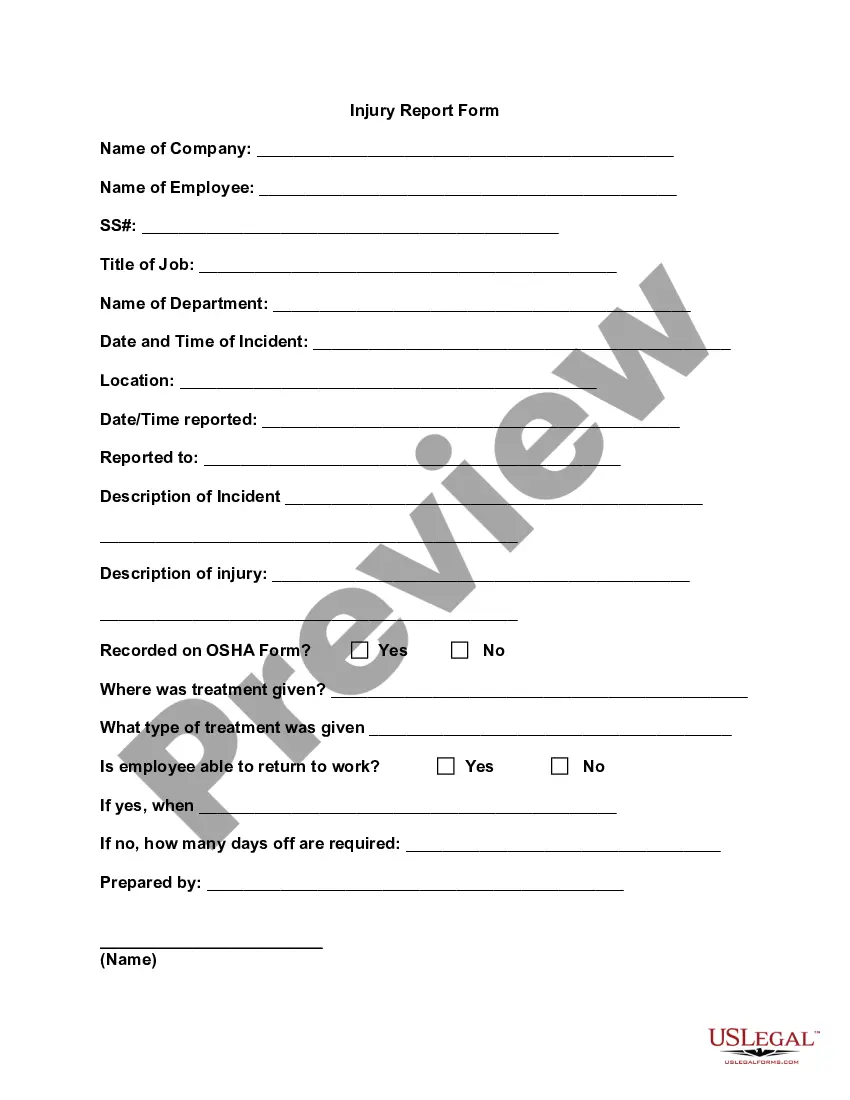
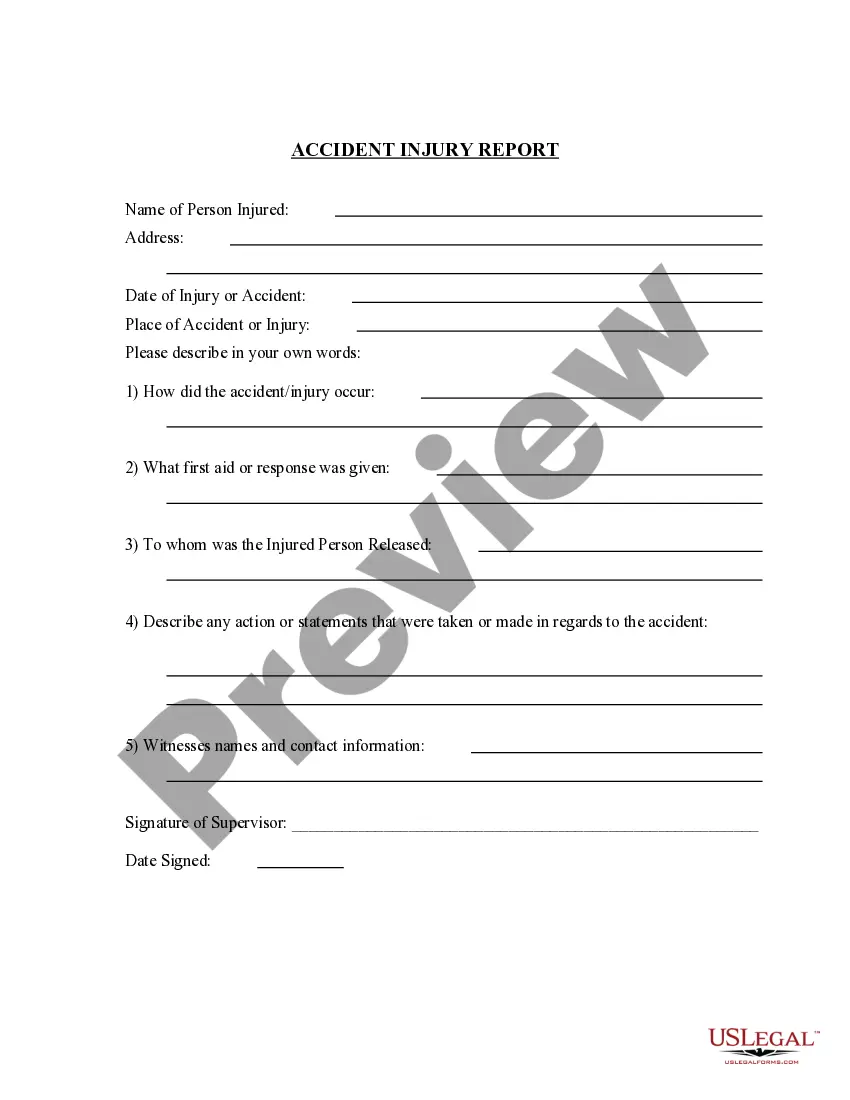
Get your form ready online
Our built-in tools help you complete, sign, share, and store your documents in one place.
Make edits, fill in missing information, and update formatting in US Legal Forms—just like you would in MS Word.
Download a copy, print it, send it by email, or mail it via USPS—whatever works best for your next step.
Sign and collect signatures with our SignNow integration. Send to multiple recipients, set reminders, and more. Go Premium to unlock E-Sign.
If this form requires notarization, complete it online through a secure video call—no need to meet a notary in person or wait for an appointment.
We protect your documents and personal data by following strict security and privacy standards.

Make edits, fill in missing information, and update formatting in US Legal Forms—just like you would in MS Word.

Download a copy, print it, send it by email, or mail it via USPS—whatever works best for your next step.

Sign and collect signatures with our SignNow integration. Send to multiple recipients, set reminders, and more. Go Premium to unlock E-Sign.

If this form requires notarization, complete it online through a secure video call—no need to meet a notary in person or wait for an appointment.

We protect your documents and personal data by following strict security and privacy standards.
Looking for another form?
Form popularity
FAQ
Stick to the Facts Focus on the facts without adding opinions or assumptions. Describe what happened during the accident clearly and avoid discussing fault or other details. Never guess or estimate. If you don't know the answer to a question, admit that you don't know and move on.
Consider this format: Salutation: Begin with a greeting just like any other letter. Events Leading to Your Injuries: Talk about what happened before you got into an accident and sustained injuries. Description of the Accident's Events: Explain the events that caused the accident that led to your injuries.
A general staff incident report generally includes: Person's name and contact details. Incident Time, date, and site. Pertinent details about what happened. Kind of injury or damage. Name of witnesses. Safety measures taken Suggestions for prevention.
There are five key details of accidents legally required: Full name, address and occupation of the injured person (a) Date and time of the accident (b) Location of the accident (c) Cause and nature of the injury (d) Name, address and occupation of the person giving the notice, if other than the injured person (e).
When writing your victim impact statement, keep several do's and don'ts in mind. Include detailed descriptions of physical injuries and the duration of recovery to illustrate the severity of the impact. Describe specific medical treatments and how the incident has affected daily activities and overall quality of life.
Take Notes After an Accident or Injury the underlying incident and how it happened. the nature and extent of your injuries, and their impact on your daily life. any time missed at work and other financial losses, and. anything else that helps establish how you've been affected by the accident.
I was injured / I became ill when give clear details involving the accident, including what led up to it. Immediately following the accident, I spoke with name of person with whom you spoke and reported what happened, as described above.
In California, a personal injury claim is a lawsuit. An injured person (the plaintiff) files the claim against the party who caused the injury (the defendant) through their negligence. This lawsuit generally will seek compensation from the defendant to account for the harms the plaintiff suffered.
To support a claim for compensation for injuries you will have to prove that your current symptoms were caused by injuries sustained in the accident. To value the claim a Court will need to know how long it will take before you recover or if there will be lasting symptoms.
Always File a Claim, Regardless of Who Was At-Fault One of the primary questions we receive from clients who have been in an accident is whether they should report the accident to their own auto insurance carrier, particularly when the accident was not their fault. And the answer to that question is: always.
