Accident And Injury Mesquite In Florida
Description

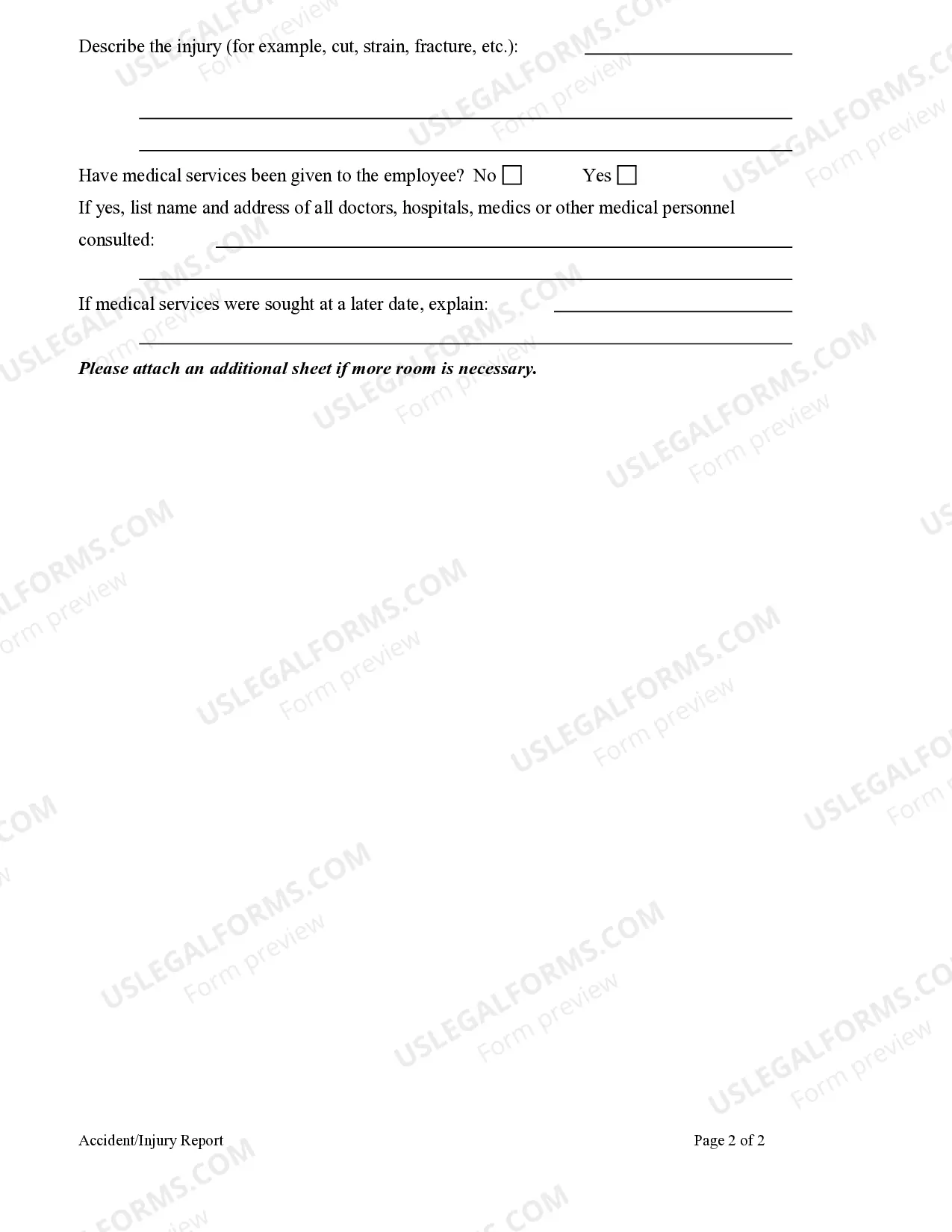
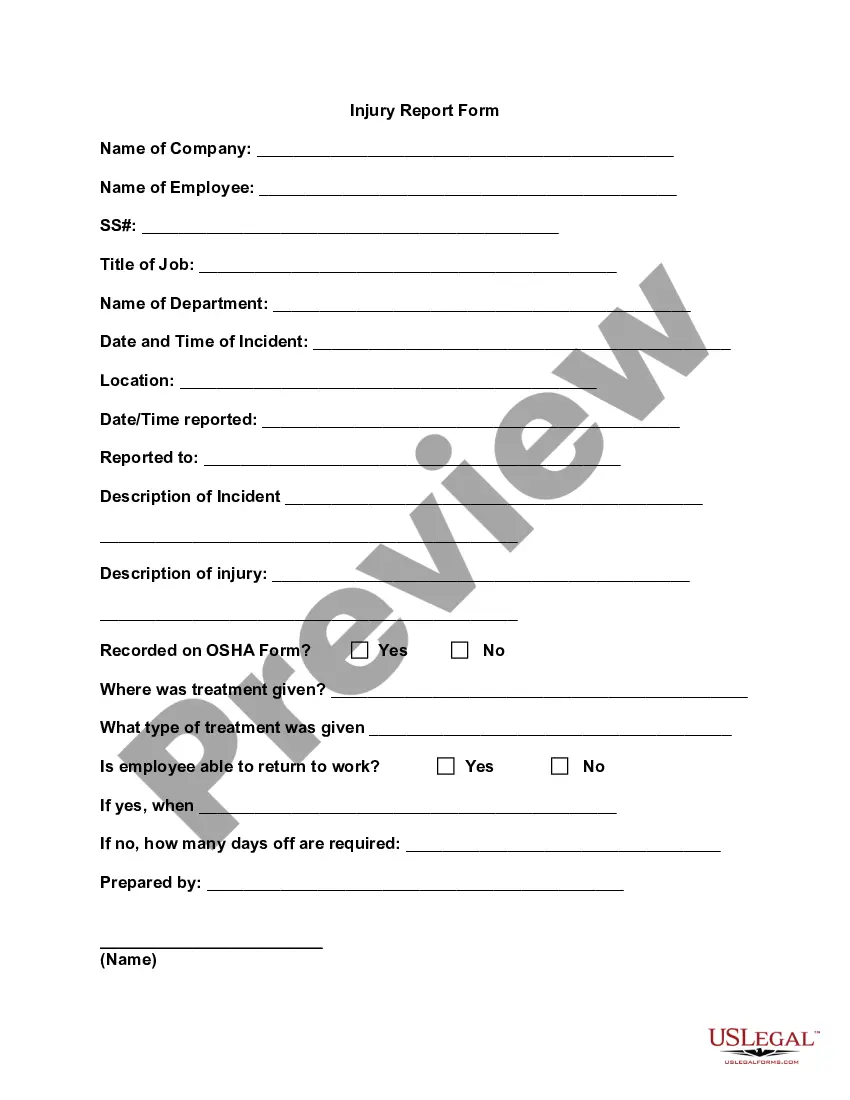
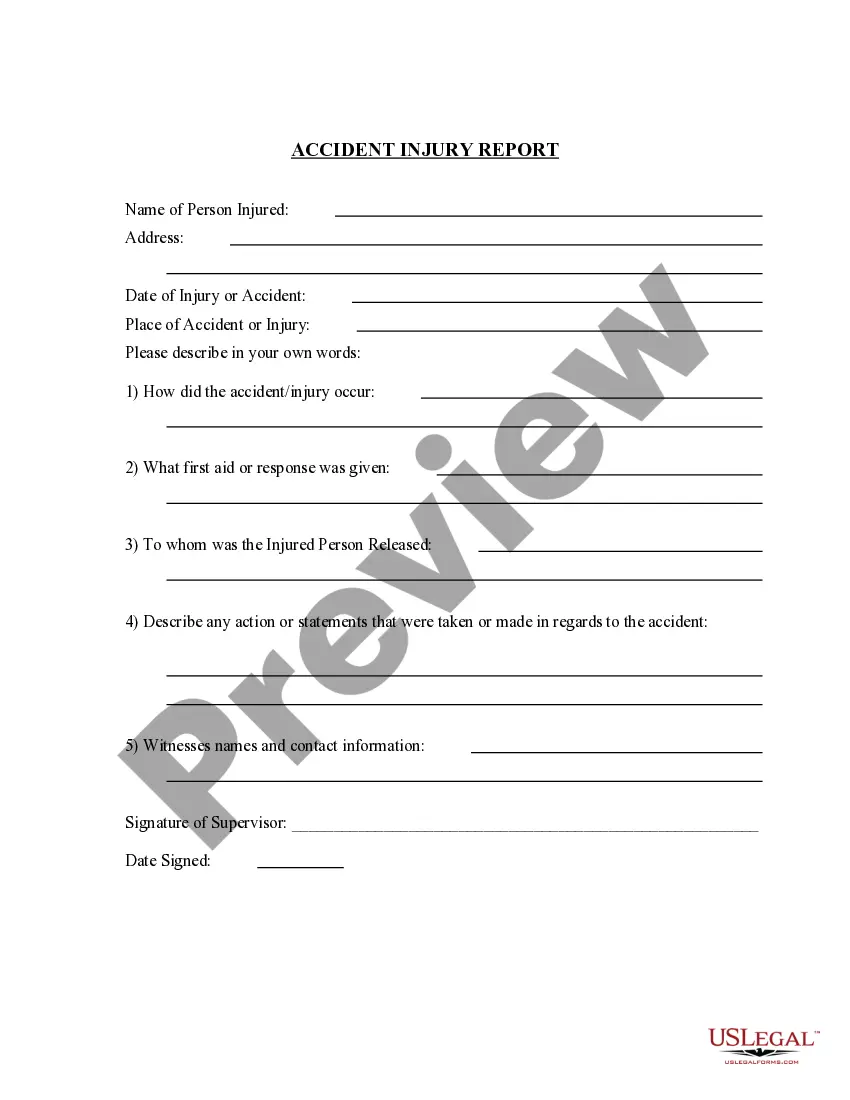
Get your form ready online
Our built-in tools help you complete, sign, share, and store your documents in one place.
Make edits, fill in missing information, and update formatting in US Legal Forms—just like you would in MS Word.
Download a copy, print it, send it by email, or mail it via USPS—whatever works best for your next step.
Sign and collect signatures with our SignNow integration. Send to multiple recipients, set reminders, and more. Go Premium to unlock E-Sign.
If this form requires notarization, complete it online through a secure video call—no need to meet a notary in person or wait for an appointment.
We protect your documents and personal data by following strict security and privacy standards.

Make edits, fill in missing information, and update formatting in US Legal Forms—just like you would in MS Word.

Download a copy, print it, send it by email, or mail it via USPS—whatever works best for your next step.

Sign and collect signatures with our SignNow integration. Send to multiple recipients, set reminders, and more. Go Premium to unlock E-Sign.

If this form requires notarization, complete it online through a secure video call—no need to meet a notary in person or wait for an appointment.

We protect your documents and personal data by following strict security and privacy standards.
Looking for another form?









Form popularity
FAQ
The new Tort Reform Act now makes Florida a modified comparative fault state, which means the other party needs to be the majority at fault for the accident for you to collect any damages. This means you must be less than 50% responsible for your injuries to receive any damages for your case.
Calculating Pain & Suffering Using The Multiplier Method Economic damages, which encompass quantifiable financial losses like medical expenses and lost wages, serve as the foundation for this calculation. Once the severity of the losses is determined, it is applied as a multiplier to the economic damages.
The Florida Tort Reform Act 2023 aims to prevent excessive damage awards to injury victims and reduce insurance costs. In doing so, the law has also limited the rights of injury victims, making it more challenging in some situations to seek compensation for their losses.
The statute of limitations for personal injury cases in Florida, including car accident cases, is four years. In other words, car accident victims have four years from the date the accident occurred to file a personal injury lawsuit against the at-fault driver.
Florida's 51% bar rule is a legal principle that falls under the broader concept of comparative negligence. This rule states that a person can recover damages in a personal injury case as long as they are not more than 51% at fault for the incident.
In 2021, the Florida Senate introduced SB 54, which would eliminate the mandatory PIP requirement for auto insurance. In its place, the new PIP reform law would require vehicle owners to carry: A minimum of $25,000 in bodily injury coverage. A minimum of $50,000 for two or more people in any one accident.
In Florida, you have four years from the day of the accident to sue. While you have up to four years to reach the statute of limitations, it's best not to wait until the last minute to file a claim with your insurance company.
What to include in a work incident report The date and time of the incident. The name of the witness or author of the report. A detailed description of the events. The names of the affected parties. Other witness statements or important information. The result of the incident.
To calculate pain and suffering damages, you multiply the number by the dollar amount of your economic damages. The result is the value of your non-economic damages. Therefore, the amount of your financial losses directly impacts the value of pain and suffering.
As of March 24, 2023, Florida's statute of limitations for negligence claims, including those arising from car accidents, has been reduced from four years to two years. This legislative change mandates that victims of car accidents must file their negligence claims within two years of the incident.
