Accident With Injury In Cook
Description

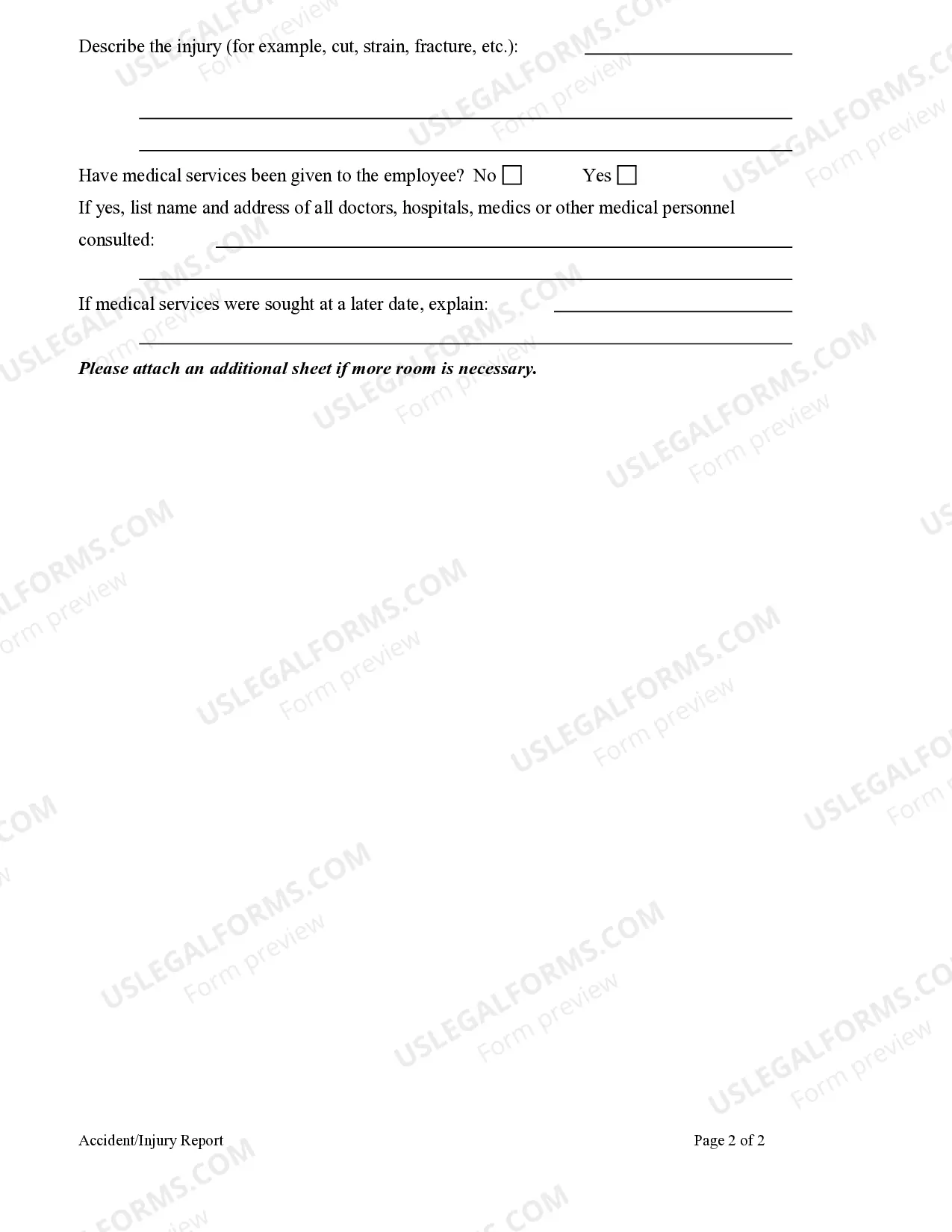
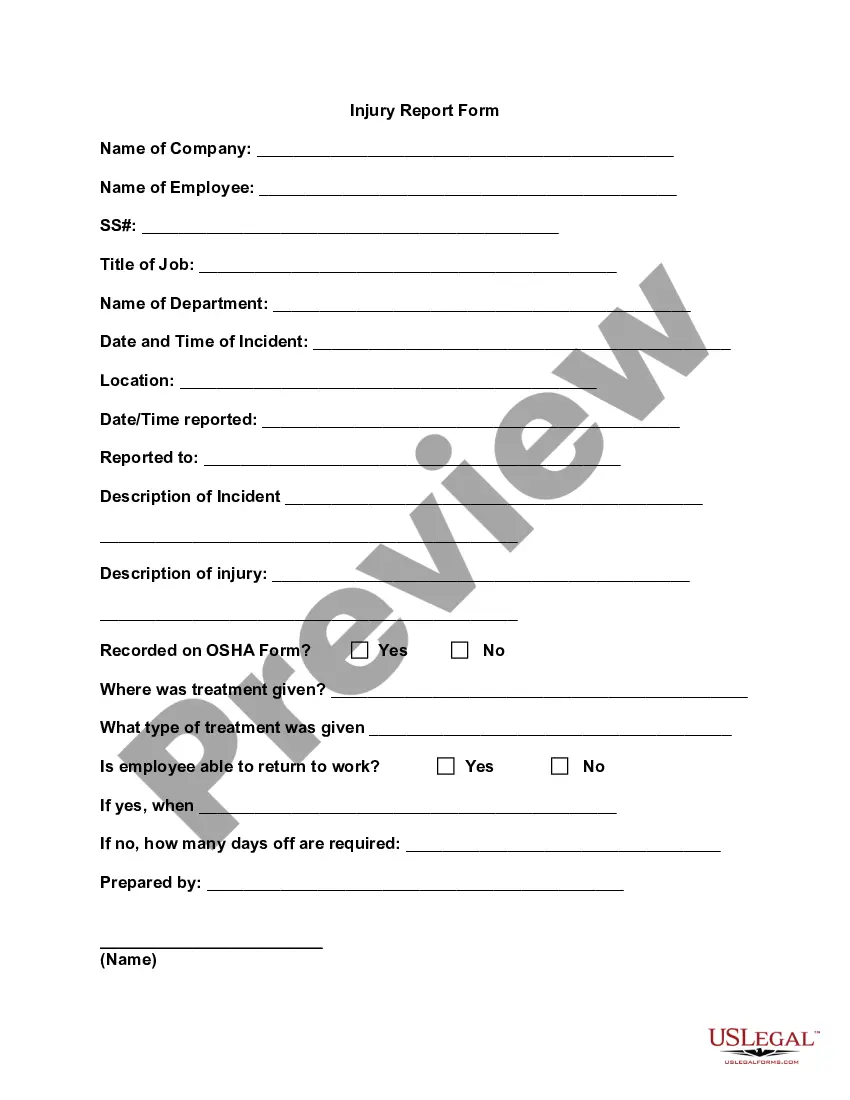
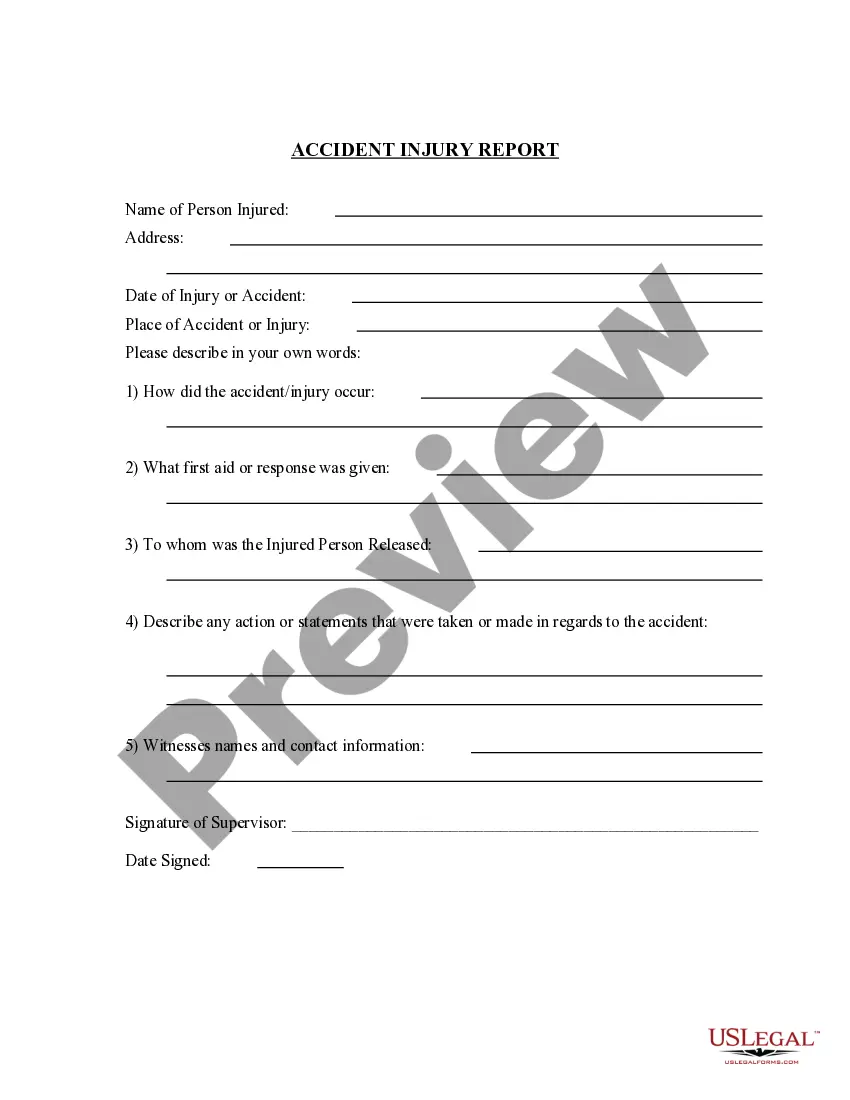
Get your form ready online
Our built-in tools help you complete, sign, share, and store your documents in one place.
Make edits, fill in missing information, and update formatting in US Legal Forms—just like you would in MS Word.
Download a copy, print it, send it by email, or mail it via USPS—whatever works best for your next step.
Sign and collect signatures with our SignNow integration. Send to multiple recipients, set reminders, and more. Go Premium to unlock E-Sign.
If this form requires notarization, complete it online through a secure video call—no need to meet a notary in person or wait for an appointment.
We protect your documents and personal data by following strict security and privacy standards.

Make edits, fill in missing information, and update formatting in US Legal Forms—just like you would in MS Word.

Download a copy, print it, send it by email, or mail it via USPS—whatever works best for your next step.

Sign and collect signatures with our SignNow integration. Send to multiple recipients, set reminders, and more. Go Premium to unlock E-Sign.

If this form requires notarization, complete it online through a secure video call—no need to meet a notary in person or wait for an appointment.

We protect your documents and personal data by following strict security and privacy standards.
Looking for another form?










Form popularity
FAQ
If someone is injured in an incident, first check that you and the person who is injured are not in any danger. If you are, make the situation safe. When it's safe to do so, assess the person who is injured and, if necessary, dial 999 for an ambulance.
What to include in a work incident report The date and time of the incident. The name of the witness or author of the report. A detailed description of the events. The names of the affected parties. Other witness statements or important information. The result of the incident.
If there are injuries, call paramedics. Get as much information as possible at the accident scene to furnish to your agent and/or insurance company. Immediately notify your agent and/or insurance company of an accident. Cooperate with the insurance adjusters/investigators to aid in their efforts.
Provide your name, phone number, and address. If pressed for more, inform the adjuster of things like the date, time, and location. However, you are not required to discuss the nature of your injury, the treatment you received, and how the crash occurred.
How Do You Create an Effective Victim Impact Statement in a Car Accident? Use your own words to convey your experiences. Focus on how the incident has affected your life, rather than detailing the accident itself. Clearly outline the physical, mental, emotional, and financial impacts, addressing each separately.
How To Write A Car Accident Witness Statement Include the Witness's Full Name and Contact Details. Detail the Who, What, When, and Where of the Accident. Share Your Perspective on How the Crash Occurred. Report Observations of Injuries and Property Damage. Include Other Relevant Information. Sign the Witness Statement.
How to create an incident report Have all basic facts prepared. In order for an incident report to be useful, it is helpful for all facts listed in the report to be specific and accurate. Explain the sequence of events step-by-step. Analyze the incident. Describe any injuries. Proofread your work. Submit your report.
Here are some details you'll want to include when writing a report for the car accident you were involved in: The Other Driver's Identity. The Time and Location of the Collision. Vehicle Information. Insurance Details. Eye-Witness Information. An Explanation of How the Collision Occurred. Seek Medical Attention.
Always File a Claim, Regardless of Who Was At-Fault One of the primary questions we receive from clients who have been in an accident is whether they should report the accident to their own auto insurance carrier, particularly when the accident was not their fault. And the answer to that question is: always.
