Personal Manager Contract With America In Pennsylvania
Description













Form popularity
FAQ
A Management Agreement is a crucial document that outlines the responsibilities and expectations between a company and its management team. It helps establish clear guidelines and ensures that both parties are on the same page.
--An assignment of "the contract" or of "all my rights under the contract" or an assignment in similar general terms is an assignment of rights and unless the language or the circumstances (as in an assignment for security) indicate the contrary, it is a delegation of performance of the duties of the assignor and its ...
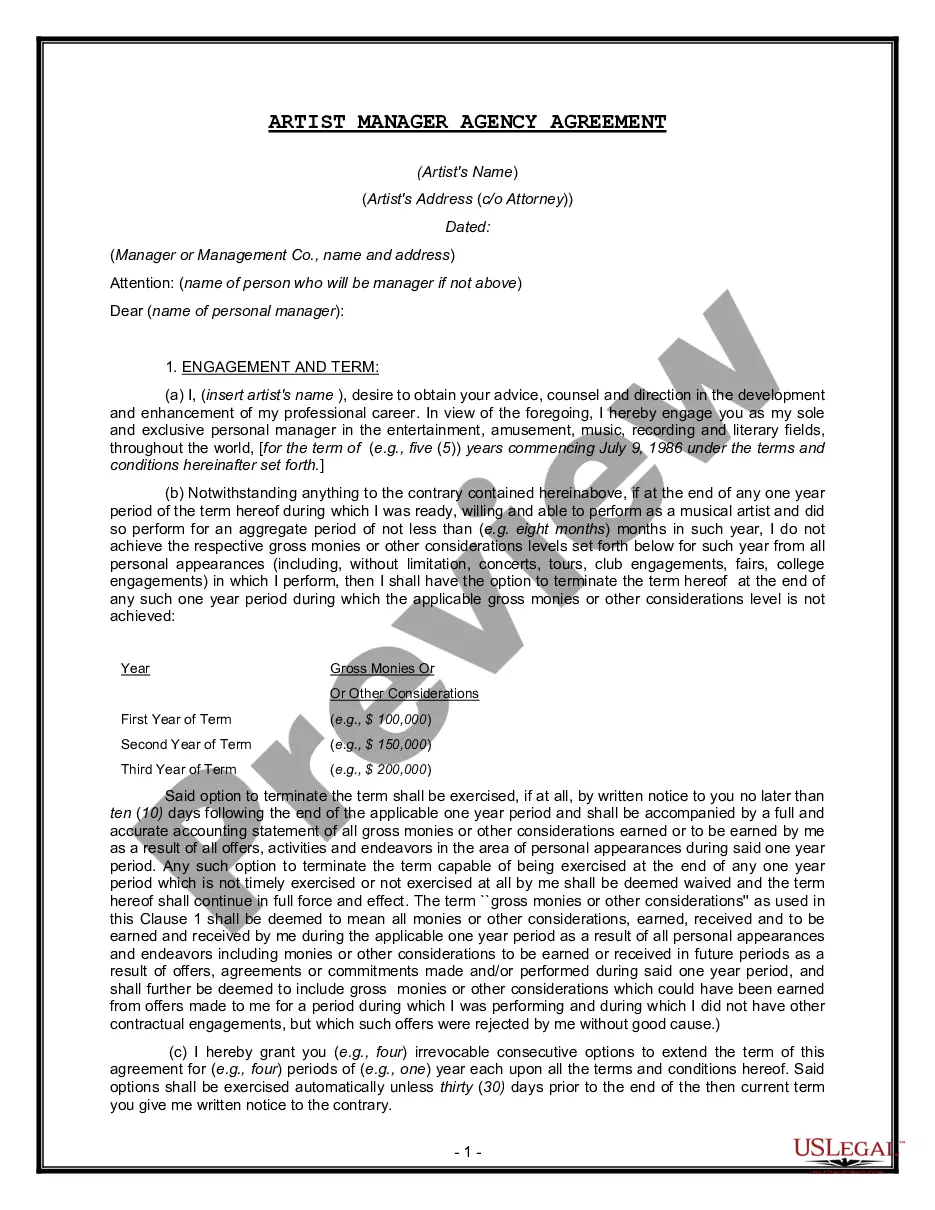
An Artist Management Agreement is used by a personal manager to contract with a recording and performing musical artist to set the terms for managing the artist's career. The manager receives a percentage of all the income generated by the artist for the management services provided.
A business management agreement is a contract between the owner of a company and one or more people responsible for managing the company. It outlines the specific roles, responsibilities, and duties of each party involved.
The agreement establishes the relationship between the owner and the manager for a fixed period, defines the manager's authority and compensation for services provided, outlines procedures, specifies limits of the manager's authority and actions, and states financial and other obligations of the property owner."
Types of agreements under Indian Contract Act, 1872 Valid agreement. Section 11 of the Indian Contract Act, 1872. Void agreement. Section 24 of the Indian Contract Act, 1872. Wagering Agreements. Contingent Agreement. Voidable agreement. Express and implied agreements. Illegal Agreements.
Below is an example of a management contract: ABC Consulting agrees to provide management services to XYZ Corporation for the period of January 1, 2022, to December 31, 2022. ABC Consulting will be responsible for managing the sales department of XYZ Corporation, including its employees, processes, and systems.
Offer and Acceptance: One party must make an offer, and the other must accept it. Mutual Consent: Both parties agree to the terms without coercion. Contract law often refers to this condition as a "meeting of the minds." Competence: The parties must have the legal capacity to agree.
