Artist Agreement Form Statement With Art In Middlesex
Description









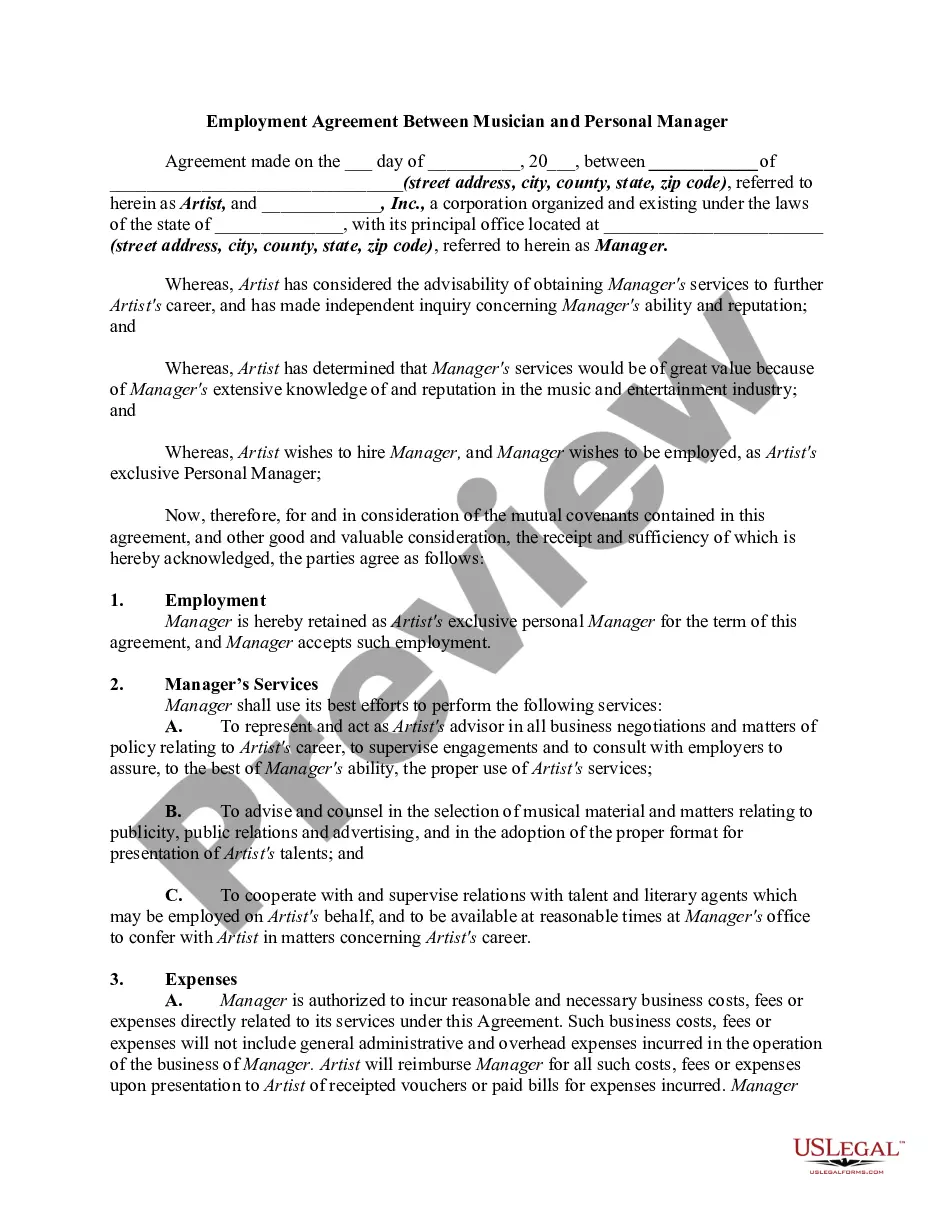


Get your form ready online
Our built-in tools help you complete, sign, share, and store your documents in one place.
Make edits, fill in missing information, and update formatting in US Legal Forms—just like you would in MS Word.
Download a copy, print it, send it by email, or mail it via USPS—whatever works best for your next step.
Sign and collect signatures with our SignNow integration. Send to multiple recipients, set reminders, and more. Go Premium to unlock E-Sign.
If this form requires notarization, complete it online through a secure video call—no need to meet a notary in person or wait for an appointment.
We protect your documents and personal data by following strict security and privacy standards.

Make edits, fill in missing information, and update formatting in US Legal Forms—just like you would in MS Word.

Download a copy, print it, send it by email, or mail it via USPS—whatever works best for your next step.

Sign and collect signatures with our SignNow integration. Send to multiple recipients, set reminders, and more. Go Premium to unlock E-Sign.

If this form requires notarization, complete it online through a secure video call—no need to meet a notary in person or wait for an appointment.

We protect your documents and personal data by following strict security and privacy standards.
Looking for another form?









Form popularity
FAQ
Example: “My body of work combines (the how) photography and original writing (the what) to investigate themes of time and memory (the why).”
An artist's statement can be a single paragraph—several paragraphs are preferable—but your statement should never be longer than one page.
How to Write an Artistic Statement Brainstorm. The first hurdle is to figure out what to write about. Freewrite. The process of writing without judgment or self-editing can help artists get at their basic philosophy. Rewrite what stands out. In general, be specific. Be clear and concise. Proofread. Use your own voice.
Subject, form, and content comprise the three basic components of a work of art.
Good artist statements clarify an artist's intent. They describe the works from a material standpoint: what medium and techniques are used. They characterize the style, its relation to a school or figures in the history of art. They avoid art-speak jargon and describe the body of work in a lively way.
Writing an Artist's Statement? Start with These Questions What does your work look like? What are its physical properties? How does it exist in space? Where do we see it? Is your work temporal? How are you making this work? Why do you make this work? How do viewers experience your work?
What information does an artist's statement need to include? There are three elements to consider: the “how,” the “what,” and the “why.” There should be enough information in your artist statement that someone can begin to imagine the art that you make without having it in front of them.
A copyright exclusive license is one in which ownership in one or more of the copyright owner's rights is transferred by the copyright owner to a third party. A copyright nonexclusive license occurs when the owner retains ownership of the copyright and retains the right to license the same right to others.
Like its name suggests, an exclusive contract is one that restricts a party from providing the same goods/services to others for a specified period of time. This can also be applied in the context where a company obtains exclusive rights and agrees to do business exclusively with another company.
It is a legal agreement that binds the Artist and the Company to fulfill all the terms and conditions contained in it. All Individual Artist Agreements must be in compliance with the respective Collective Bargaining Agreement.