Tour Manager Contract With Players In Maricopa
Description









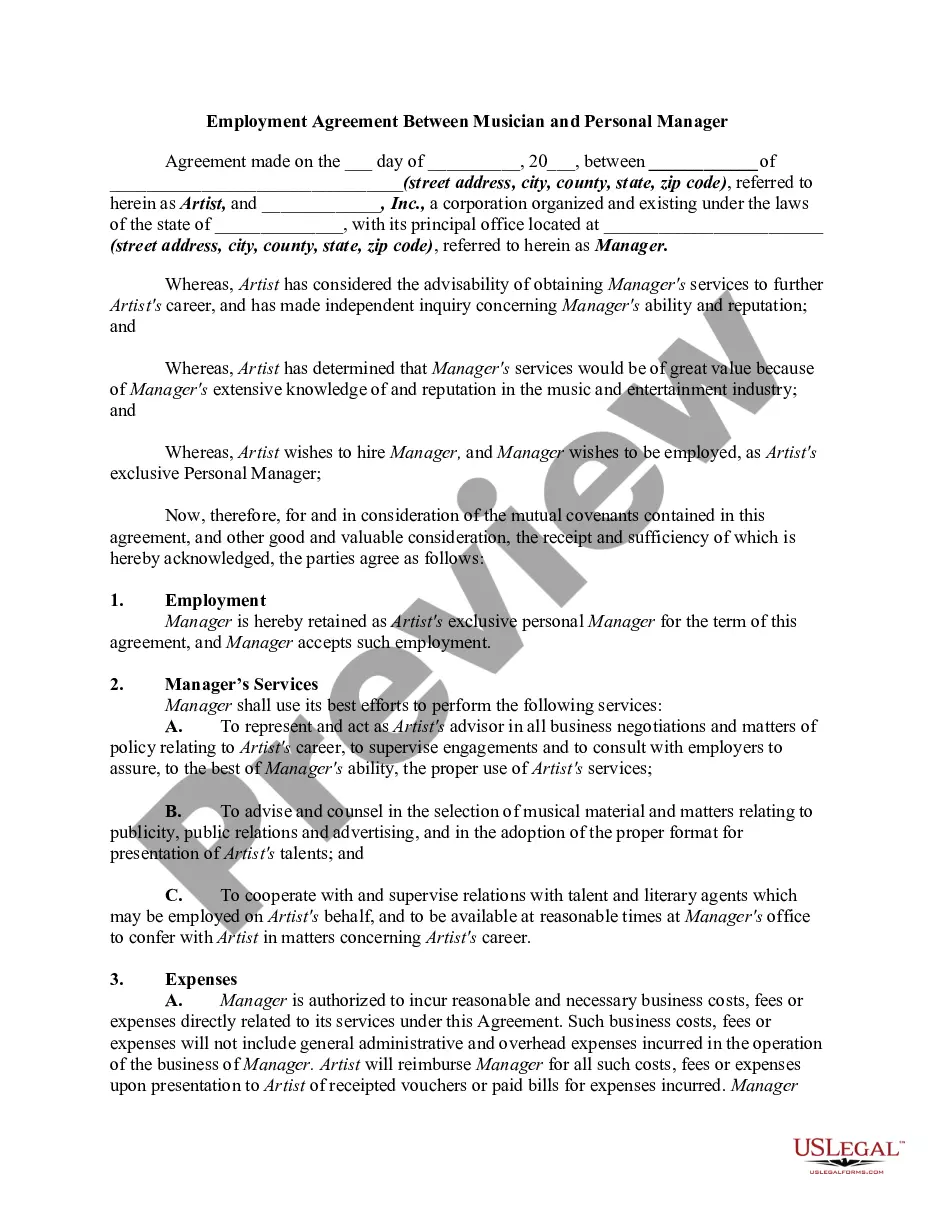
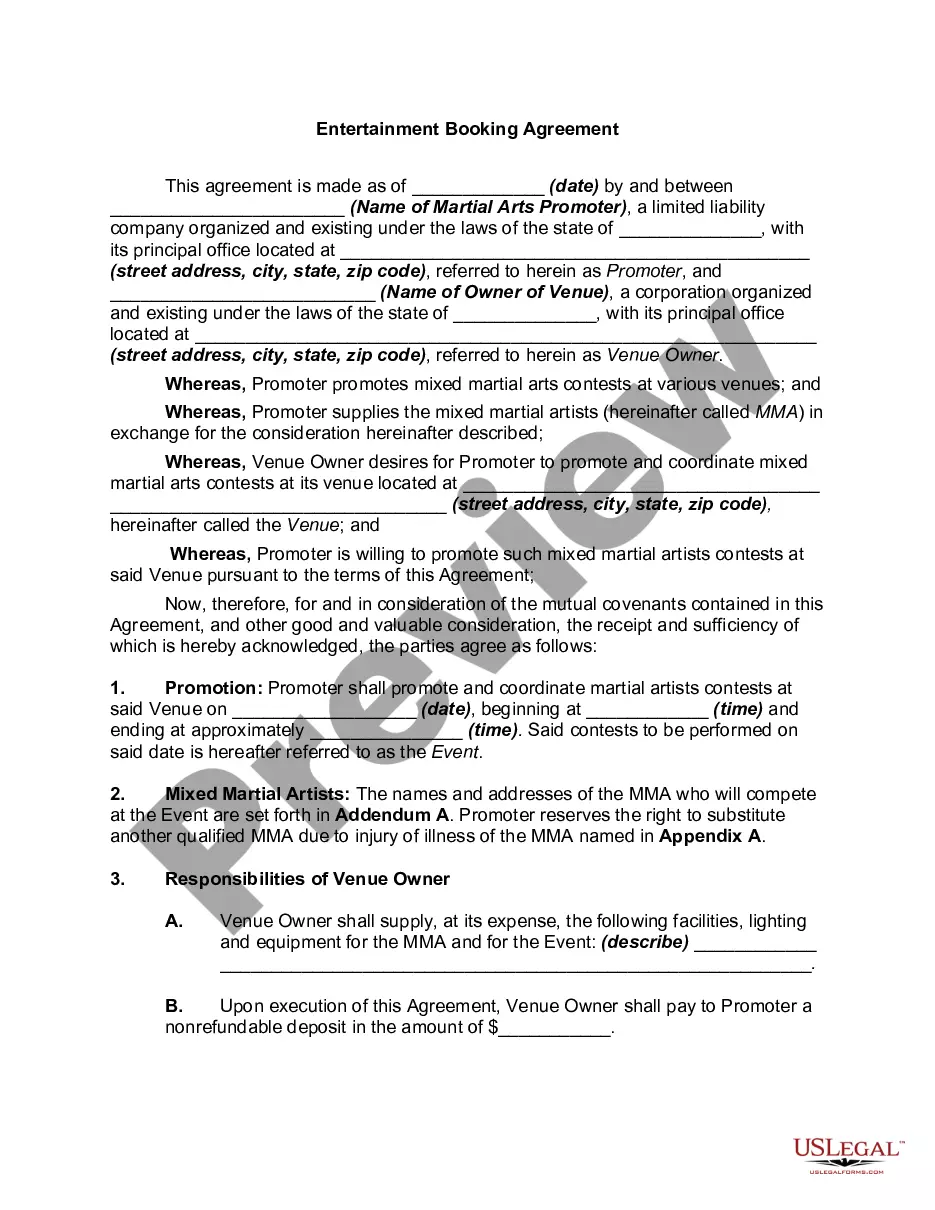
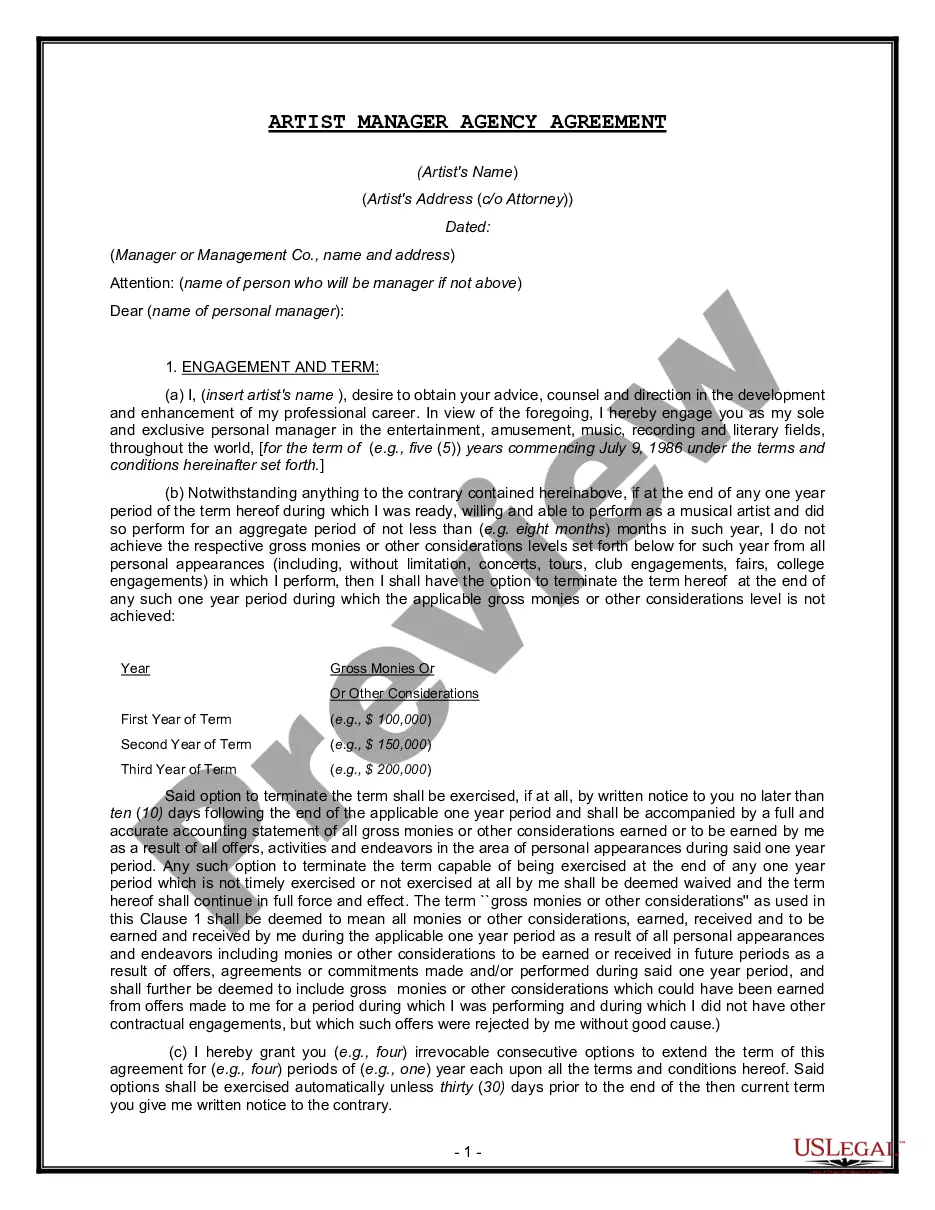
Get your form ready online
Our built-in tools help you complete, sign, share, and store your documents in one place.
Make edits, fill in missing information, and update formatting in US Legal Forms—just like you would in MS Word.
Download a copy, print it, send it by email, or mail it via USPS—whatever works best for your next step.
Sign and collect signatures with our SignNow integration. Send to multiple recipients, set reminders, and more. Go Premium to unlock E-Sign.
If this form requires notarization, complete it online through a secure video call—no need to meet a notary in person or wait for an appointment.
We protect your documents and personal data by following strict security and privacy standards.

Make edits, fill in missing information, and update formatting in US Legal Forms—just like you would in MS Word.

Download a copy, print it, send it by email, or mail it via USPS—whatever works best for your next step.

Sign and collect signatures with our SignNow integration. Send to multiple recipients, set reminders, and more. Go Premium to unlock E-Sign.

If this form requires notarization, complete it online through a secure video call—no need to meet a notary in person or wait for an appointment.

We protect your documents and personal data by following strict security and privacy standards.
Looking for another form?









Form popularity
FAQ
Some employers may require a bachelor's degree, while others need only a high school diploma or certificate. Most employers prefer a degree in business management, music, communication, marketing, entrepreneurship or a related area.
In general, road managers handle tour details for their specific band, while tour managers are used to oversee the logistics, finances and communications for tours as a holistic entity.
Kind of in general if it's a solo artist with hired musicians the artist has a bus of their own that maybe their tour manager and assistant are on, band and crew have a separate bus/buses, but a lot of times the artist will fly ahead anyway. If it's a long drive, like a few days, they may fly home in between.
Most employers prefer a degree in business management, music, communication, marketing, entrepreneurship or a related area. To stand out among the competition, additional recommended courses include psychology, business law, logistics, accounting or tourism and travel management.
For a young-gun tour manager just starting out on a van tour, the average salary is anywhere between $1000 – $1500 per week. With a few years of touring experience, the average tour manager's salary can range between $2000 – $3000 per week, depending on the organization and responsibilities.
Yes, you can write your own contract. However, including all necessary elements is crucial to make it legally binding.
A tour operator agreement is a contract between a tour agency and a tour operator sets the terms and conditions of their business relationship. The contract includes details about what services will be provided, when, and what the compensation rate will be.
How to draft a contract between two parties: A step-by-step checklist Know your parties. Agree on the terms. Set clear boundaries. Spell out the consequences. Specify how you will resolve disputes. Cover confidentiality. Check the legality of the contract. Open it up to negotiation.
Here are the basic steps you can take to become a tour manager: Pursue relevant education. Some employers may require a bachelor's degree, while others need only a high school diploma or certificate. Gain experience. Develop a professional network. Perfect your social skills. Identify a mentor.
The basic elements required for the agreement to be a legally enforceable contract are: mutual assent, expressed by a valid offer and acceptance; adequate consideration; capacity; and legality.
