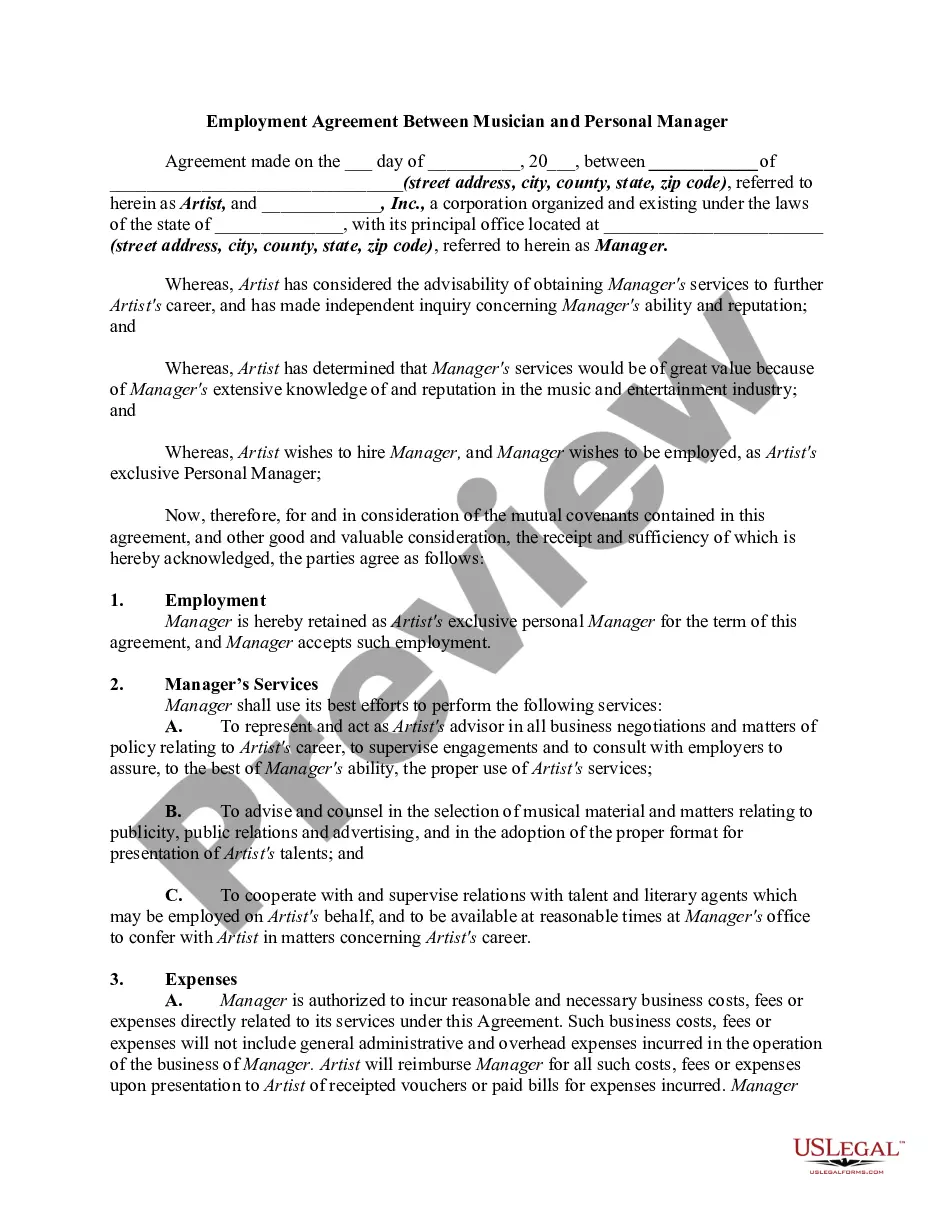
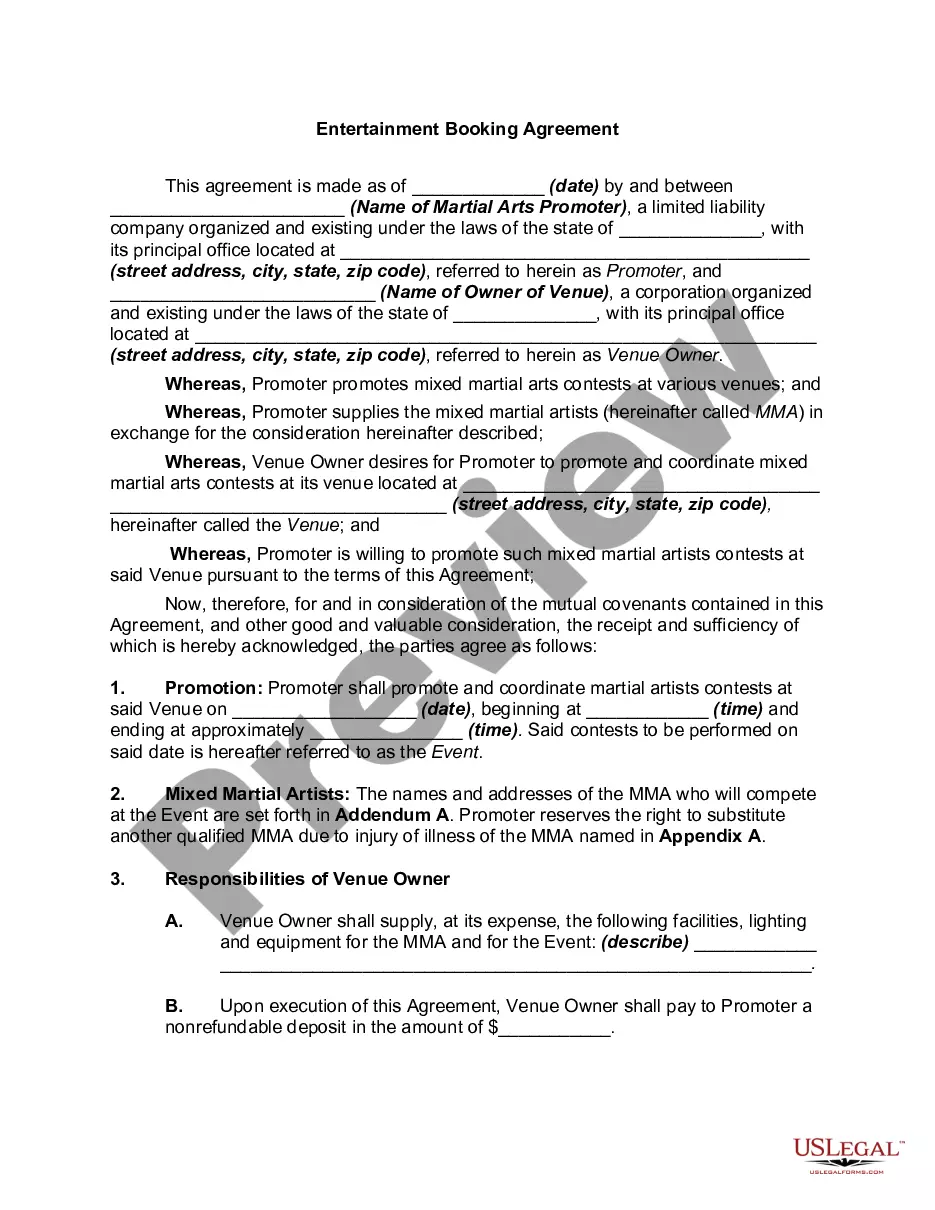
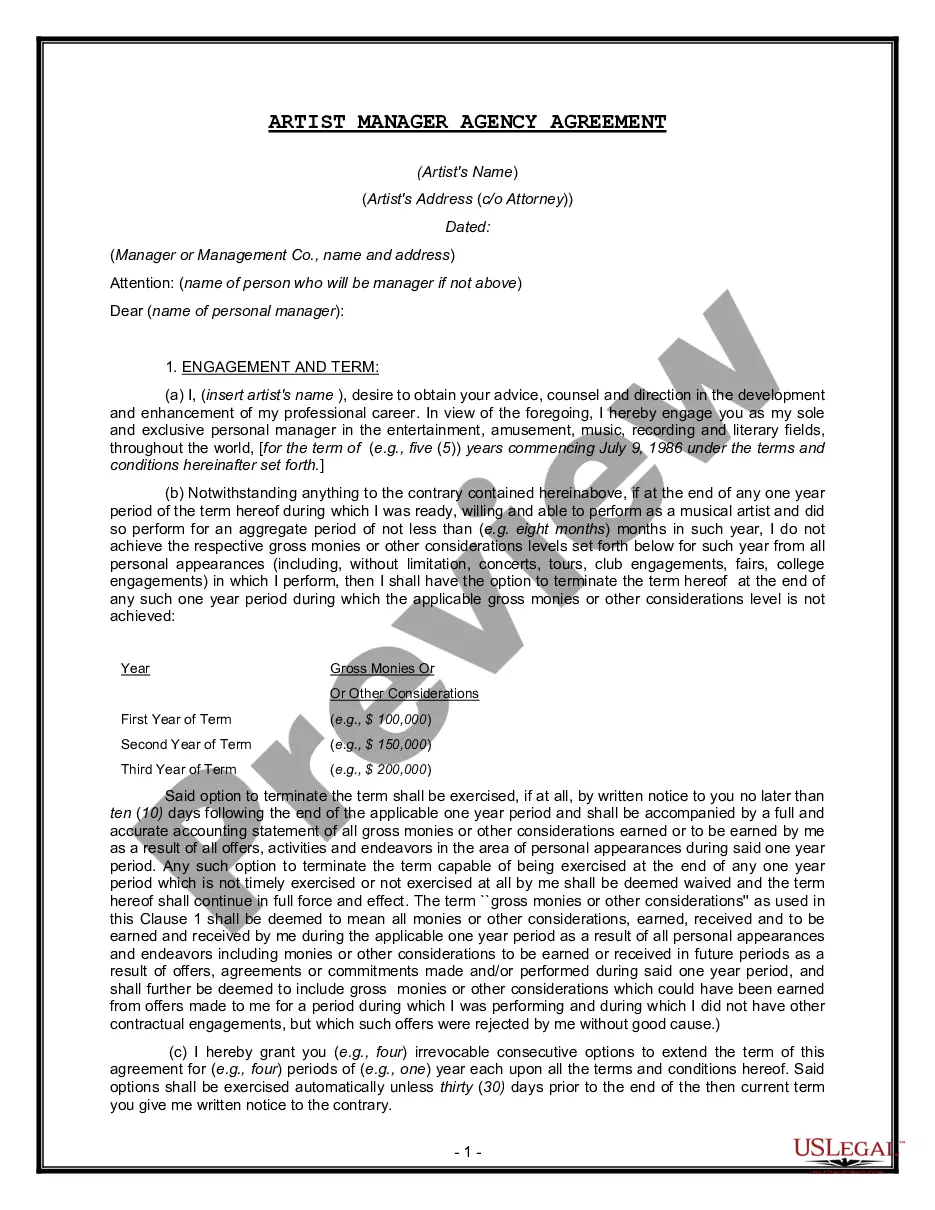
Music Management Contract For Hotels In Fulton
Description

Get your form ready online
Our built-in tools help you complete, sign, share, and store your documents in one place.
Make edits, fill in missing information, and update formatting in US Legal Forms—just like you would in MS Word.
Download a copy, print it, send it by email, or mail it via USPS—whatever works best for your next step.
Sign and collect signatures with our SignNow integration. Send to multiple recipients, set reminders, and more. Go Premium to unlock E-Sign.
If this form requires notarization, complete it online through a secure video call—no need to meet a notary in person or wait for an appointment.
We protect your documents and personal data by following strict security and privacy standards.

Make edits, fill in missing information, and update formatting in US Legal Forms—just like you would in MS Word.

Download a copy, print it, send it by email, or mail it via USPS—whatever works best for your next step.

Sign and collect signatures with our SignNow integration. Send to multiple recipients, set reminders, and more. Go Premium to unlock E-Sign.

If this form requires notarization, complete it online through a secure video call—no need to meet a notary in person or wait for an appointment.

We protect your documents and personal data by following strict security and privacy standards.
Looking for another form?









Form popularity
FAQ
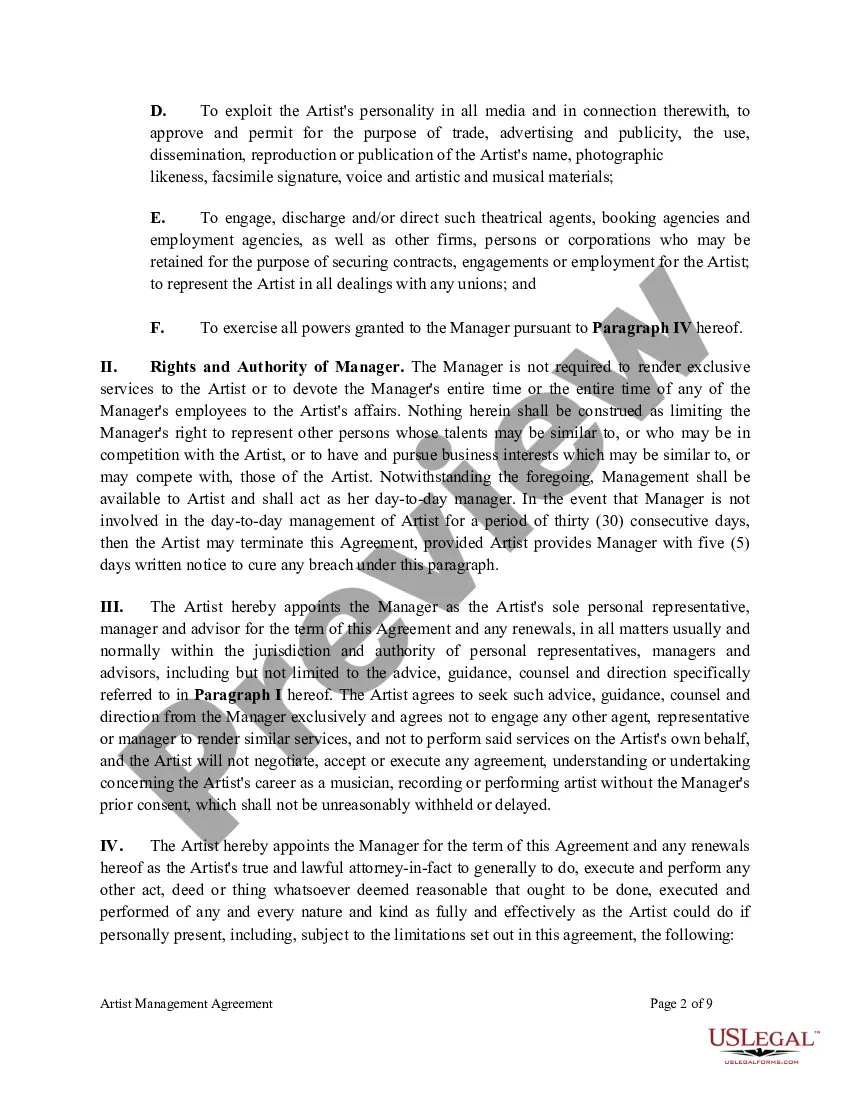
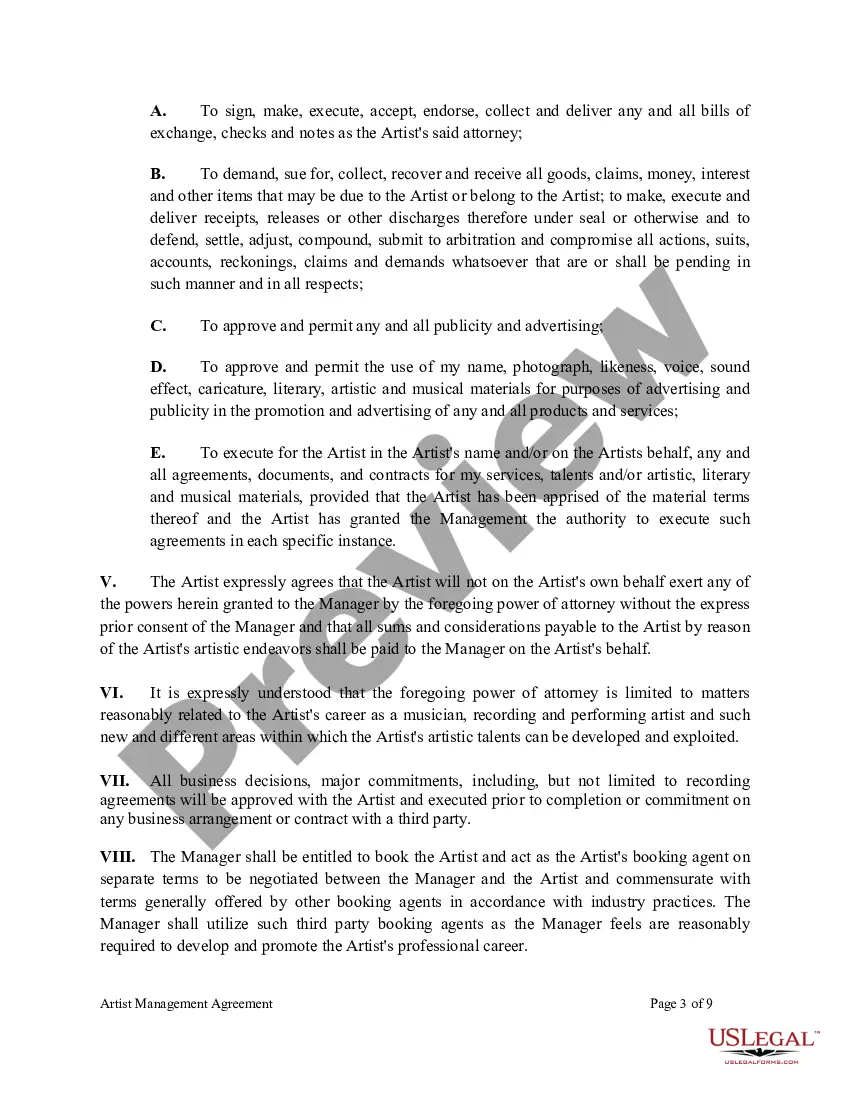
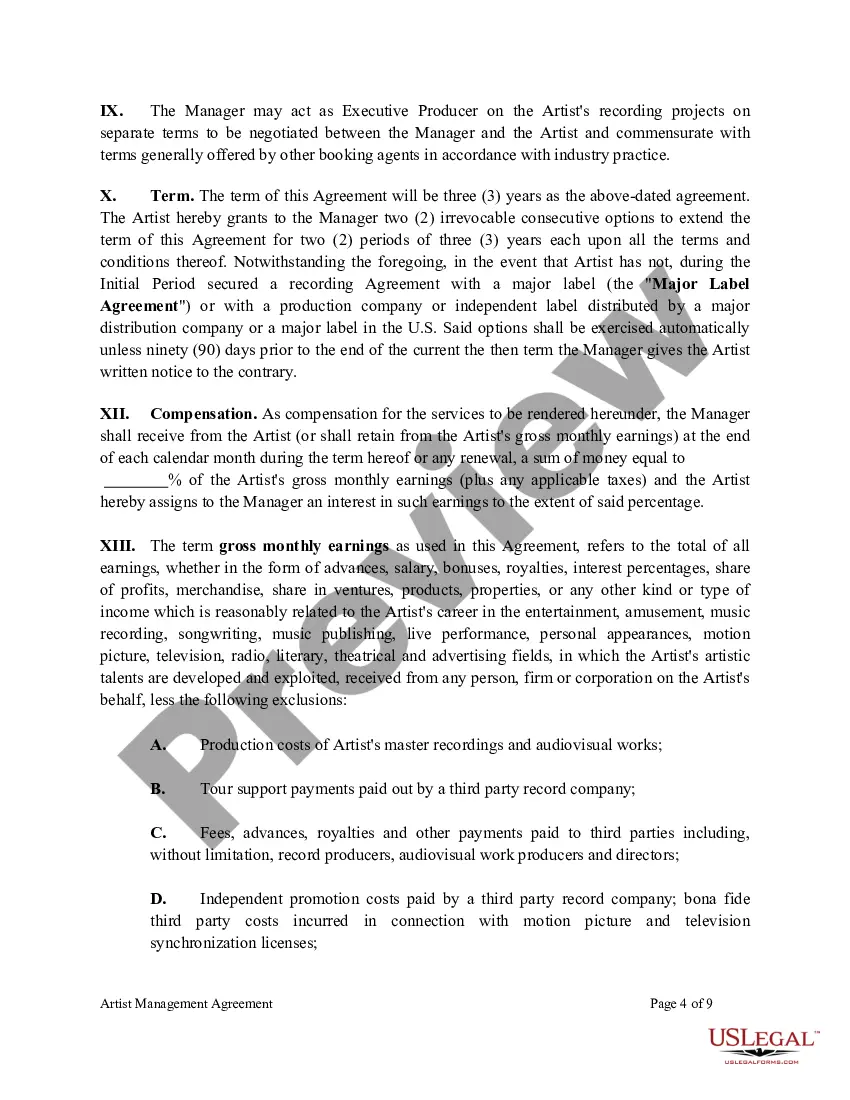
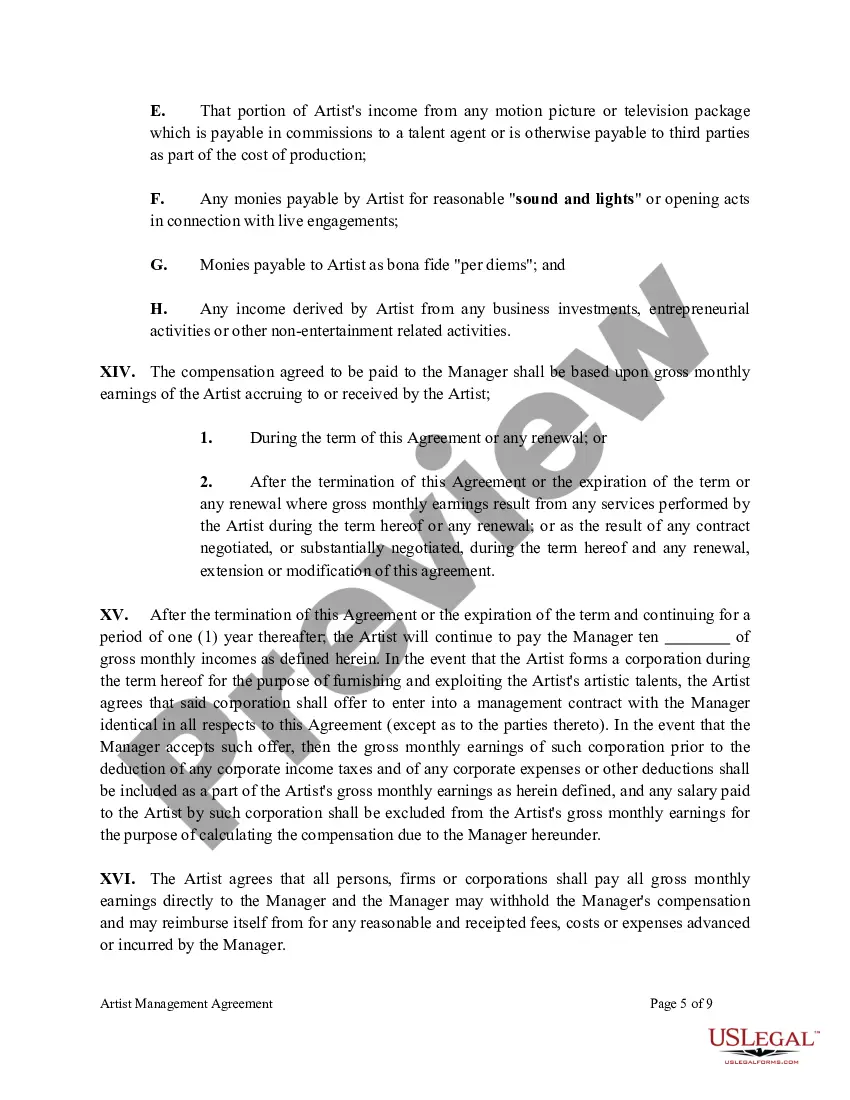
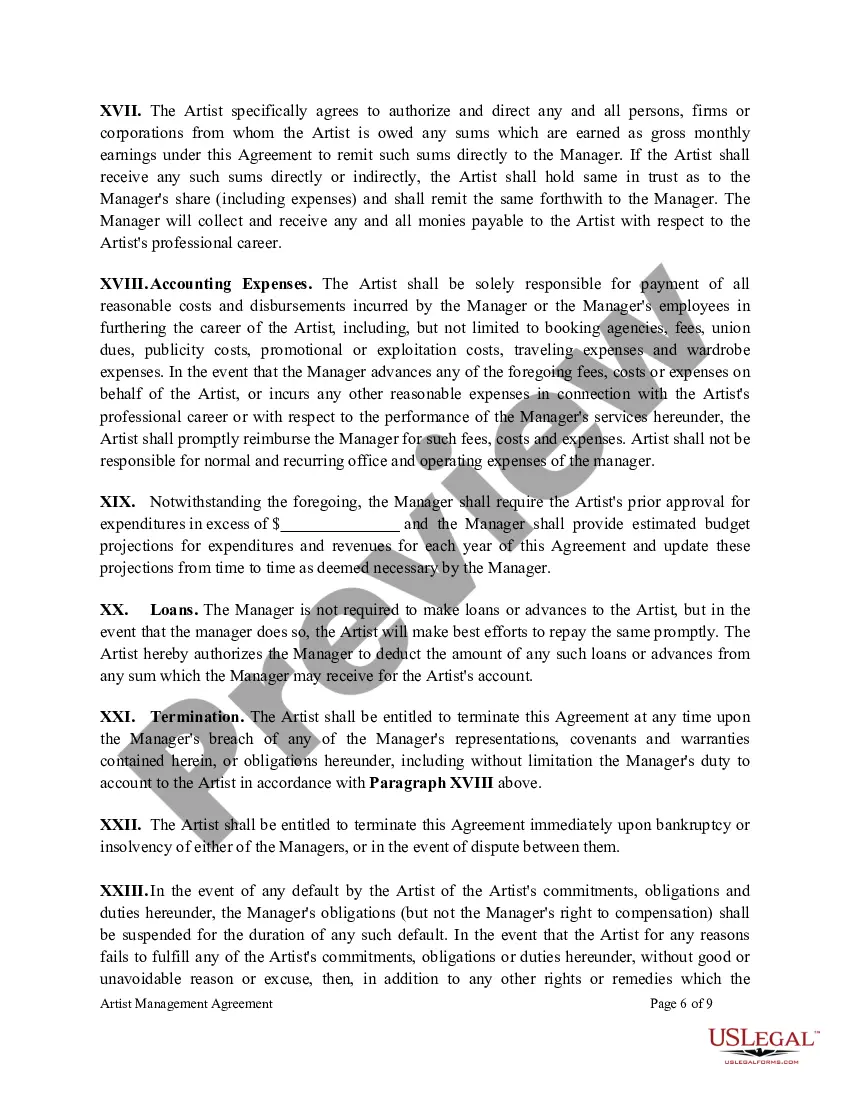
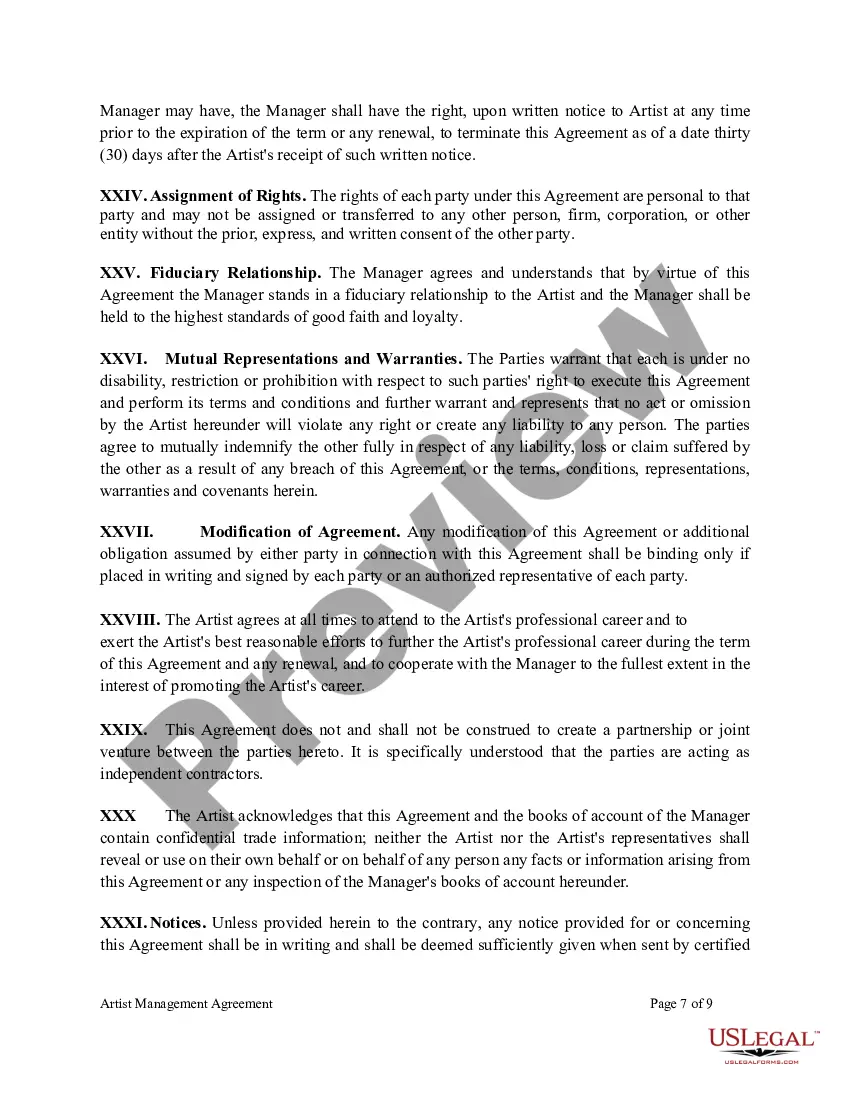
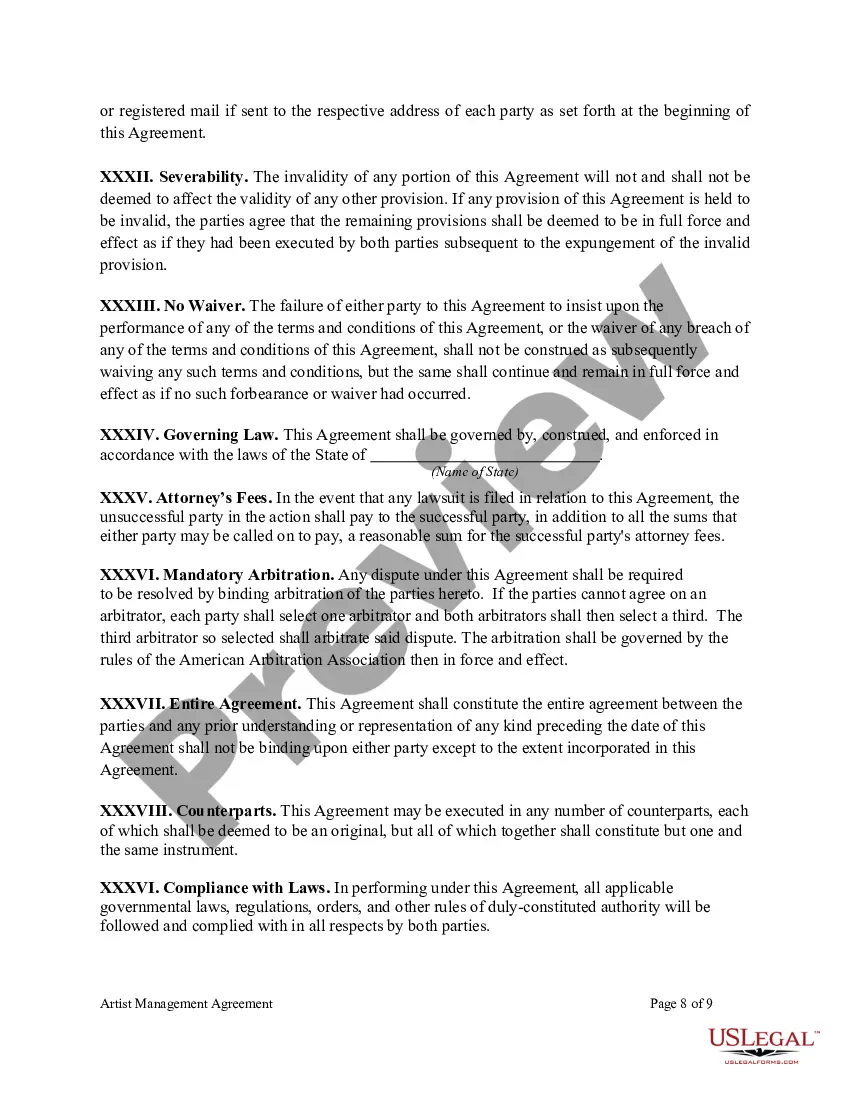
Your Music Recording Contract should cover details like: Compensation and royalties. Where and when the album will be recorded. The album's release date. Who has creative control over specific elements of the album. The termination clause. The exclusive agreement clause. Dispute resolution. Promotional appearances.
As a general rule, managers take a percentage of all income generated by the artist in exchange for their management services. Commission rates typically range from 15-25% of the artist's gross income from: Recording royalties: Sales, streaming and licensing of recorded music.
Under a hotel management contract, the owner of the hotel real estate and business appoints a management company to operate the hotel business on the owner's behalf. Some management companies are also brand owners, in which case the hotel will be operated under the management company's brand.
Hotel Management Agreements (HMAs) are contracts which defines the relationship between the hotel owners and management companies or operators, outlining the terms and conditions for managing the hotel. These agreements are crucial for defining the roles, responsibilities and expectations of both parties.
Hotel Management Agreements (HMAs) are contracts which defines the relationship between the hotel owners and management companies or operators, outlining the terms and conditions for managing the hotel. These agreements are crucial for defining the roles, responsibilities and expectations of both parties.
A business management agreement is a contract between the owner of a company and one or more people responsible for managing the company. It outlines the specific roles, responsibilities, and duties of each party involved.
Under a hotel management contract, the owner of the hotel real estate and business appoints a management company to operate the hotel business on the owner's behalf. Some management companies are also brand owners, in which case the hotel will be operated under the management company's brand.
Managers typically receive 15% to 20% of the artist's gross earnings (before any expenses are deducted), but this figure can vary from contract to contract. For example, a manager might start at 20% and decrease his or her cut to 15% after a period of time or once the artist achieves a certain level in their career.
How to become a music manager Earn a bachelor's degree. While some music managers can find work without a college degree, many candidates choose to pursue one. Complete an internship. Stay updated on trends in the industry. Apply for jobs with established artists or companies. Find your own clients.
When Does an Artist Need a Music Manager? If you're working on your very first album release, the chances are slim that your career can really benefit from having a music manager. However, artists whose careers are beginning to take off usually enjoy significant advantages through having a good manager.
