Artist Agreement Form Statement With Art In Fulton
Description

Get your form ready online
Our built-in tools help you complete, sign, share, and store your documents in one place.
Make edits, fill in missing information, and update formatting in US Legal Forms—just like you would in MS Word.
Download a copy, print it, send it by email, or mail it via USPS—whatever works best for your next step.
Sign and collect signatures with our SignNow integration. Send to multiple recipients, set reminders, and more. Go Premium to unlock E-Sign.
If this form requires notarization, complete it online through a secure video call—no need to meet a notary in person or wait for an appointment.
We protect your documents and personal data by following strict security and privacy standards.

Make edits, fill in missing information, and update formatting in US Legal Forms—just like you would in MS Word.

Download a copy, print it, send it by email, or mail it via USPS—whatever works best for your next step.

Sign and collect signatures with our SignNow integration. Send to multiple recipients, set reminders, and more. Go Premium to unlock E-Sign.

If this form requires notarization, complete it online through a secure video call—no need to meet a notary in person or wait for an appointment.

We protect your documents and personal data by following strict security and privacy standards.
Looking for another form?






Form popularity
FAQ
Example: “My body of work combines (the how) photography and original writing (the what) to investigate themes of time and memory (the why).”
Artist Statement Guidelines A general introduction to your work, a body of work, or a specific project. It should open with the work's basic ideas in an overview of two or three sentences or a short paragraph. The second paragraph should go into detail about how these issues or ideas are presented in the work.
Often, artists are instructed to write a three-paragraph statement that begins with a broad overview of their ideas, then gives an explanation of their materials, and ends with a description of their personal philosophies.
Artist Statement Guidelines A general introduction to your work, a body of work, or a specific project. It should open with the work's basic ideas in an overview of two or three sentences or a short paragraph. The second paragraph should go into detail about how these issues or ideas are presented in the work.
This is a quick introduction. Include your name, the theme of your work, and the medium you work in. 2nd paragraph: Help us understand your creative decisions. Describe your personal connection to the subject matter or composition. Explain why the medium you've chosen is most appropriate for your work.
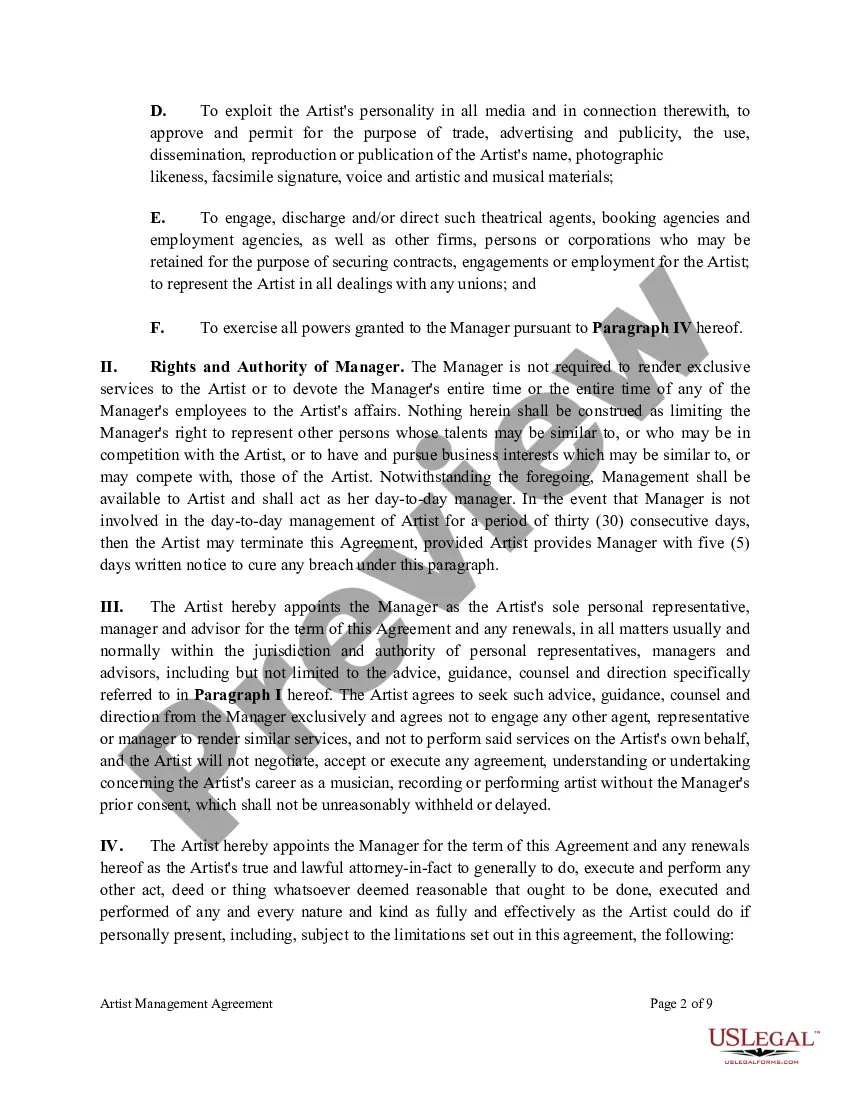
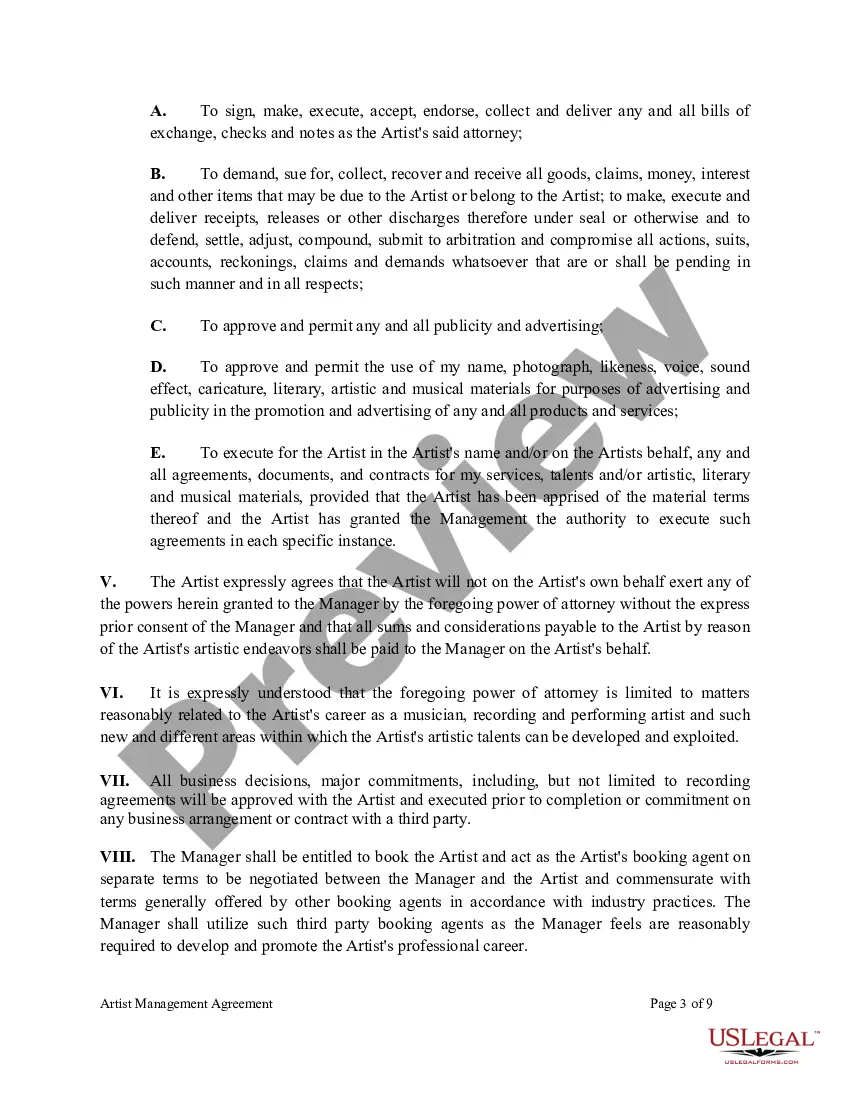
Like its name suggests, an exclusive contract is one that restricts a party from providing the same goods/services to others for a specified period of time. This can also be applied in the context where a company obtains exclusive rights and agrees to do business exclusively with another company.
A copyright exclusive license is one in which ownership in one or more of the copyright owner's rights is transferred by the copyright owner to a third party. A copyright nonexclusive license occurs when the owner retains ownership of the copyright and retains the right to license the same right to others.
During the Term of this Agreement, you will not enter into. any agreement which would interfere with the full and prompt performance of. your obligations hereunder, and you will not perform or render any services for. the purpose of making Records or Master Recordings for any Person other than. Company.
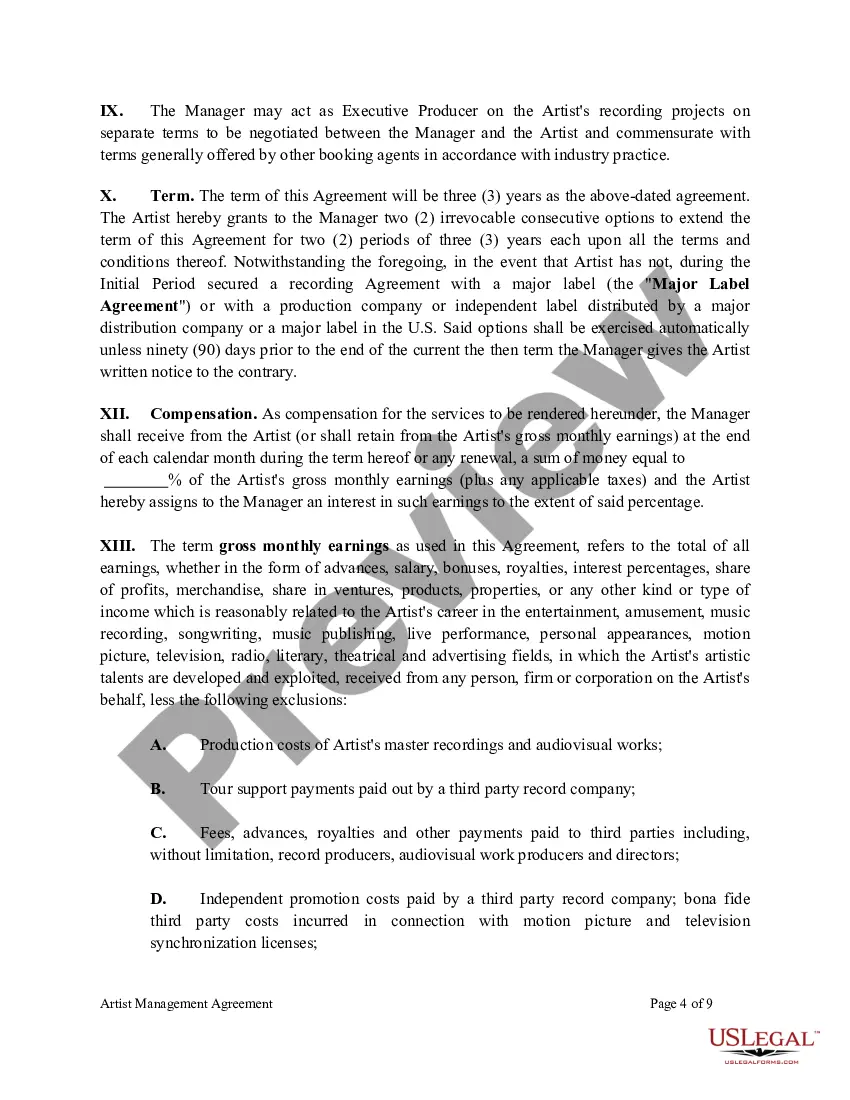
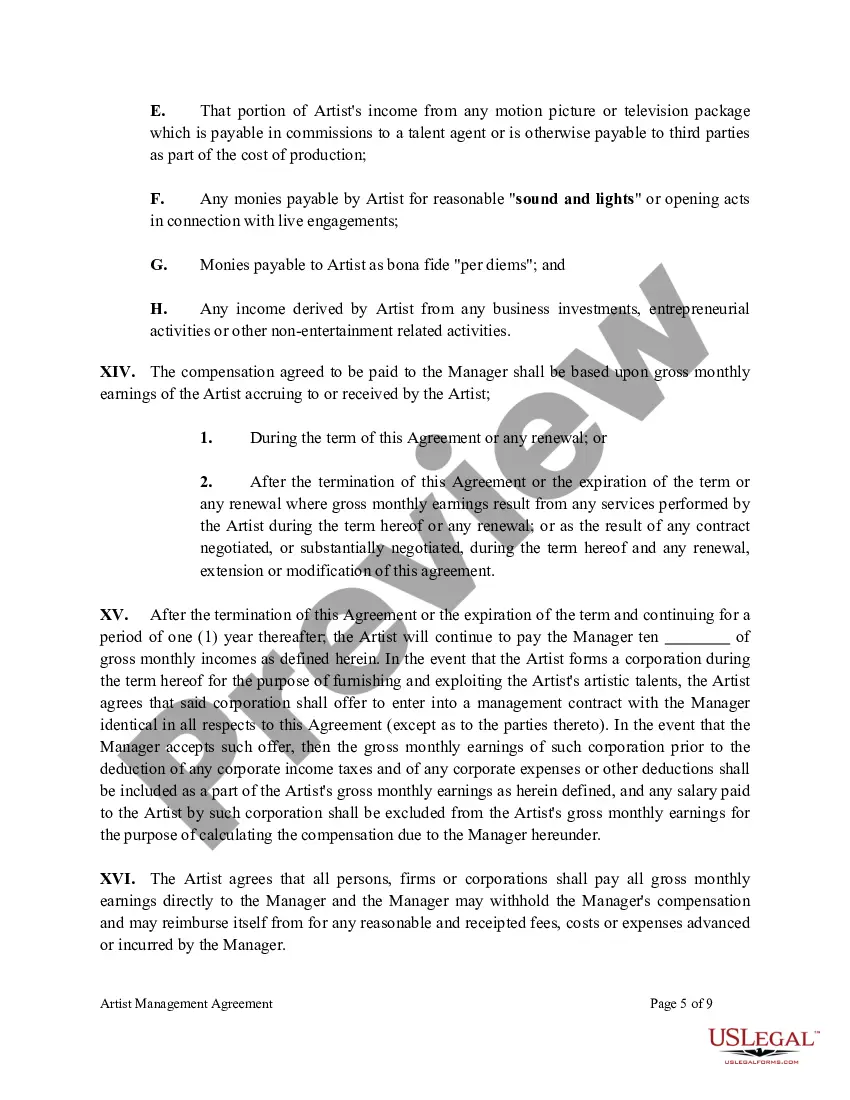
The Producer And Artist Production Agreement is used when a producer enters into a contract with an artist to produce one or more of the artist's recordings. This agreement works whether the artist will own and release the recordings or if the artist is signed to a record label.
exclusive agreement gives parties the freedom to form similar arrangements with multiple entities. Unlike exclusive contracts that lock you into working with just one partner, nonexclusive agreements open doors to numerous business relationships.
