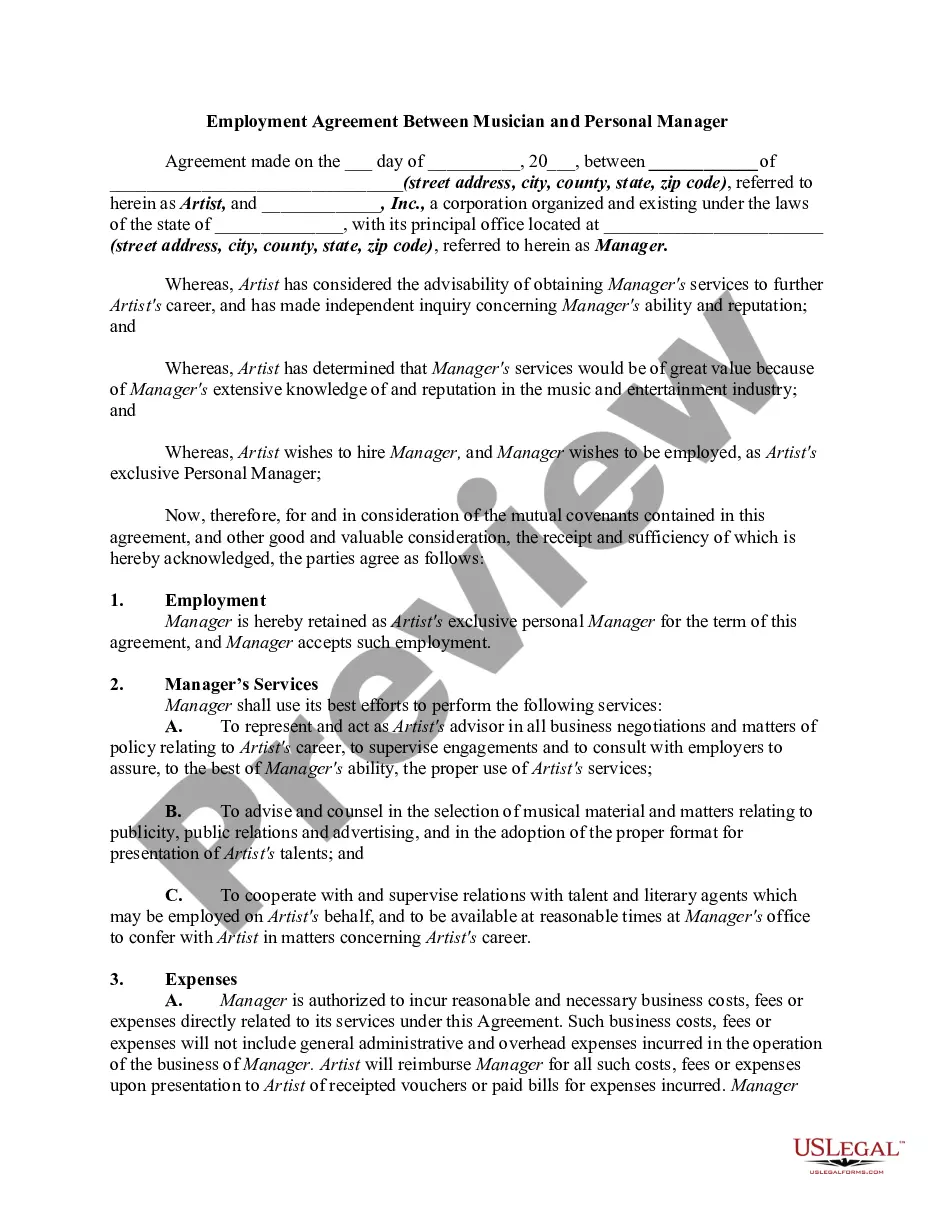
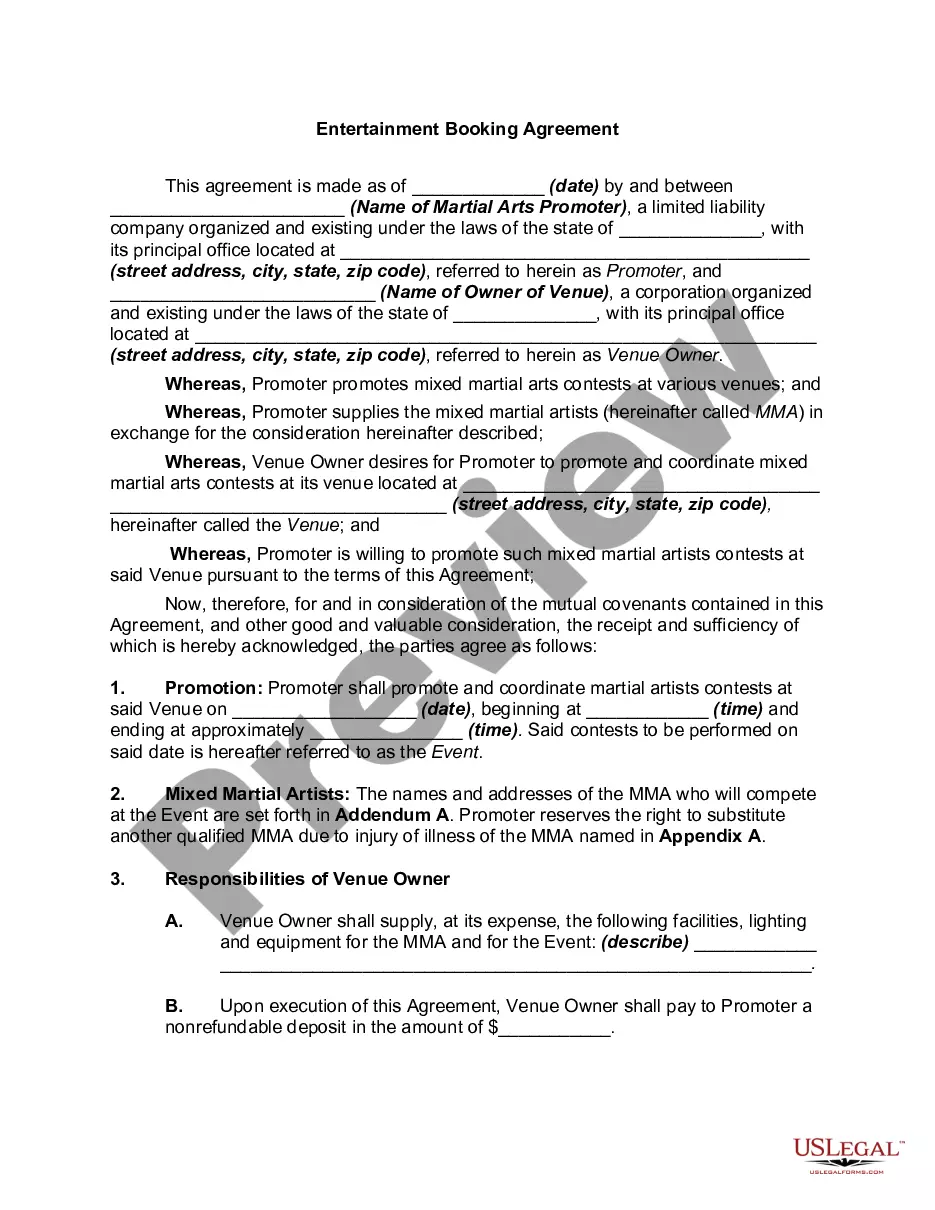
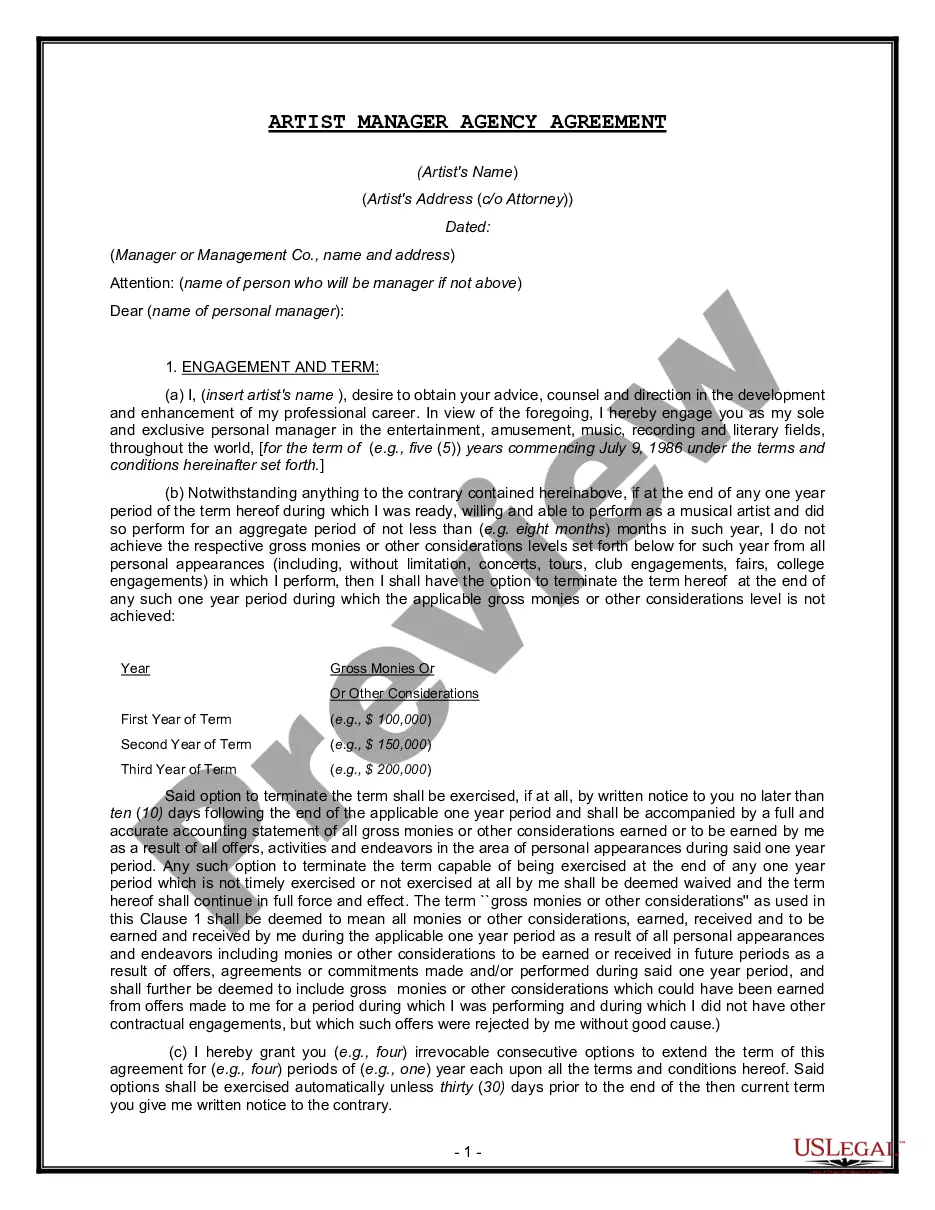
Talent Management Contract For Music Artist In Florida
Description

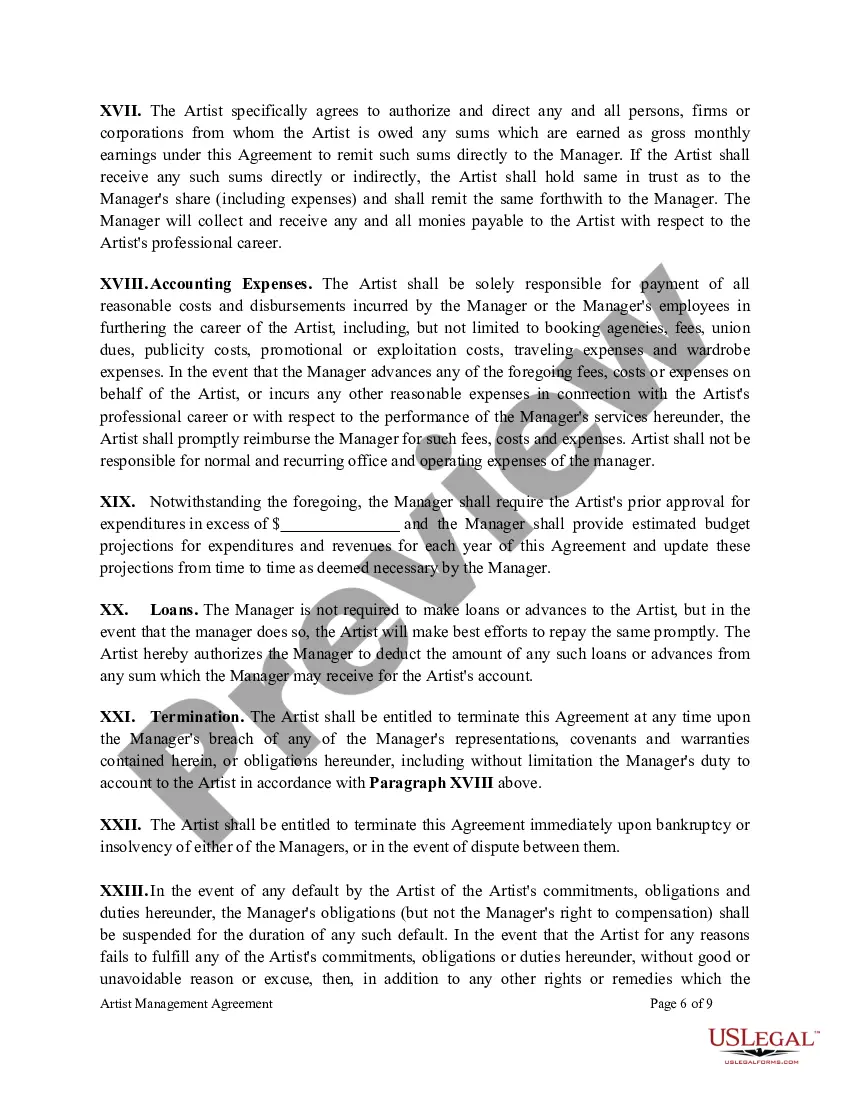
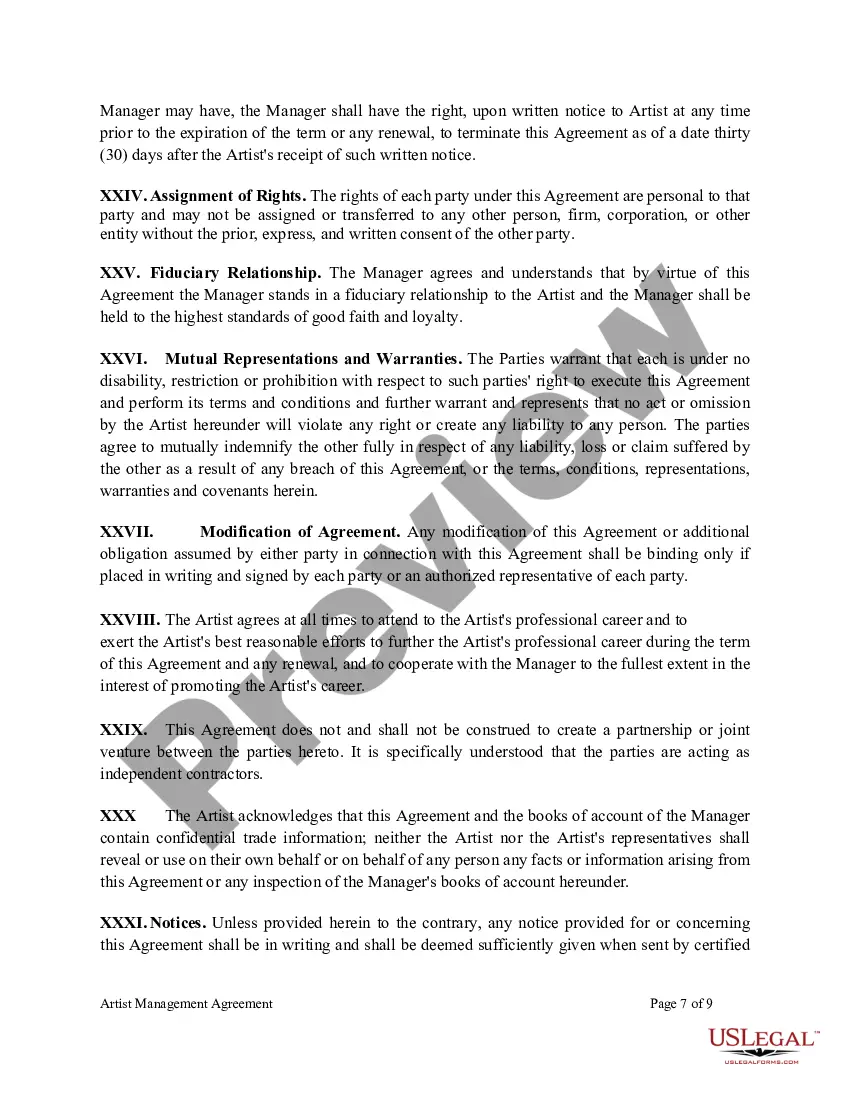
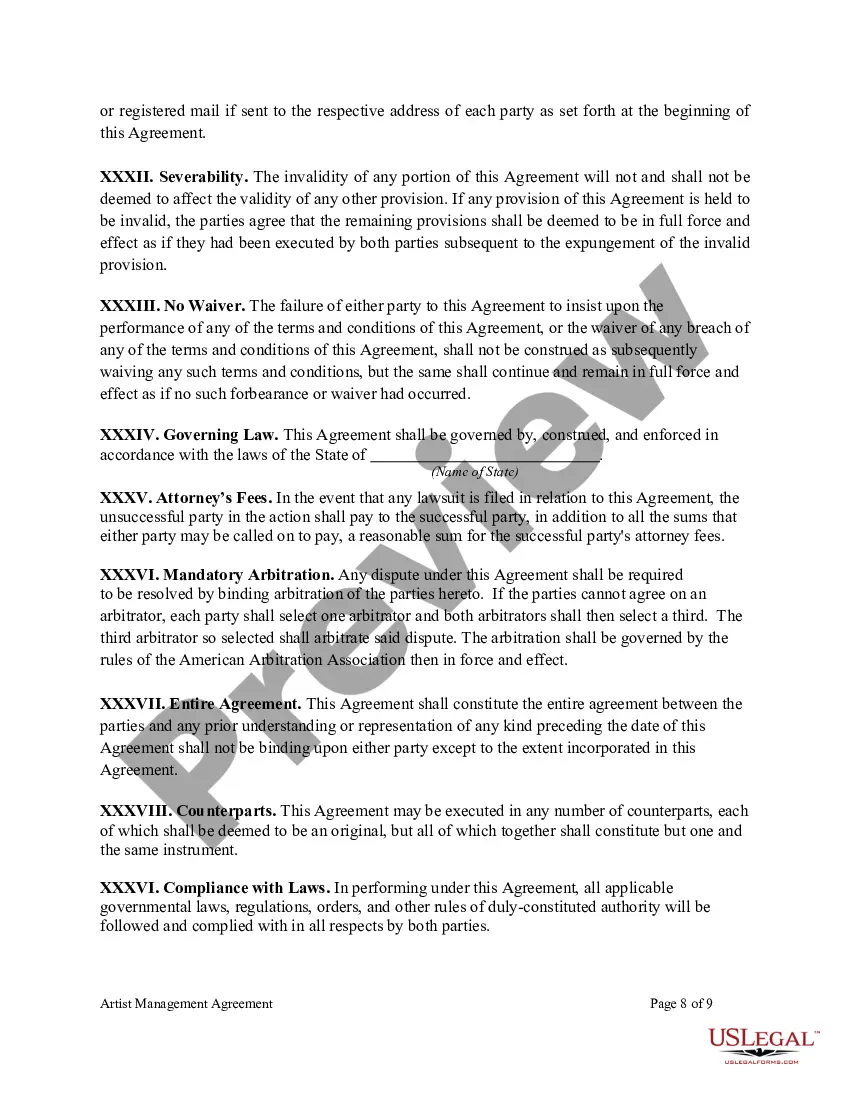
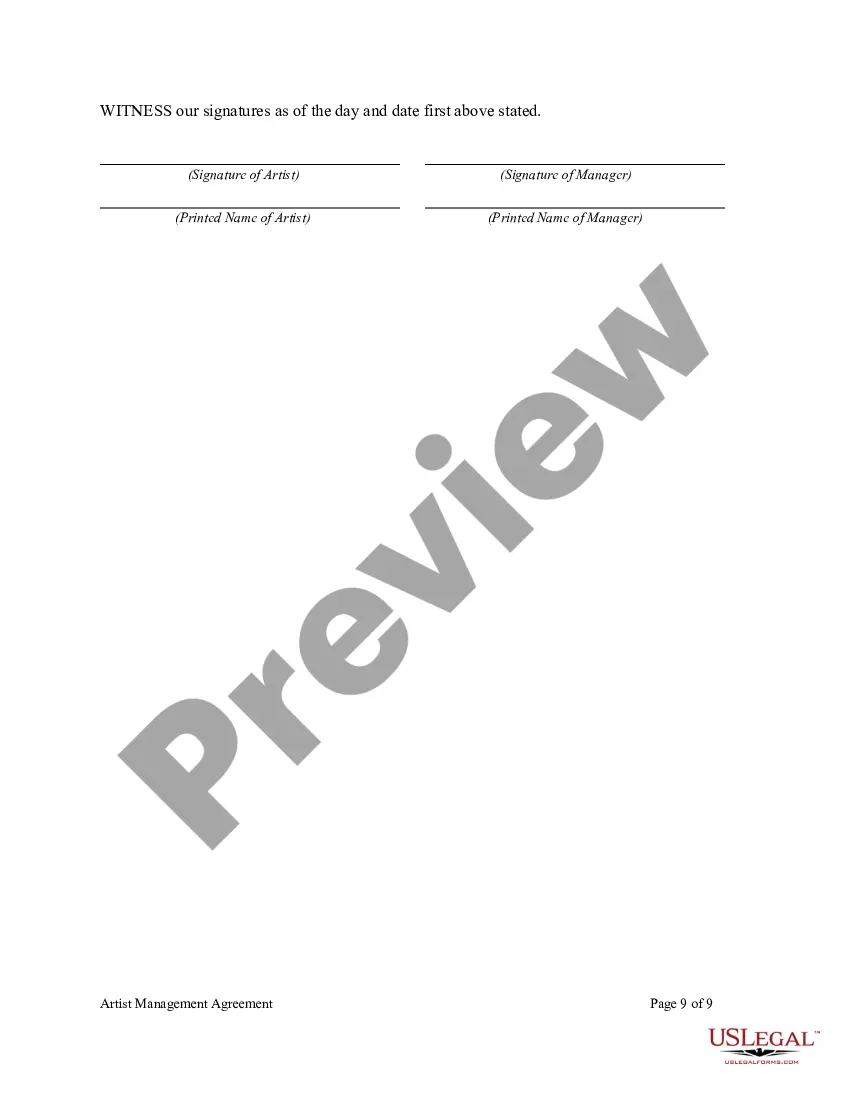
Get your form ready online
Our built-in tools help you complete, sign, share, and store your documents in one place.
Make edits, fill in missing information, and update formatting in US Legal Forms—just like you would in MS Word.
Download a copy, print it, send it by email, or mail it via USPS—whatever works best for your next step.
Sign and collect signatures with our SignNow integration. Send to multiple recipients, set reminders, and more. Go Premium to unlock E-Sign.
If this form requires notarization, complete it online through a secure video call—no need to meet a notary in person or wait for an appointment.
We protect your documents and personal data by following strict security and privacy standards.

Make edits, fill in missing information, and update formatting in US Legal Forms—just like you would in MS Word.

Download a copy, print it, send it by email, or mail it via USPS—whatever works best for your next step.

Sign and collect signatures with our SignNow integration. Send to multiple recipients, set reminders, and more. Go Premium to unlock E-Sign.

If this form requires notarization, complete it online through a secure video call—no need to meet a notary in person or wait for an appointment.

We protect your documents and personal data by following strict security and privacy standards.
Looking for another form?






Form popularity
FAQ
Networking: Attend music industry events, conferences, or concerts. Networking can often lead to personal connections with managers or their representatives. LinkedIn: Search for the artist's management team on LinkedIn. Professionals in the industry often maintain profiles that can provide contact details.
What do booking agents look for in musicians? Play live often & sell plenty of tickets. Have a killer live set. Build a network. Strong social media following. Mailing list subscribers. A professional and consistent music brand.
To get a talent agent, you need to find their email address and email them an EPK (Electronic Press Kit). Also do some cold calling by finding their phone numbers, but before you do that, try to learn something about them if you can find any info on them. Or, simply show up in their office and set a meeting with them.
How to become a talent manager Earn your degree. Many employers might require you to earn a high school diploma, while others may prefer a bachelor's degree. Gain experience in the entertainment industry. Network with industry professionals. Determine your niche. Join an organization for support.
Contract Overview. Briefly outline. Objectives. List objectives and desired outcomes here. Transitional arrangements and mobilisation. Briefly outline. Performance management. Briefly outline. Finance. Briefly outline. Governance arrangements. Communication with provider. Briefly outline. Communication with stakeholders.
Your Music Recording Contract should cover details like: Compensation and royalties. Where and when the album will be recorded. The album's release date. Who has creative control over specific elements of the album. The termination clause. The exclusive agreement clause. Dispute resolution. Promotional appearances.
As a general rule, managers take a percentage of all income generated by the artist in exchange for their management services. Commission rates typically range from 15-25% of the artist's gross income from: Recording royalties: Sales, streaming and licensing of recorded music.
Managers' commissions are typically between 15 to 20% of an artist's gross income. Whether it's 15% or 20% really depends on the level of the band and the bargaining power of each party. I've seen some net deals, but they are extremely rare. That being said, I always push for a net commission on merchandise.
Music Management Contracts Explained Most managers receive a percentage of the artist's gross income, typically between 15-30 percent. Before signing a management contract, artists should thoroughly review the terms and consider seeking legal advice.
