Music Contract Examples In California
Description

Get your form ready online
Our built-in tools help you complete, sign, share, and store your documents in one place.
Make edits, fill in missing information, and update formatting in US Legal Forms—just like you would in MS Word.
Download a copy, print it, send it by email, or mail it via USPS—whatever works best for your next step.
Sign and collect signatures with our SignNow integration. Send to multiple recipients, set reminders, and more. Go Premium to unlock E-Sign.
If this form requires notarization, complete it online through a secure video call—no need to meet a notary in person or wait for an appointment.
We protect your documents and personal data by following strict security and privacy standards.

Make edits, fill in missing information, and update formatting in US Legal Forms—just like you would in MS Word.

Download a copy, print it, send it by email, or mail it via USPS—whatever works best for your next step.

Sign and collect signatures with our SignNow integration. Send to multiple recipients, set reminders, and more. Go Premium to unlock E-Sign.

If this form requires notarization, complete it online through a secure video call—no need to meet a notary in person or wait for an appointment.

We protect your documents and personal data by following strict security and privacy standards.
Looking for another form?







Form popularity
FAQ
When a producer offers a production contract to an artist, that artist is then signed to that producer. The producer can then go to the label and get the artist signed through the producer. Producers that offer production contracts will develop an artist, bring them into the studio and work them hard.
Ok, good. This week, major labels banded together to unveil a revolutionary new type of record deal: the 720 deal. It follows the same basic principles as the 360 deal, but with one groundbreaking twist: record labels are now also allowed to take a cut out of the incomes of family members of signed musicians.
Your Music Recording Contract should cover details like: Compensation and royalties. Where and when the album will be recorded. The album's release date. Who has creative control over specific elements of the album. The termination clause. The exclusive agreement clause. Dispute resolution. Promotional appearances.
A profit share deal, sometimes also referred to as a joint venture, is as the name suggests a deal between two or more parties who share the profit of a project. A common split of the profit is an equal 50/50 split between the label and artist, but a higher split may be agreed in favour of either party.
Recording Contracts As part of this agreement, the label typically pays for the artist's marketing, promotion, and music distribution at every step of the recording process. In return, the artist commits to providing the label with a set quantity of albums or tracks within a given time.
What Is the Basic Structure of a Contract? Section 1: Key Players. This section should include who the contract involves, the companies or individuals and the date on which the agreement was made. Section 2: Agreement. Section 3: Consideration. Section 4: Terms and Conditions. Section 5: Signature.
The industry standard is 50/50 , our's is 70/30 – that's 70% to Artist and only 30% to Company but when the Contract ends you retain 100%. We do not own anything. Q: On a Record and Distribution Contract, do I retain my Publishing rights and Copyrights?
The 360 deal is one of the most common, and most misunderstood, contracts in the industry. Many hate it on sight, assuming that it's designed to solely screw over the artist. However, it's not the predatory contract that many assume it to be.
Traditional Record Deal In this exchange, the record label will grant the artist a hefty advance for their masters' ownership and 80% of their royalties. I have never seen an artist get more than 22% of their royalties, and typically it's much lower than that.
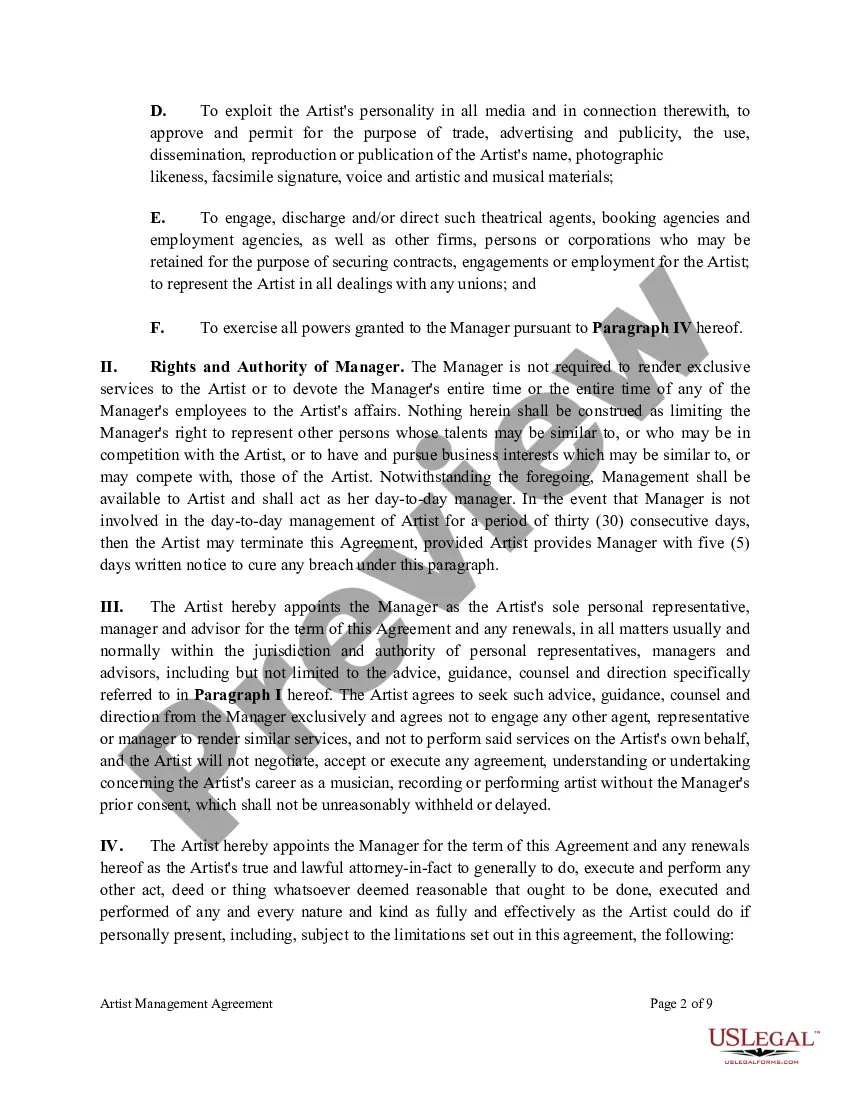
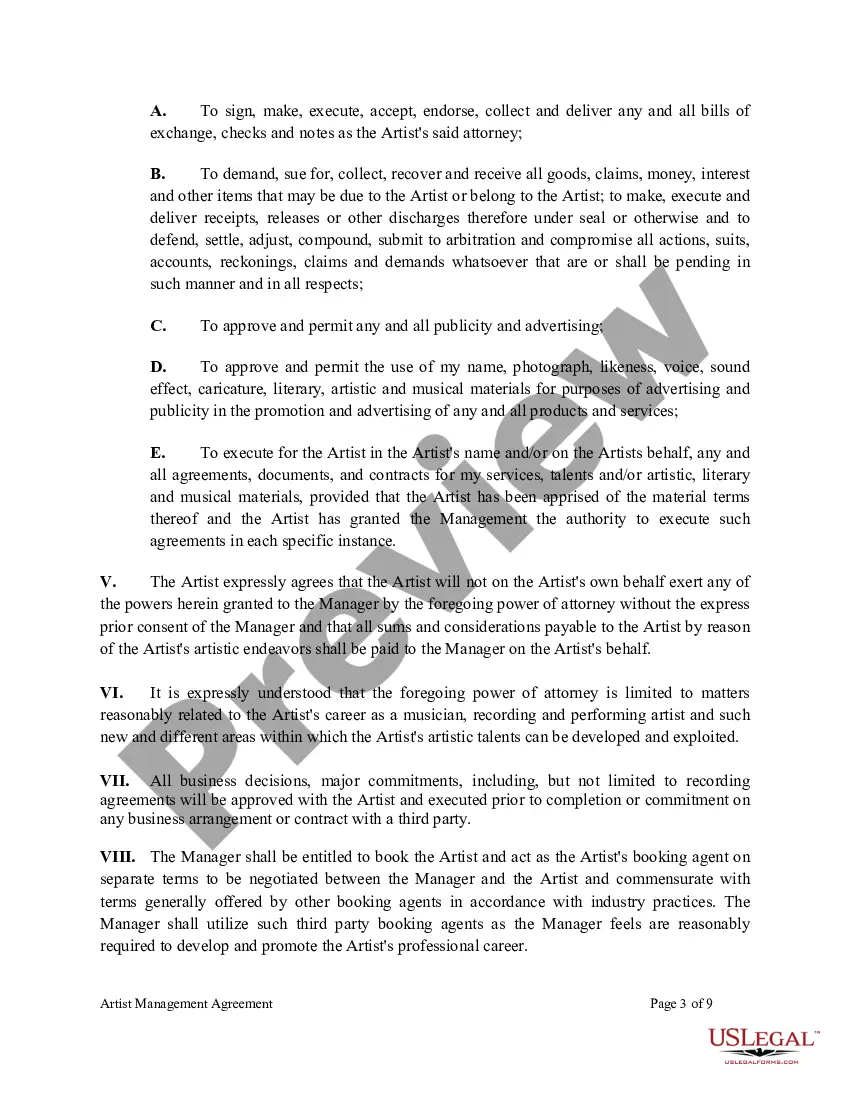
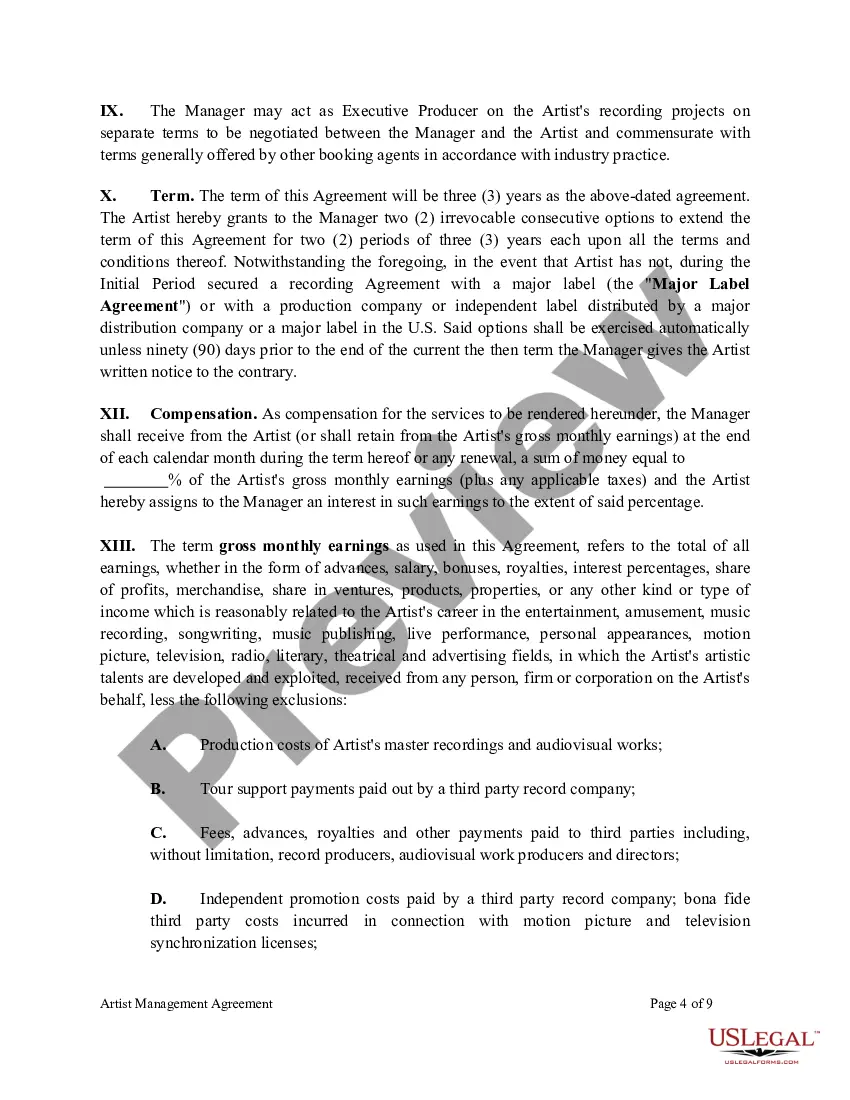
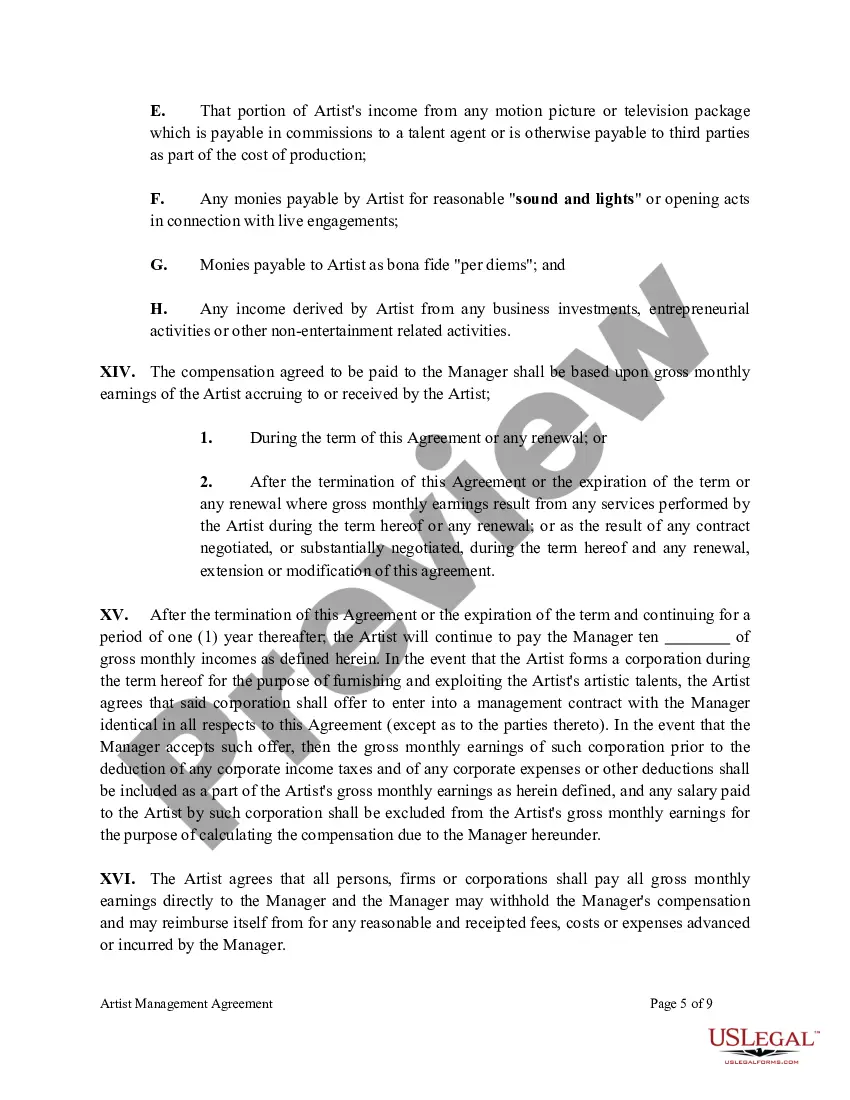
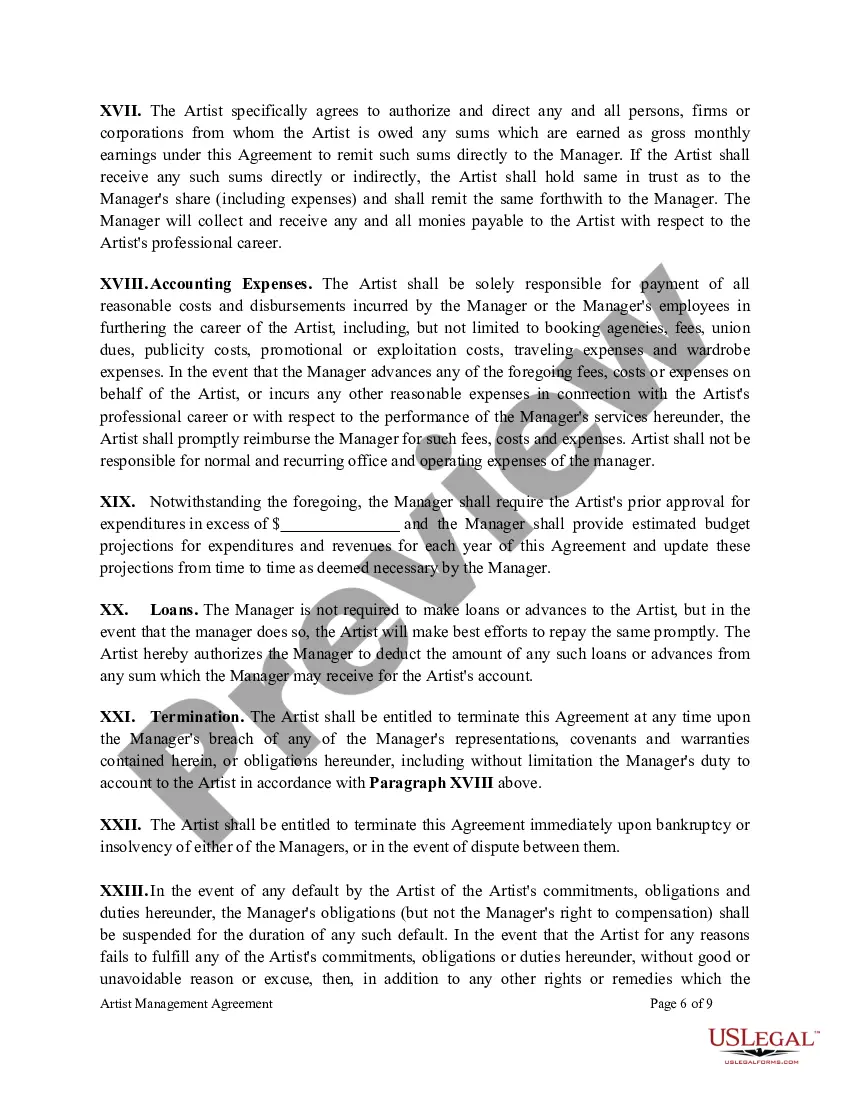
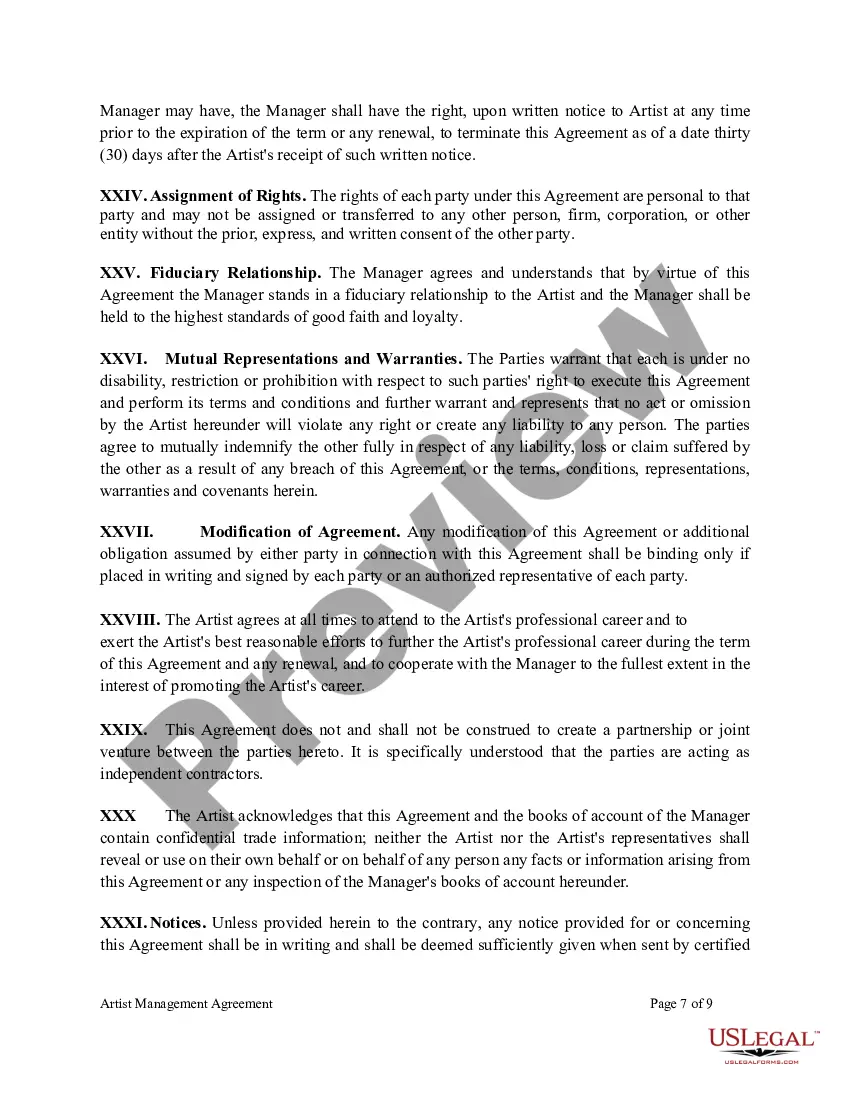
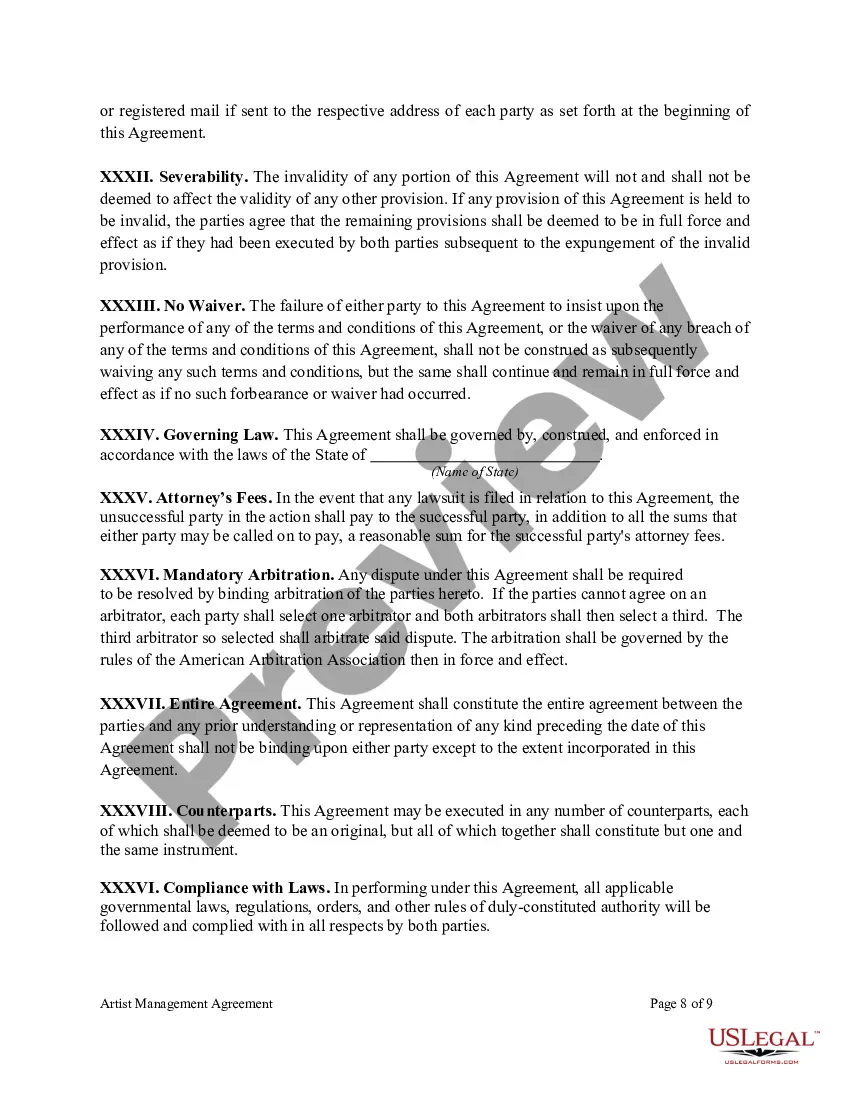
Contracts like an artist agreement help avoid miscommunications and confusion over the rights and responsibilities of both parties involved. Artist agreements typically include availability expectations, performance markers, and licensing or ownership rights of the works created during the partnership.
