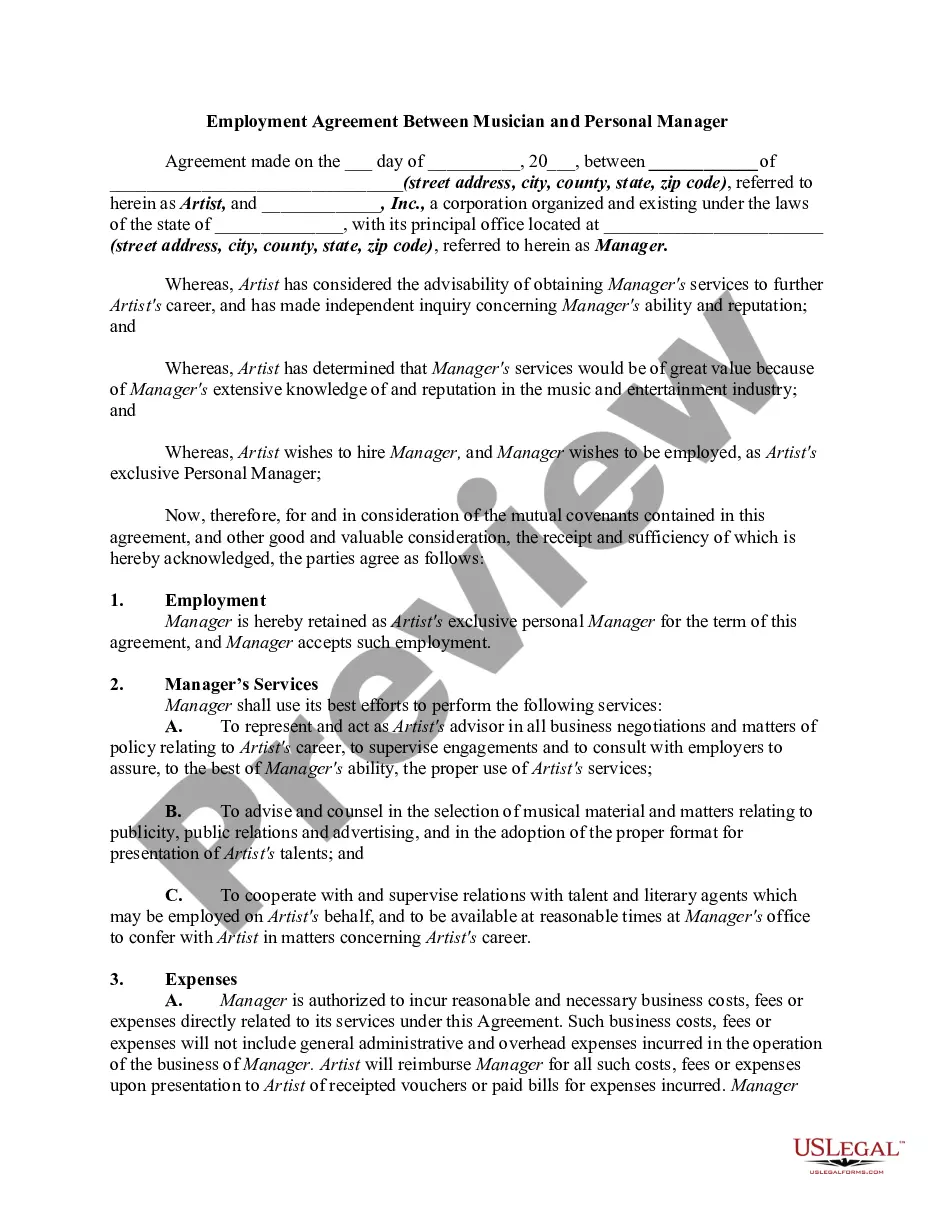
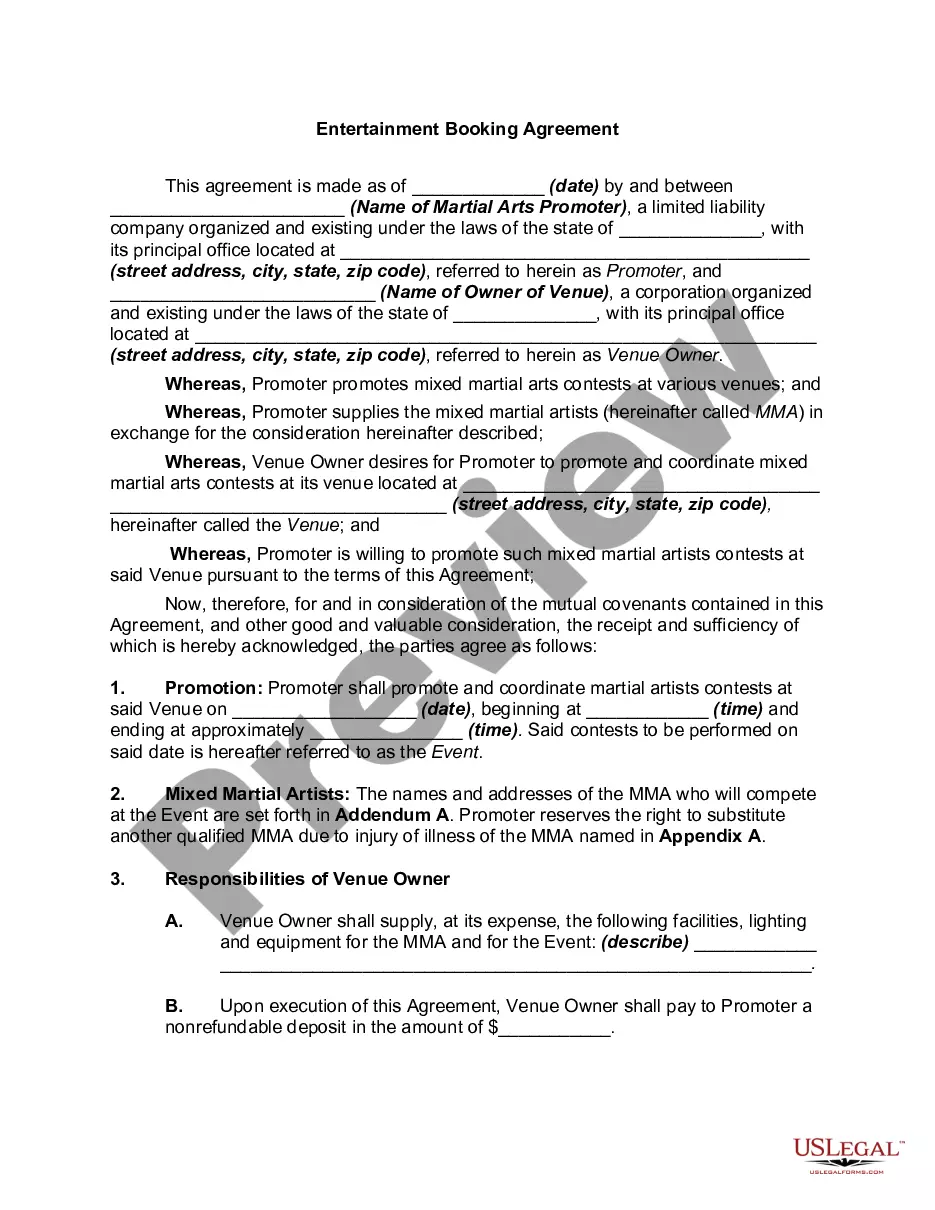
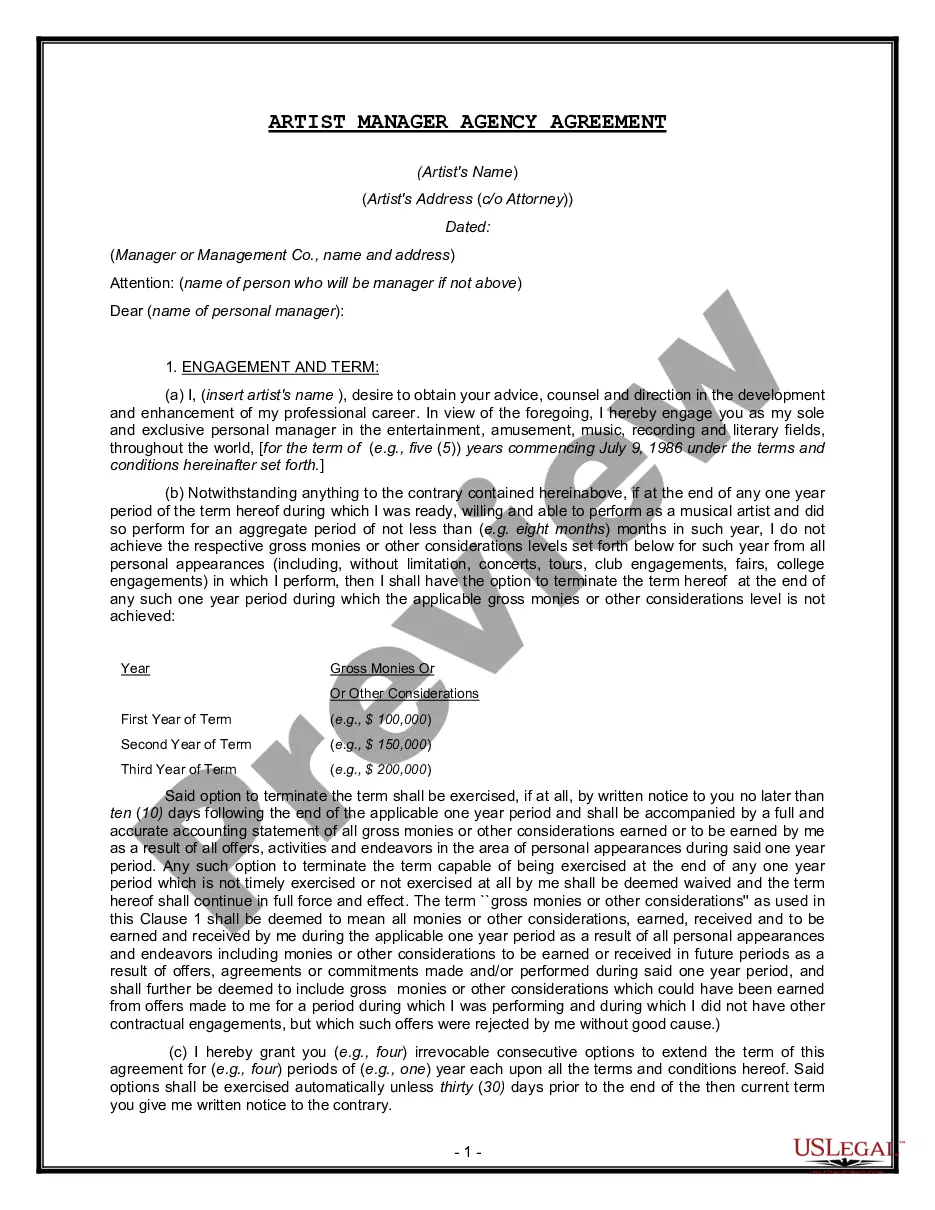
Artist Agreement Form For Car In Alameda
Description

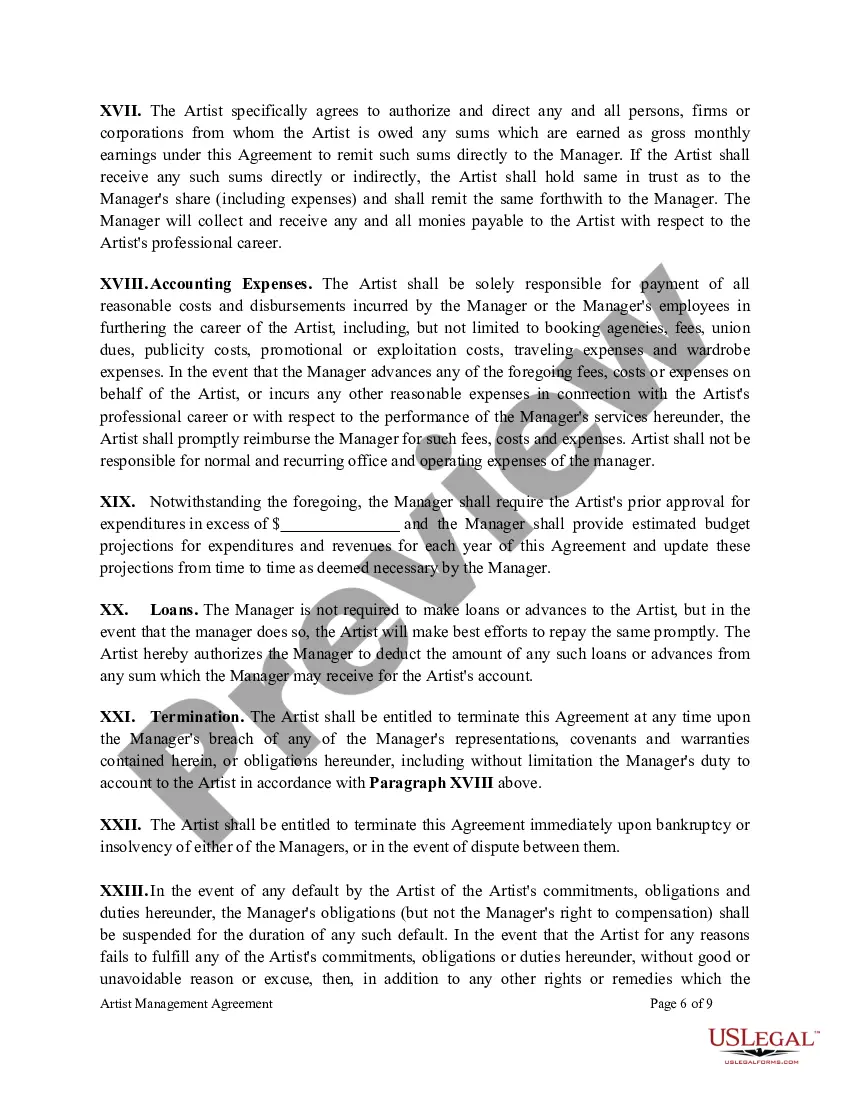
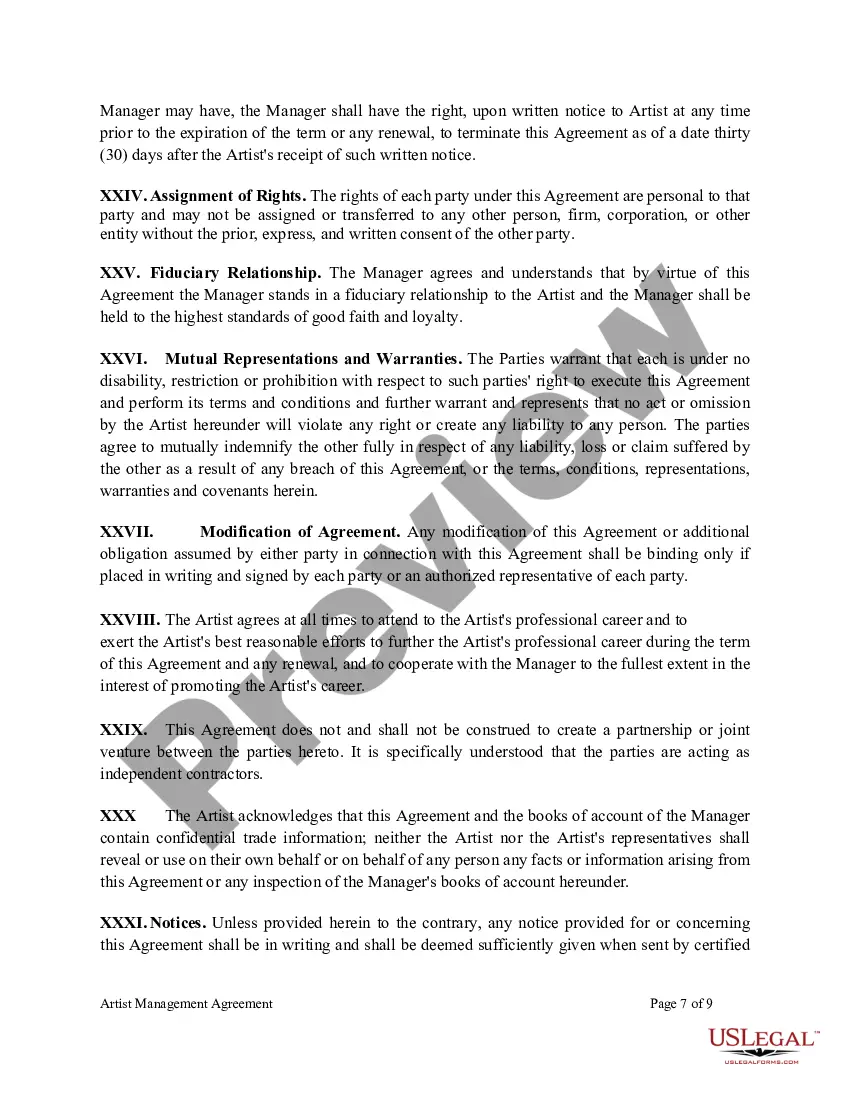
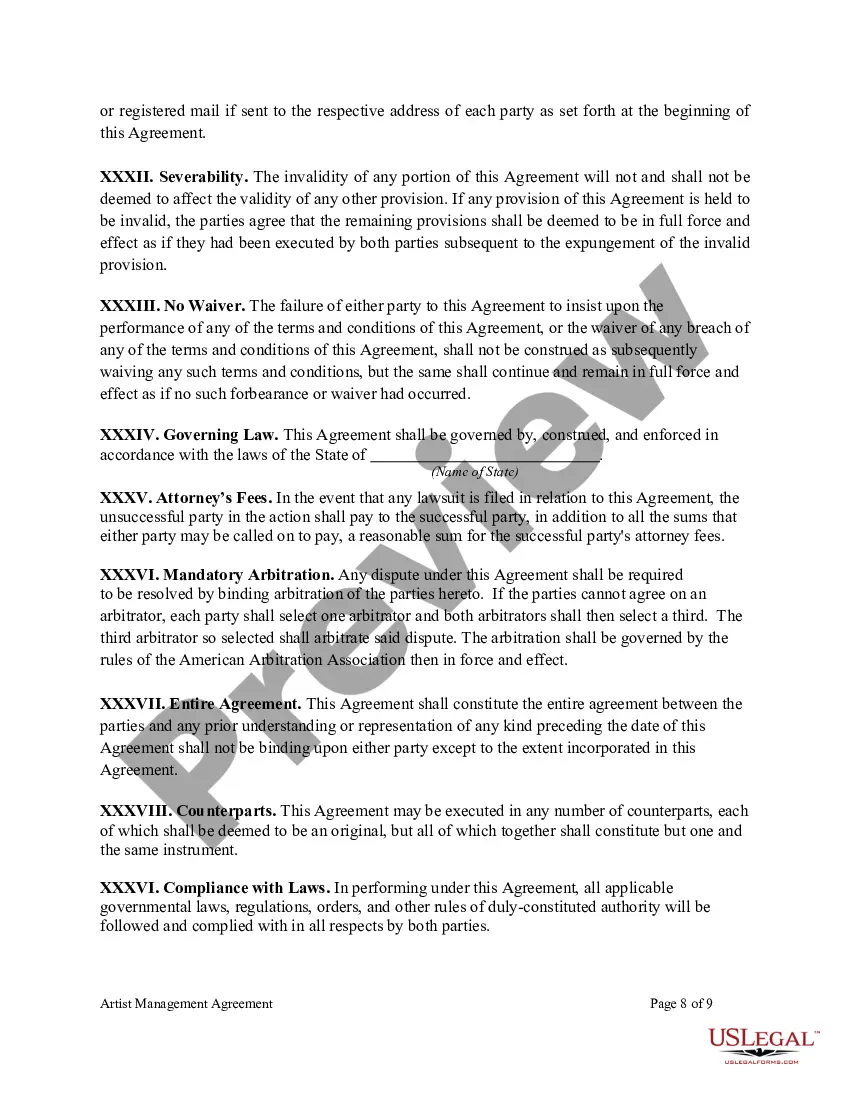
Get your form ready online
Our built-in tools help you complete, sign, share, and store your documents in one place.
Make edits, fill in missing information, and update formatting in US Legal Forms—just like you would in MS Word.
Download a copy, print it, send it by email, or mail it via USPS—whatever works best for your next step.
Sign and collect signatures with our SignNow integration. Send to multiple recipients, set reminders, and more. Go Premium to unlock E-Sign.
If this form requires notarization, complete it online through a secure video call—no need to meet a notary in person or wait for an appointment.
We protect your documents and personal data by following strict security and privacy standards.

Make edits, fill in missing information, and update formatting in US Legal Forms—just like you would in MS Word.

Download a copy, print it, send it by email, or mail it via USPS—whatever works best for your next step.

Sign and collect signatures with our SignNow integration. Send to multiple recipients, set reminders, and more. Go Premium to unlock E-Sign.

If this form requires notarization, complete it online through a secure video call—no need to meet a notary in person or wait for an appointment.

We protect your documents and personal data by following strict security and privacy standards.
Looking for another form?

Form popularity
FAQ
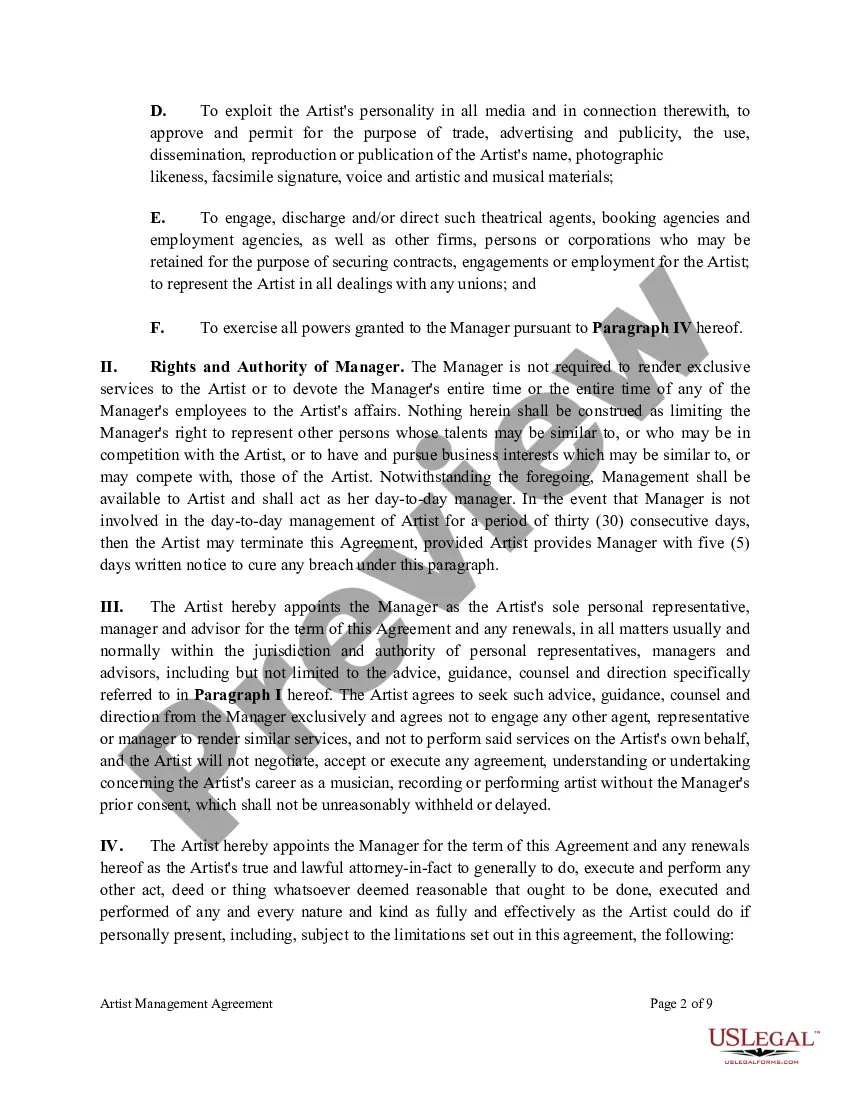
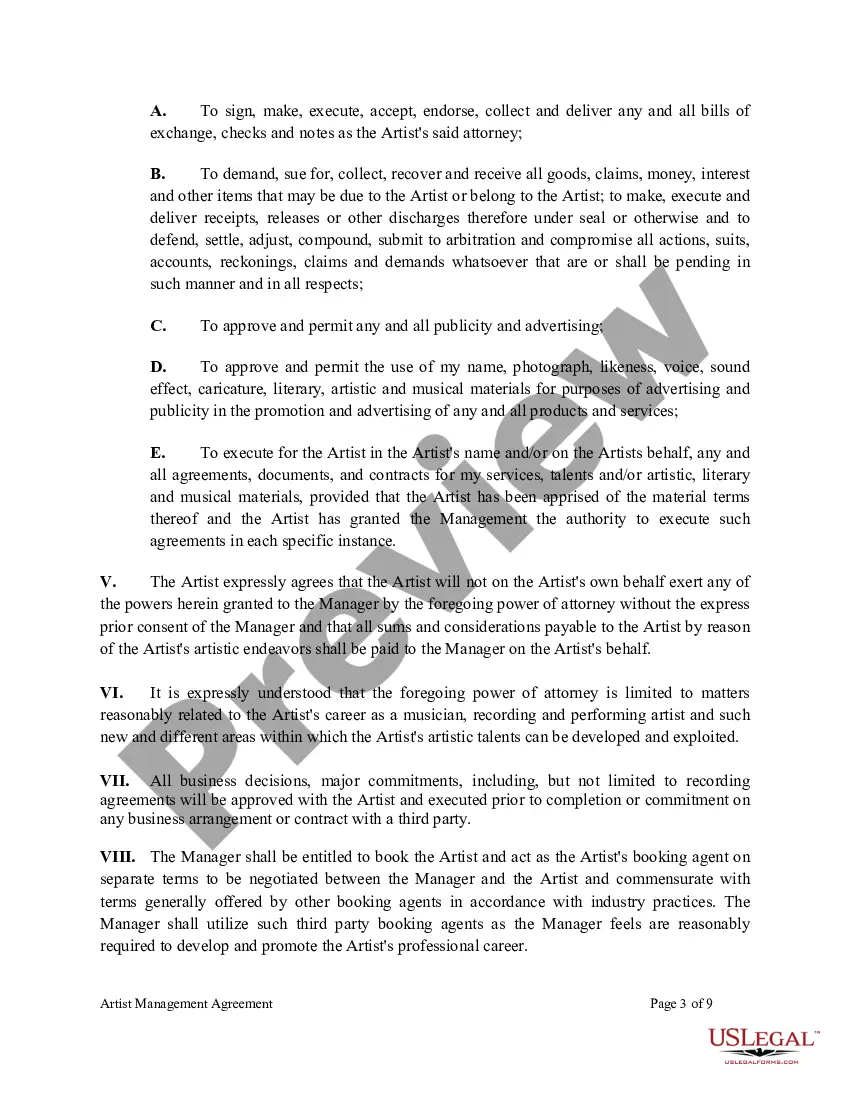
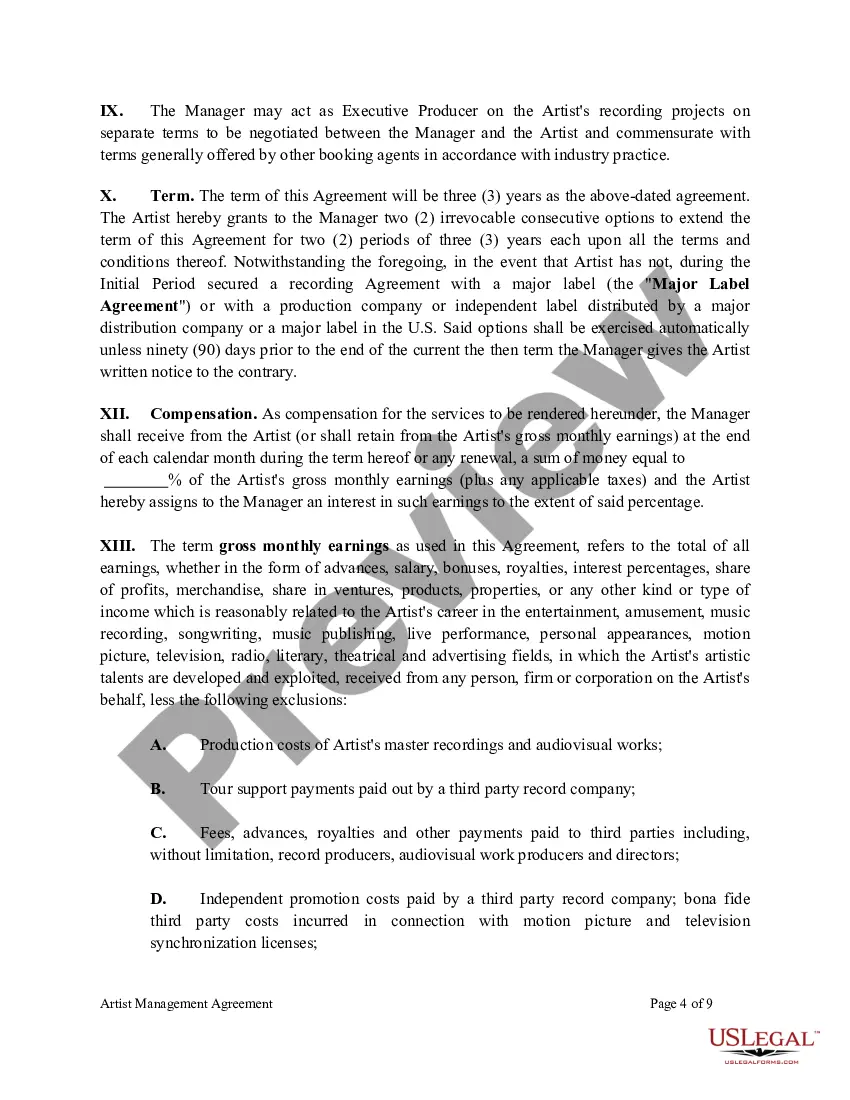
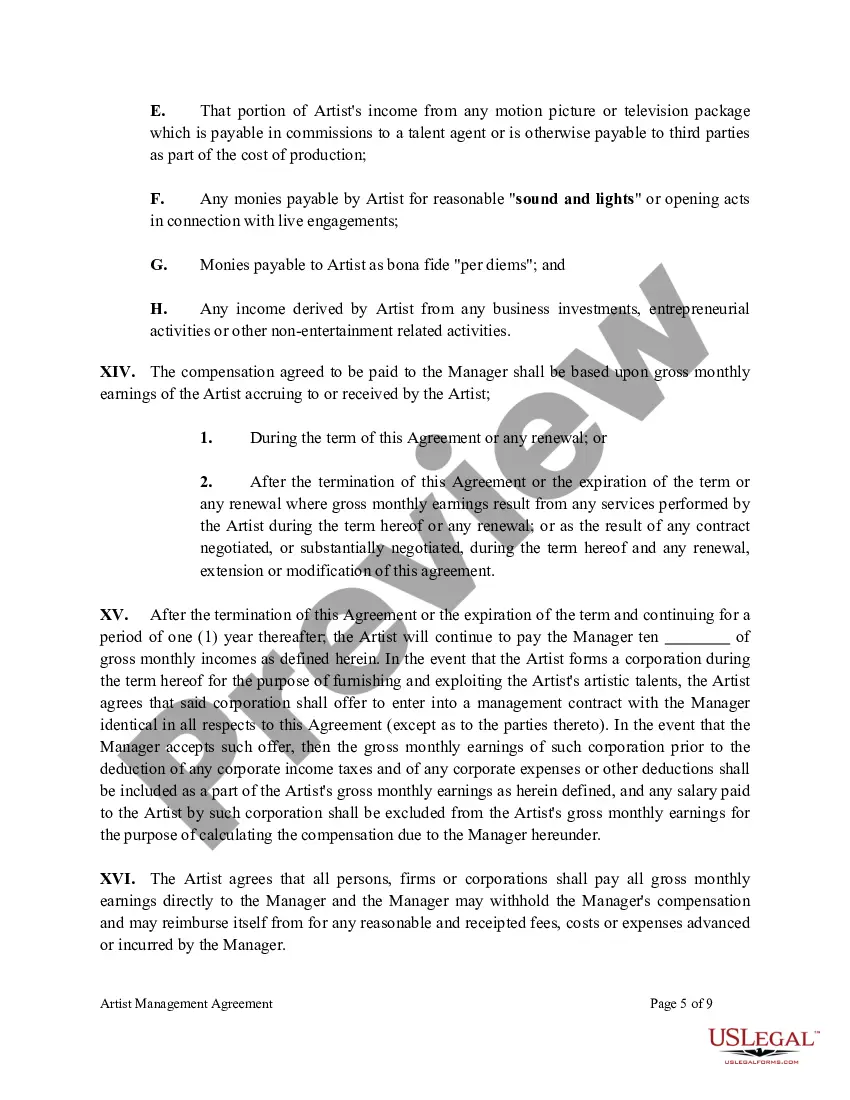
Important clauses in the artist agreement Parties. This clause defines the parties to the agreement, one would be the producer and the other would be the artist. Project. Payment/compensation. Service/work by an artist/engagement. Terms and conditions. Term/duration. Rights of the parties. Artists obligations.
To help you get started, take a look at a few basic components to include in your contract so you can better protect your art business. Client Info. Project Info and Terms. Project Timeline. Costs and Payment Terms. Itemization. Artist's Rights. Cancellation Terms. Acceptance of Agreement.
Contracts like an artist agreement help avoid miscommunications and confusion over the rights and responsibilities of both parties involved. Artist agreements typically include availability expectations, performance markers, and licensing or ownership rights of the works created during the partnership.
Artist contracts usually include details regarding payment terms, compensation rates, royalties, and commissions. A contract also protects the intellectual property of the artist and may include rights to license, use, and exhibit the artwork or performance created.
I would recommend introducing yourself as an artist and have a portfolio ready. Be respectful and let them know you are seeking representation, ask about possible opportunities, and if they would like to see a portfolio, show them. Most galleries in my experience have waitlists, but this is normal.
A commission contract outlines the conditions for an artist to create a commissioned work. Contracts generally specify project dates, payment schedules, notable project requirements, or constraints. They also build out scheduled check-in points for the artist and commissioner.
A contract is mandatory for any commission. Write down every detail in the contract, such as the size and media of the artwork, your compensation, due dates for payments, who is responsible for framing, installation, delivery of the artwork, etc. If your client balks at signing a contract, WALK AWAY.
Commission Artist Salary Annual SalaryHourly Wage Top Earners $107,000 $51 75th Percentile $88,500 $43 Average $59,432 $29 25th Percentile $30,500 $15
The “Artist's Contract,” or “The Projansky Agreement,” as it is known in art and legal circles respectively, is a model contract for artists to use when selling their work or transferring ownership. Its most enduringly controversial aspect is the inclusion of an artist's resale royalty.
To help you get started, take a look at a few basic components to include in your contract so you can better protect your art business. Client Info. Project Info and Terms. Project Timeline. Costs and Payment Terms. Itemization. Artist's Rights. Cancellation Terms. Acceptance of Agreement.