Assets Asset Purchase For Credit In Hennepin
Description
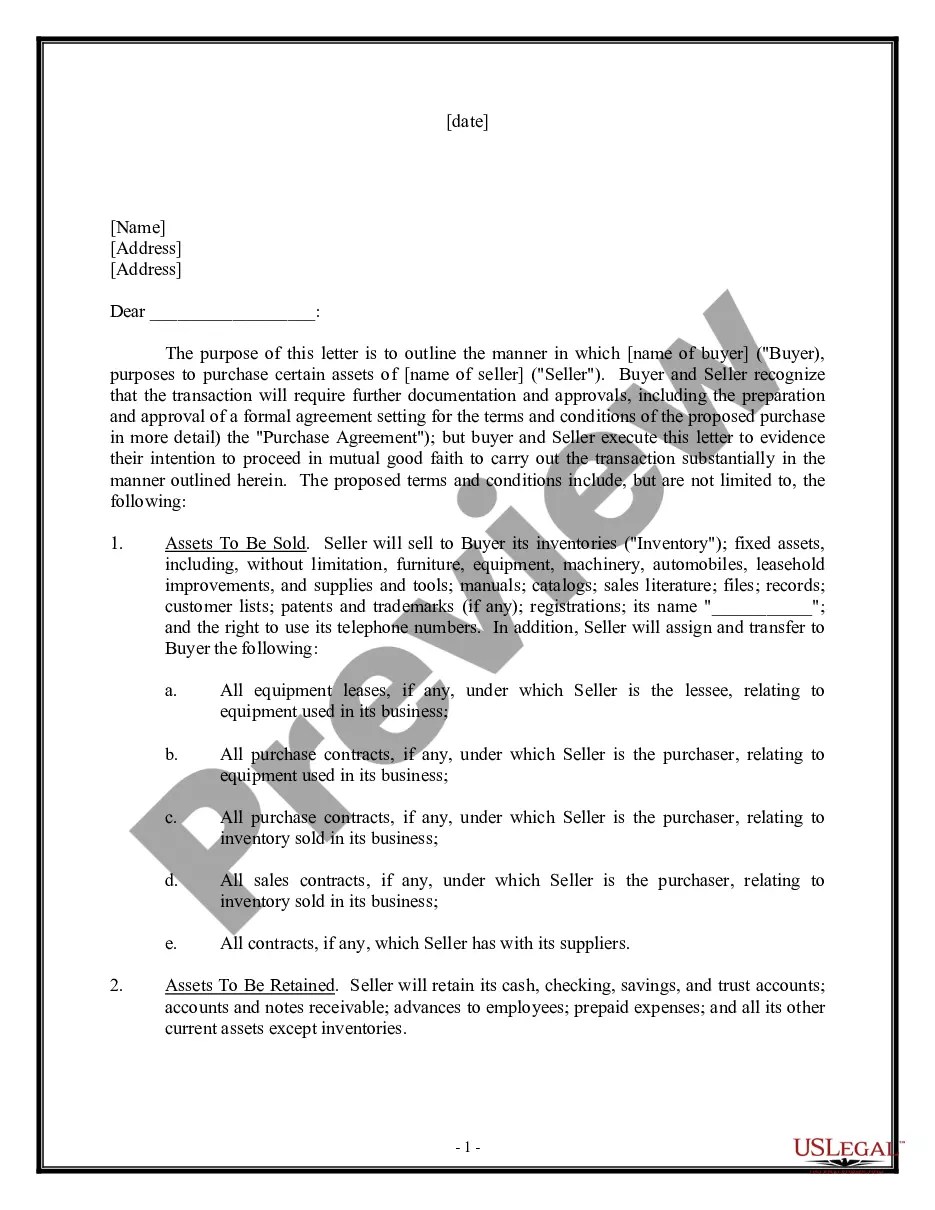
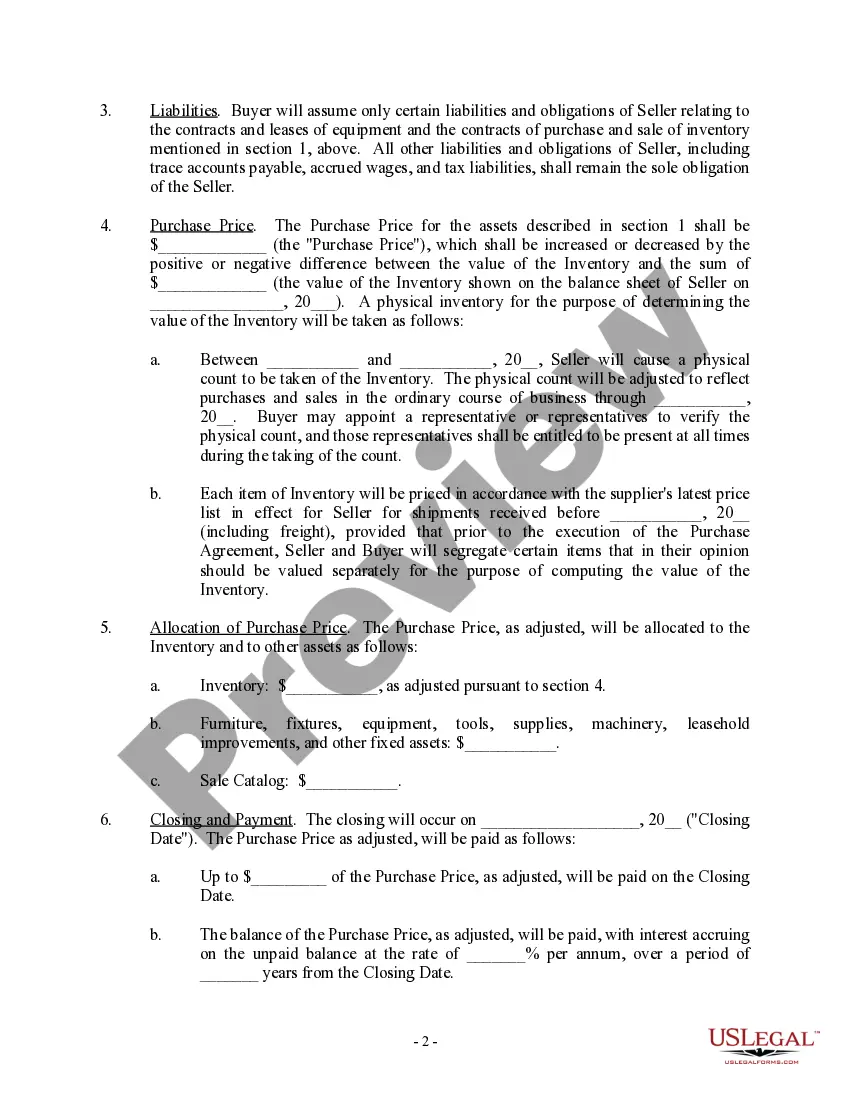
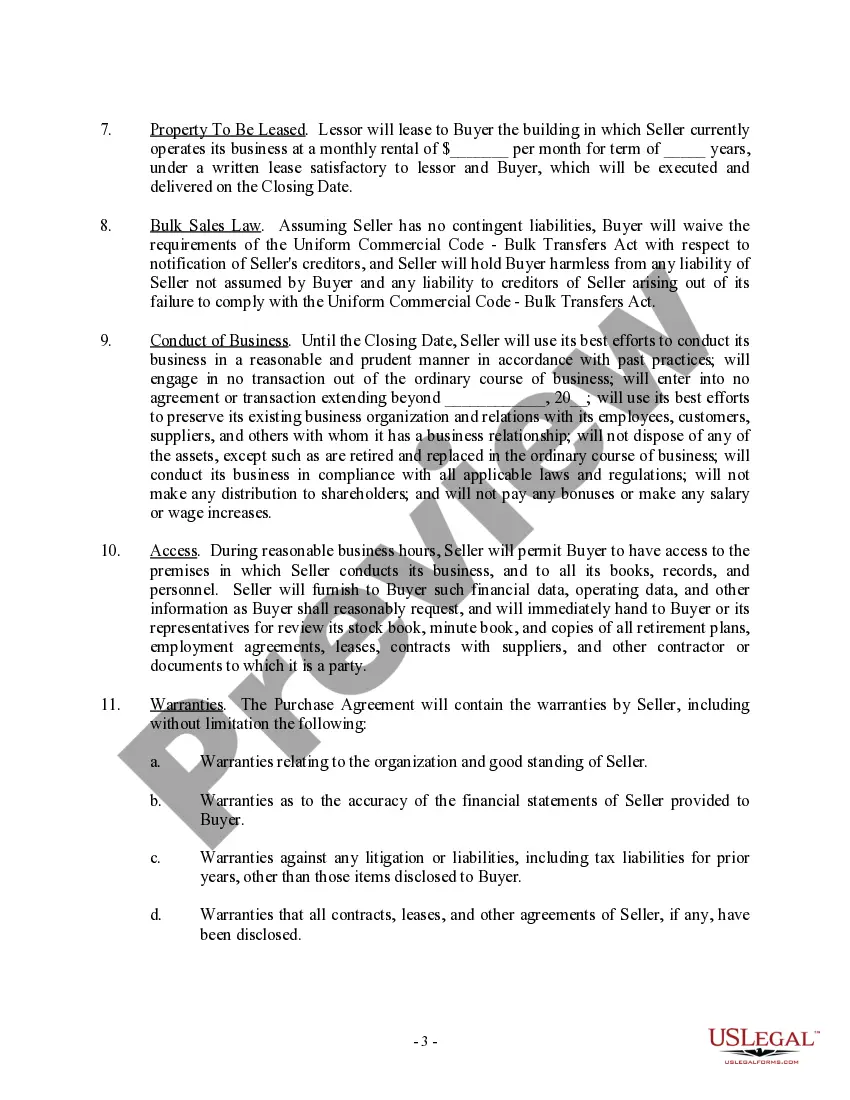
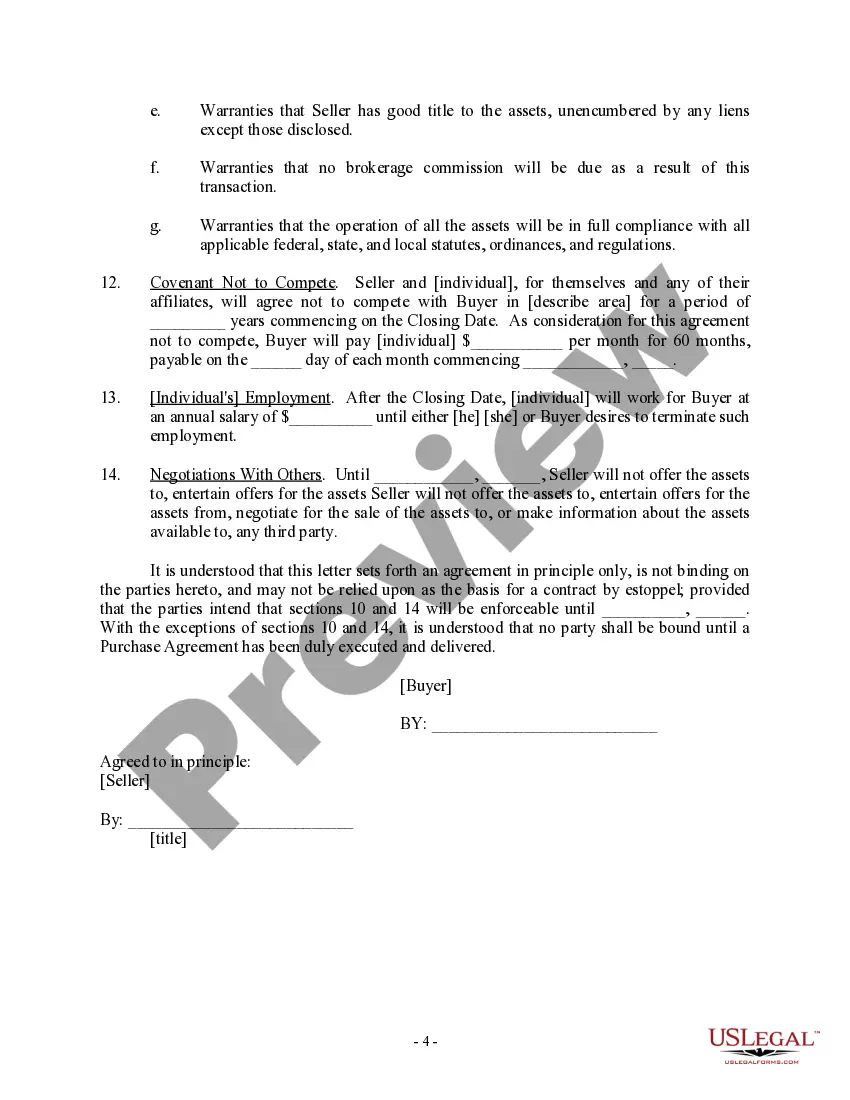
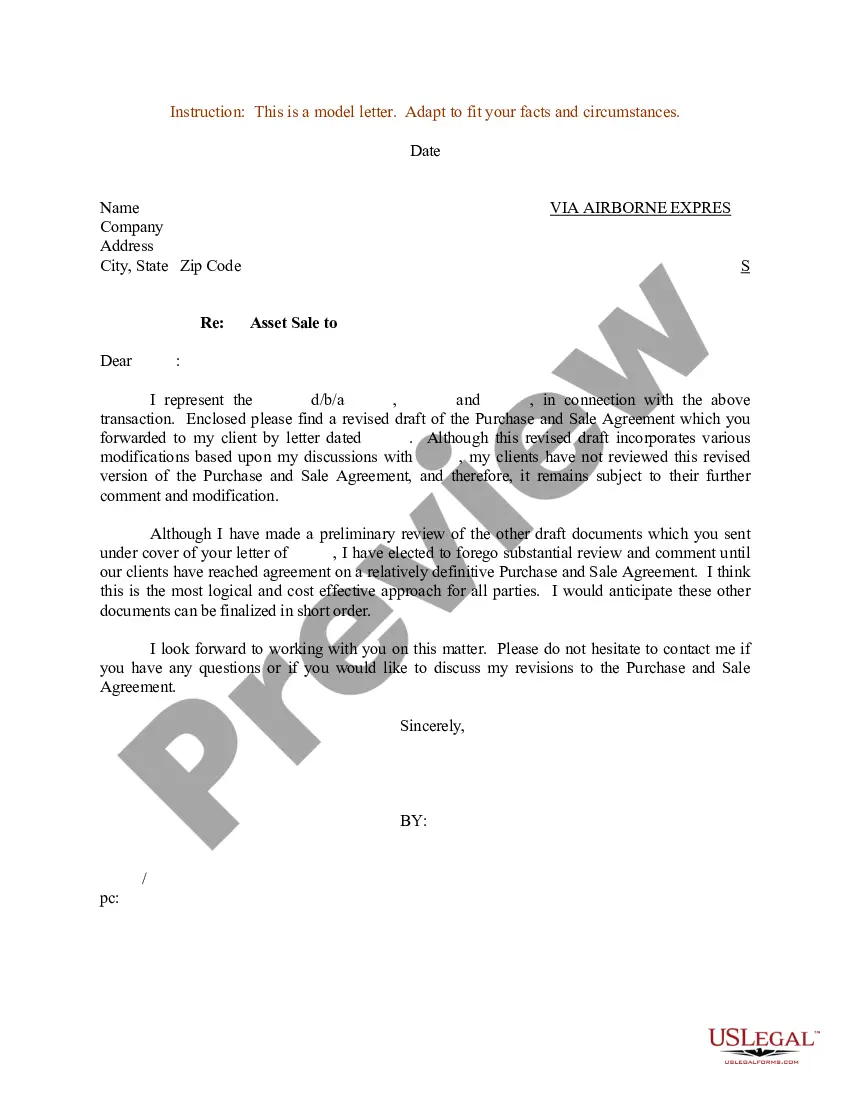
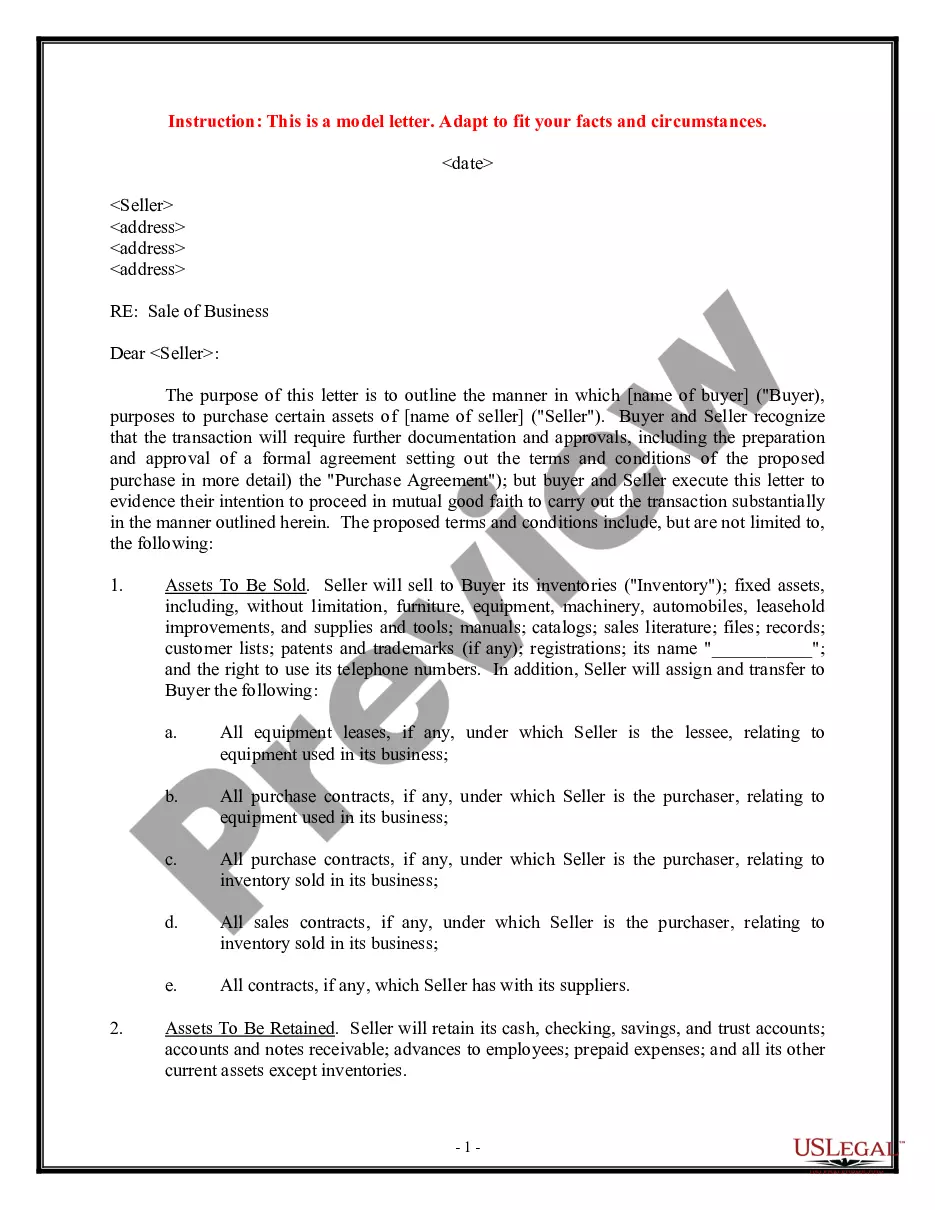
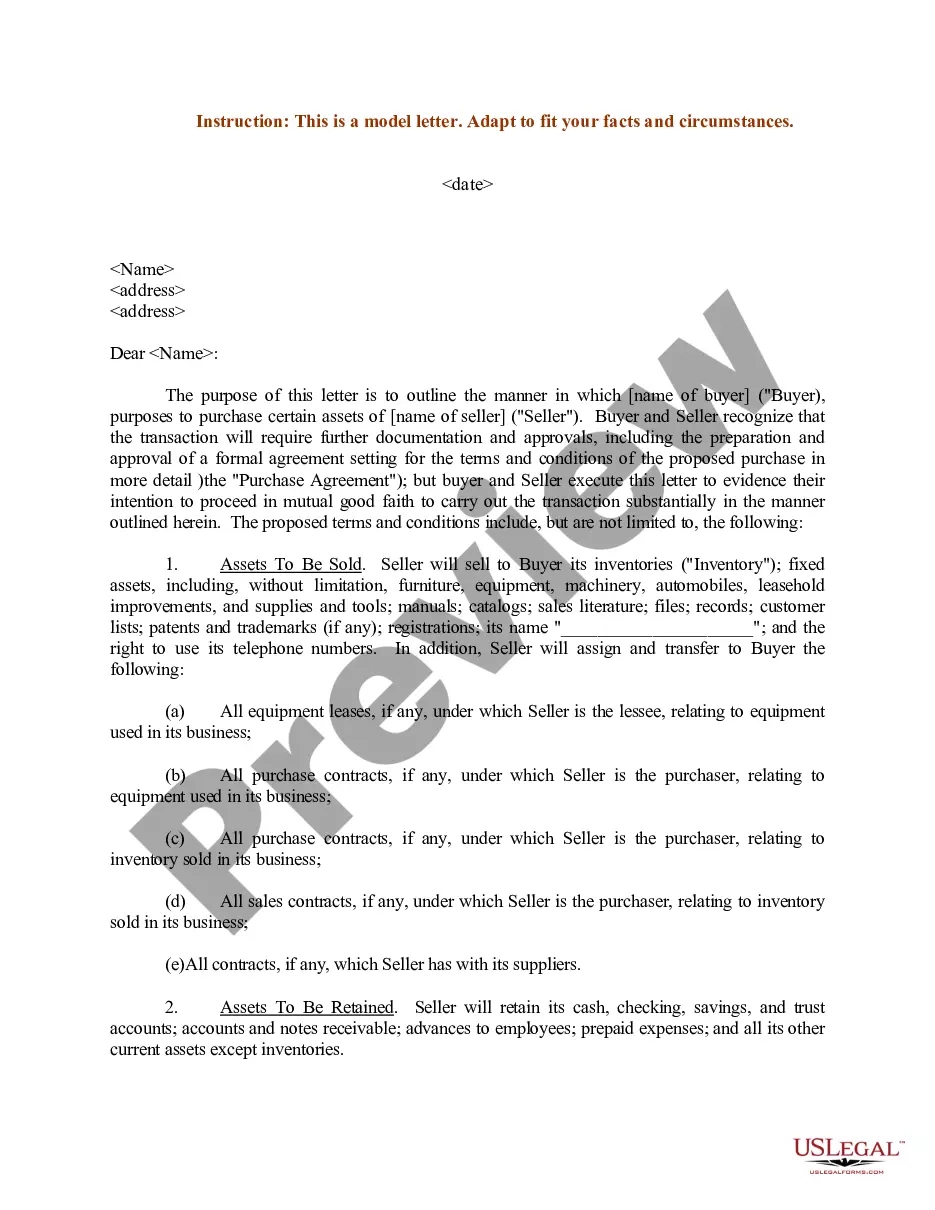
Get your form ready online
Our built-in tools help you complete, sign, share, and store your documents in one place.
Make edits, fill in missing information, and update formatting in US Legal Forms—just like you would in MS Word.
Download a copy, print it, send it by email, or mail it via USPS—whatever works best for your next step.
Sign and collect signatures with our SignNow integration. Send to multiple recipients, set reminders, and more. Go Premium to unlock E-Sign.
If this form requires notarization, complete it online through a secure video call—no need to meet a notary in person or wait for an appointment.
We protect your documents and personal data by following strict security and privacy standards.

Make edits, fill in missing information, and update formatting in US Legal Forms—just like you would in MS Word.

Download a copy, print it, send it by email, or mail it via USPS—whatever works best for your next step.

Sign and collect signatures with our SignNow integration. Send to multiple recipients, set reminders, and more. Go Premium to unlock E-Sign.

If this form requires notarization, complete it online through a secure video call—no need to meet a notary in person or wait for an appointment.

We protect your documents and personal data by following strict security and privacy standards.
Looking for another form?





Form popularity
FAQ
From a tax and accounting perspective, the terms asset and expense both refer to anything your company purchases in order to do business. However, the similarities end there. Assets and expenses are accounted for differently on your books and have very different impacts on your taxes.
Your farm or ranch may qualify for the R&D tax credit if you make farm technology or operational updates like using new or experimental soil or fertilizer, developing new pesticides to protect crops, planting cover crops, or developing new or improved harvest techniques.
When goods are purchased on credit, the two accounts that get impacted are the stock account which is an asset and creditors account which is a liability. Hence, there won't be any change in the value of capital in the accounting equation.
You can file a declared homestead by taking these steps: Buy a declared homestead form from an office-supply store, or download a form from the Registrar-Recorder's website. Fill out the form. Sign the form and have it notarized.
The Senior Citizens Property Tax Deferral Program allows property taxpayers who are 65 years or older, and whose total household income is $96,000 or less, to defer a portion of their homestead property taxes until some later time.
Effective beginning with assessment year 2024. EXPLANATION OF THE BILL Under current law, the homestead market value exclusion reduces the taxable market value for all homesteads valued below $413,800. The exclusion is 40% of the first $76,000 of market value, yielding a maximum exclusion of $30,400.
To qualify for the homestead classification you must: Occupy the property listed on the application as your primary residence; Be one of the owners of the property listed on the application, or a qualifying relative; Be a Minnesota resident.
Remove your homestead status Notify the county assessor within 30 days if you sell, move, or for any reason no longer qualify for homestead. Complete the notice-of-move form (PDF, 1MB). Email form to ao.programs@hennepin or mail to the address on the form.
Claimants can check the status of their refund by calling DOR at 651-296-4444 or online ( ). Minnesota House Research Department provides nonpartisan legislative, legal, and information services to the Minnesota House of Representatives.
Hennepin County Property Tax Rates Hennepin County's 1.16% average effective property tax rate is higher than Minnesota's state average effective rate of 1.05%. The median home value in Hennepin County is $358,000, and the median annual property tax payment is $4,142.