Board Directors Corporate Without Shareholder In Philadelphia
Description



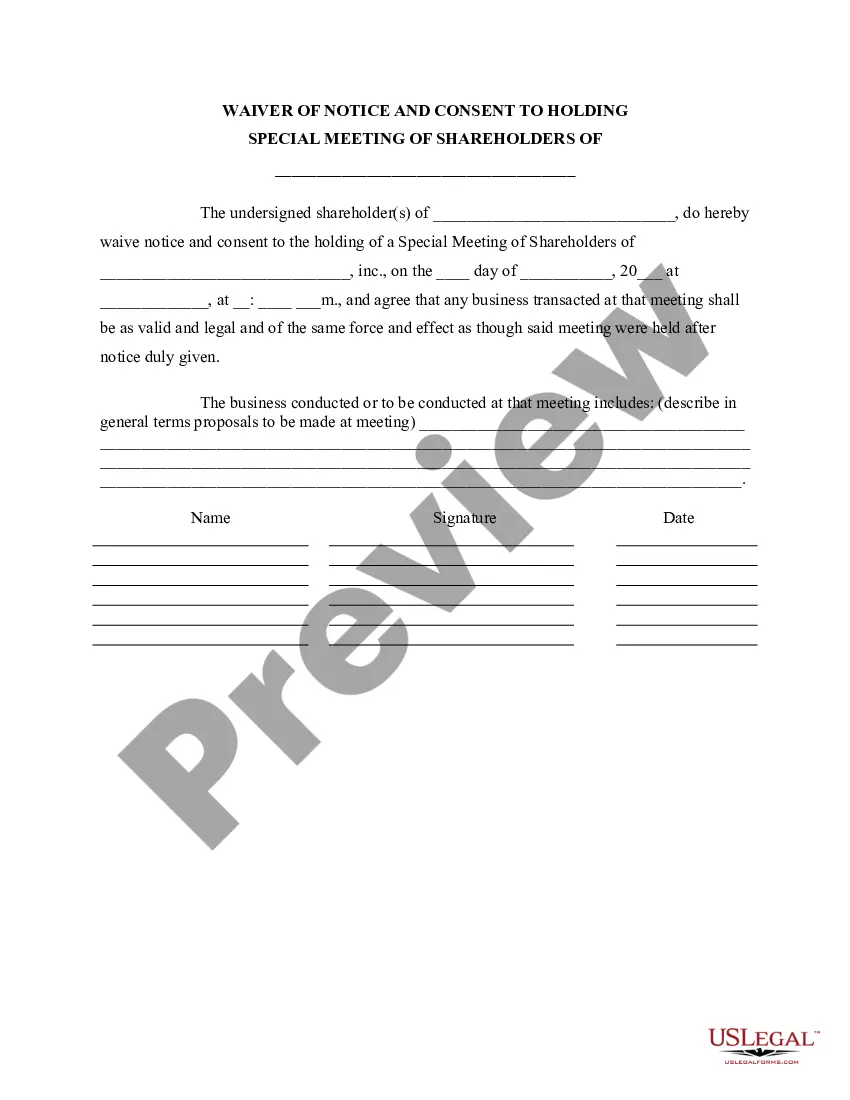
Get your form ready online
Our built-in tools help you complete, sign, share, and store your documents in one place.
Make edits, fill in missing information, and update formatting in US Legal Forms—just like you would in MS Word.
Download a copy, print it, send it by email, or mail it via USPS—whatever works best for your next step.
Sign and collect signatures with our SignNow integration. Send to multiple recipients, set reminders, and more. Go Premium to unlock E-Sign.
If this form requires notarization, complete it online through a secure video call—no need to meet a notary in person or wait for an appointment.
We protect your documents and personal data by following strict security and privacy standards.

Make edits, fill in missing information, and update formatting in US Legal Forms—just like you would in MS Word.

Download a copy, print it, send it by email, or mail it via USPS—whatever works best for your next step.

Sign and collect signatures with our SignNow integration. Send to multiple recipients, set reminders, and more. Go Premium to unlock E-Sign.

If this form requires notarization, complete it online through a secure video call—no need to meet a notary in person or wait for an appointment.

We protect your documents and personal data by following strict security and privacy standards.
Looking for another form?






Form popularity
FAQ
The Rights of Shareholders Large shareholder blocs can therefore vote to fire a member of the board and replace them with somebody else for perceived mismanagement, ineffectual governance, or malfeasance.
If your business is a corporation, then you are required by law to have a board of directors. Depending on your particular corporate structure and your state, one or two directors may be all that's legally required.
Shareholders are the individuals or entities that own company shares, giving them control over that company. The members of the board don't control the company (unless they are also shareholders), but they make the day-to-day decisions of the business. In a startup context, a board member may be the CEO, CTO, or CMO.
Shareholders own the company by buying and holding its shares, acting as the company's financial supporters. Directors are responsible for day-to-day management of the business and its operations. Being a shareholder does not automatically confer the right to have a say in how that company is run on a day-to-day basis.
While the shareholders control the ownership of the company and are entitled to share its profits in the ratio of their shareholding, directors are responsible for controlling the day to day management of the company and ensuring its compliance with all legal, tax, and regulatory frameworks.
While every board member is a shareholder, not every shareholder is automatically a board member. Shareholders who own a certain percentage of the company's shares (usually 10 percent or more) are eligible to serve on the board. However, they must be nominated and elected by the other shareholders.
The corporate opportunity doctrine prohibits a corporate fiduciary from exploiting an opportunity related to the corporation's business unless he or she first offers that opportunity to the corporation.
(1)A private company must have at least one director. (2)A public company must have at least two directors.
(2) A public company must have at least 3 directors (not counting alternate directors).

