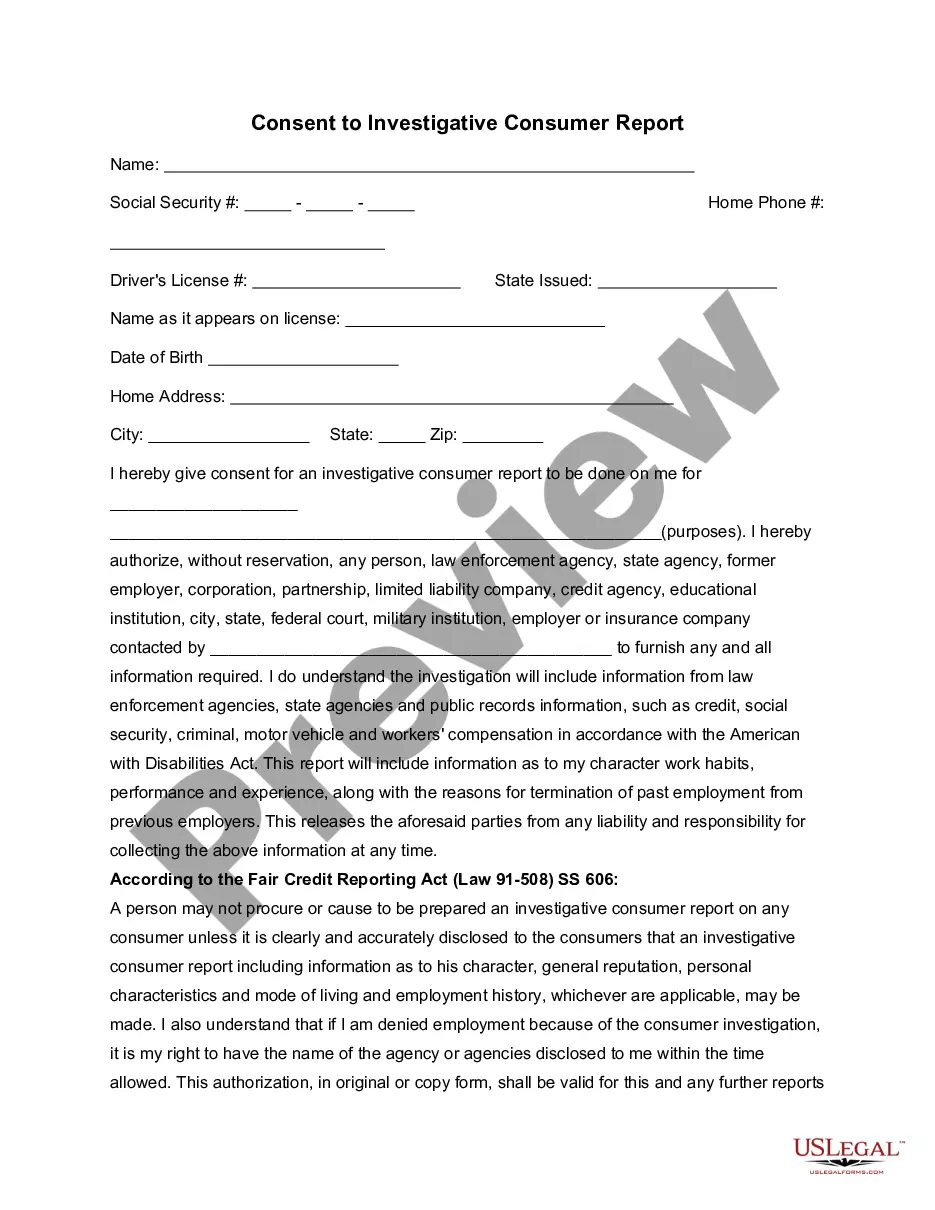
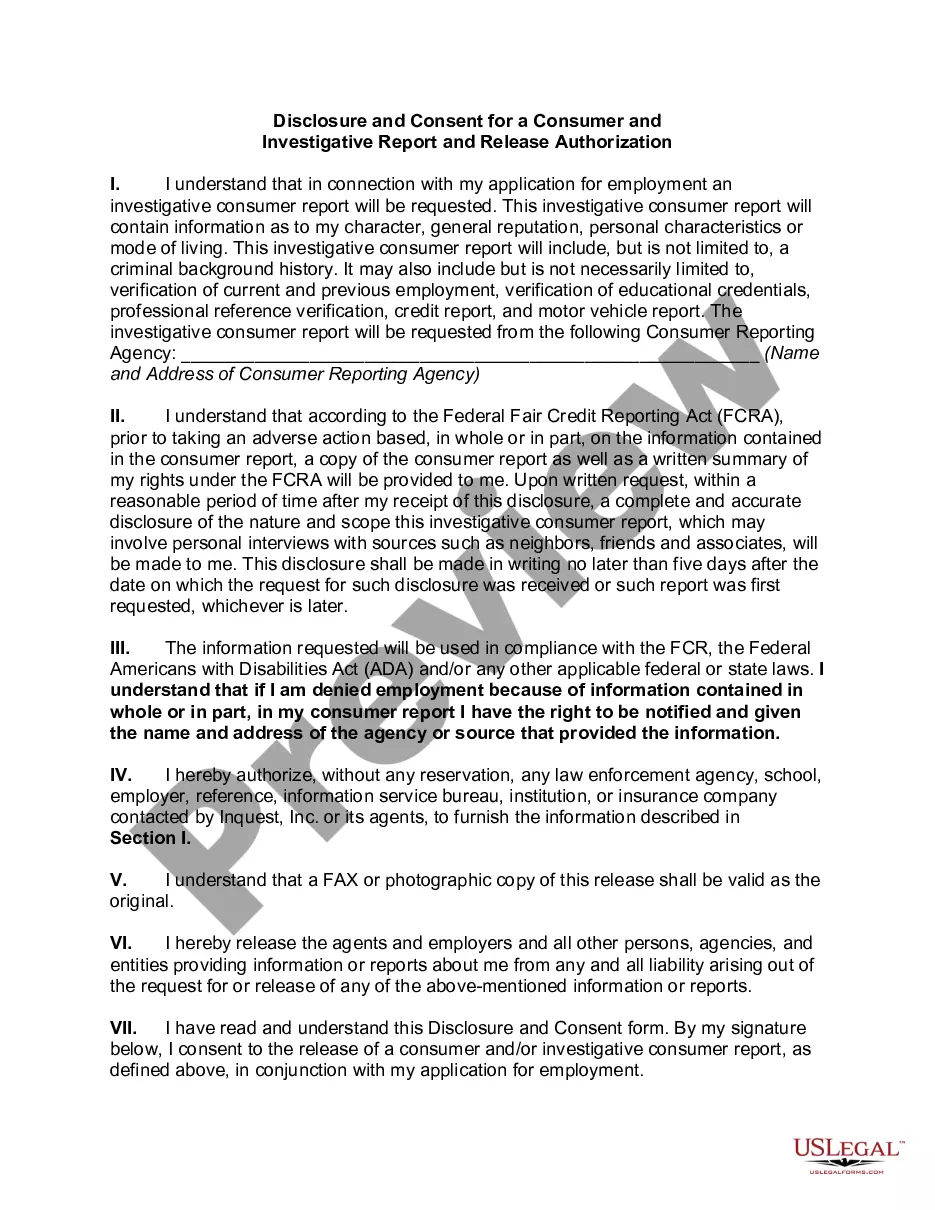
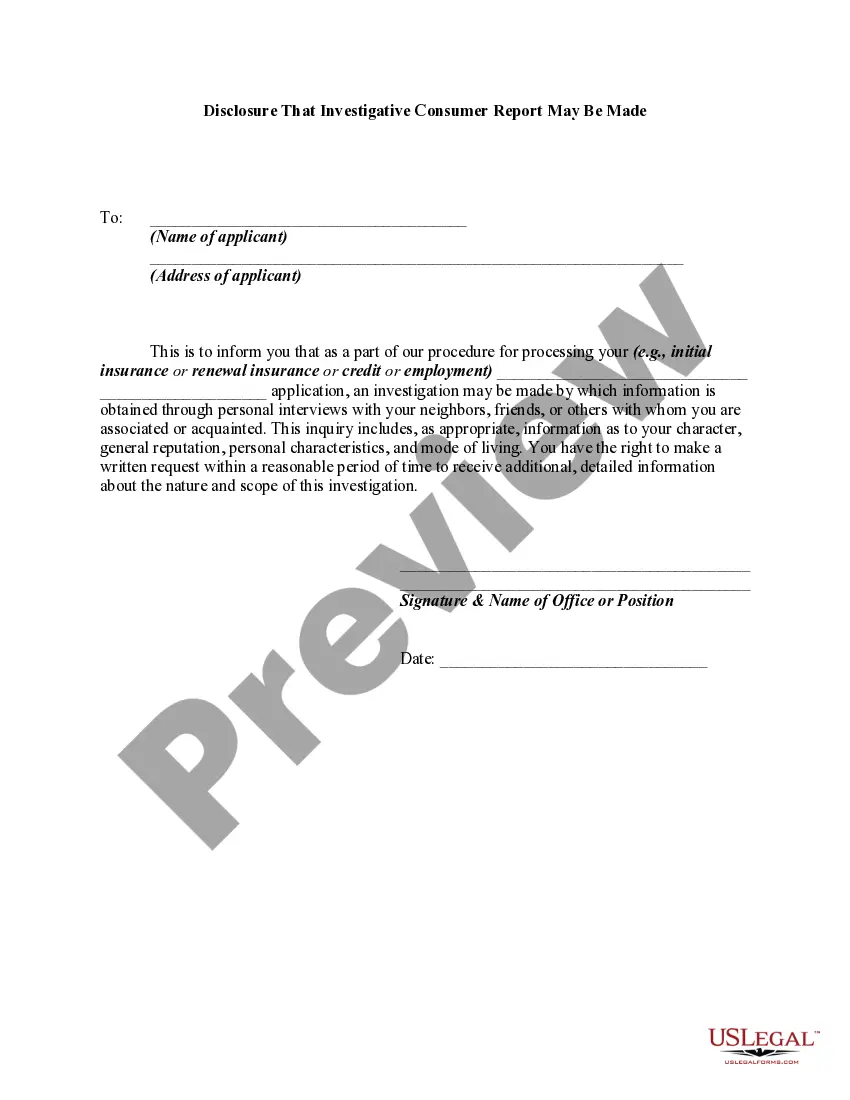
Consumer Reporting Agency In Virginia In Minnesota
Description

Get your form ready online
Our built-in tools help you complete, sign, share, and store your documents in one place.
Make edits, fill in missing information, and update formatting in US Legal Forms—just like you would in MS Word.
Download a copy, print it, send it by email, or mail it via USPS—whatever works best for your next step.
Sign and collect signatures with our SignNow integration. Send to multiple recipients, set reminders, and more. Go Premium to unlock E-Sign.
If this form requires notarization, complete it online through a secure video call—no need to meet a notary in person or wait for an appointment.
We protect your documents and personal data by following strict security and privacy standards.

Make edits, fill in missing information, and update formatting in US Legal Forms—just like you would in MS Word.

Download a copy, print it, send it by email, or mail it via USPS—whatever works best for your next step.

Sign and collect signatures with our SignNow integration. Send to multiple recipients, set reminders, and more. Go Premium to unlock E-Sign.

If this form requires notarization, complete it online through a secure video call—no need to meet a notary in person or wait for an appointment.

We protect your documents and personal data by following strict security and privacy standards.
Looking for another form?








Form popularity
FAQ
Attorney General Miyares's Consumer Protection Section enforces state and federal laws designed to protect consumers from fraud, deception, and misrepresentation.
Please call the Consumer Protection Hotline at (800) 552-9963 if calling from Virginia, or (804) 786-2042 if calling from the Richmond area or from outside Virginia. Our business hours are a.m. to p.m., Monday through Friday.
Types of Consumer Protection Agencies The National Highway Traffic Safety Administration (NHTSA) ensures vehicle safety standards. The Consumer Product Safety Commission (CPSC) addresses product safety hazards and recalls. The Food and Drug Administration (FDA) monitors and regulates food and drug safety.
The FTC enforces federal consumer protection laws that prevent fraud, deception and unfair business practices. The Commission also enforces federal antitrust laws that prohibit anticompetitive mergers and other business practices that could lead to higher prices, fewer choices, or less innovation.
Established in 1877, the Virginia Department of Agriculture and Consumer Services (VDACS) promotes the economic growth and development of Virginia agriculture, provides consumer protection and encourages environmental stewardship.
The Federal Communications Commission (FCC) has regulatory authority under the statute.
The big three—Experian, TransUnion and Equifax—collect and organize data to create consumer credit reports. The bureaus don't make lending decisions or determine your credit scores.
Pursuant to the Fair Credit Reporting Act, you may request a Consumer Disclosure Report online via the Online Request Form.
A consumer reporting agency must also include a summary of consumer rights with the disclosure to the consumer. This ensures the consumer is informed about their rights under the Fair Credit Reporting Act (FCRA). Details such as the firm's name and address, and privacy policies are also typically included.
What are the three credit bureaus? Equifax, Experian and TransUnion are the three nationwide credit bureaus. ing to the Consumer Financial Protection Bureau (CFPB), credit bureaus are companies that compile and sell credit reports.
