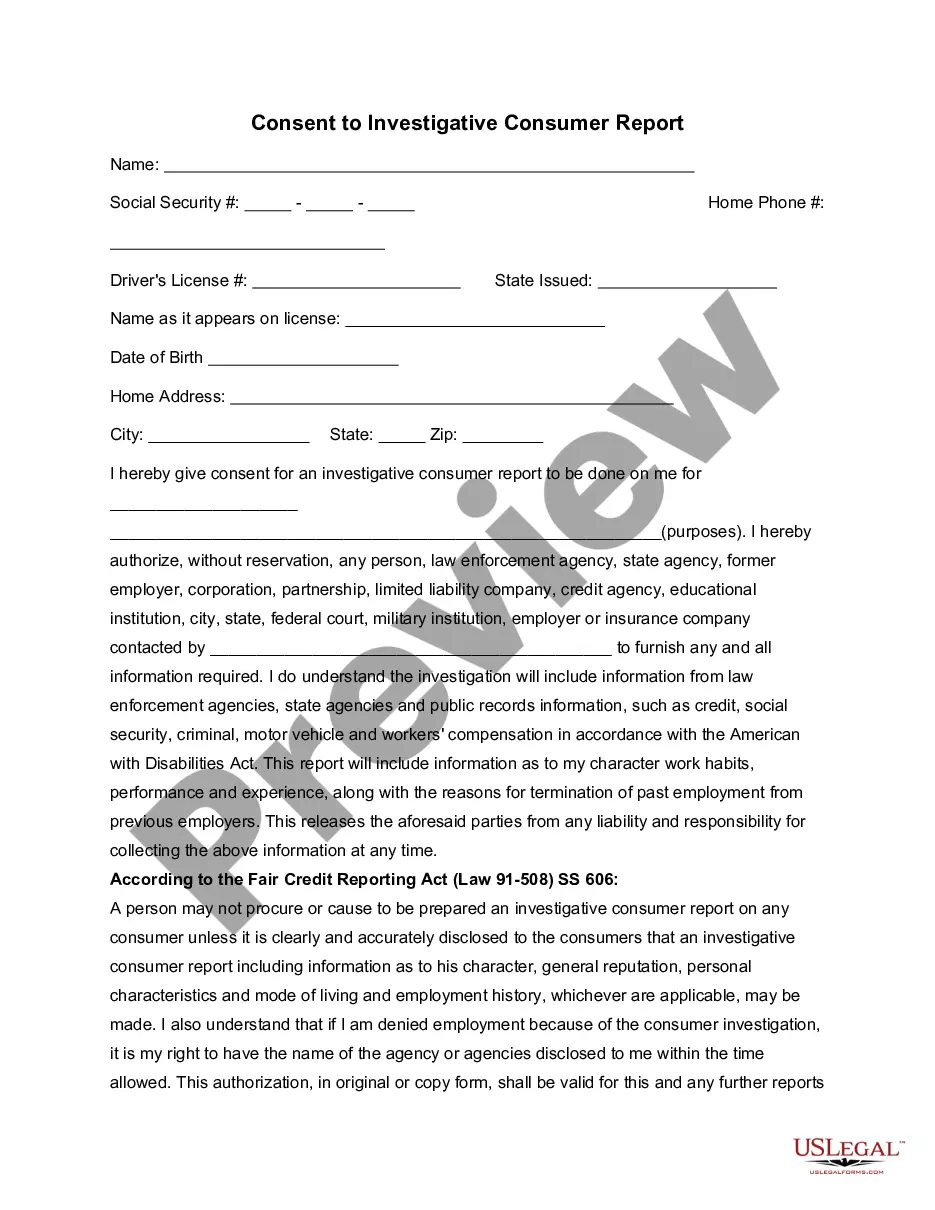
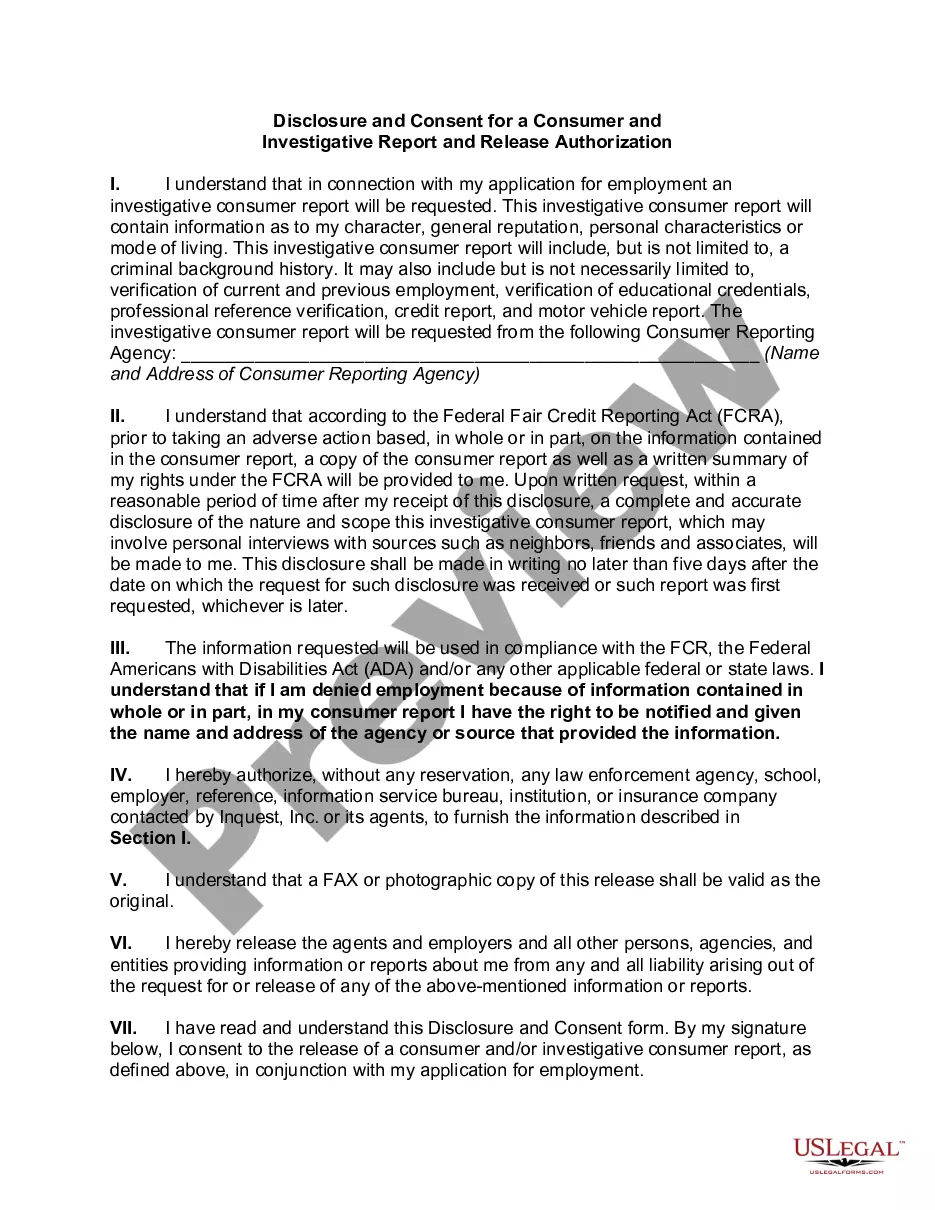
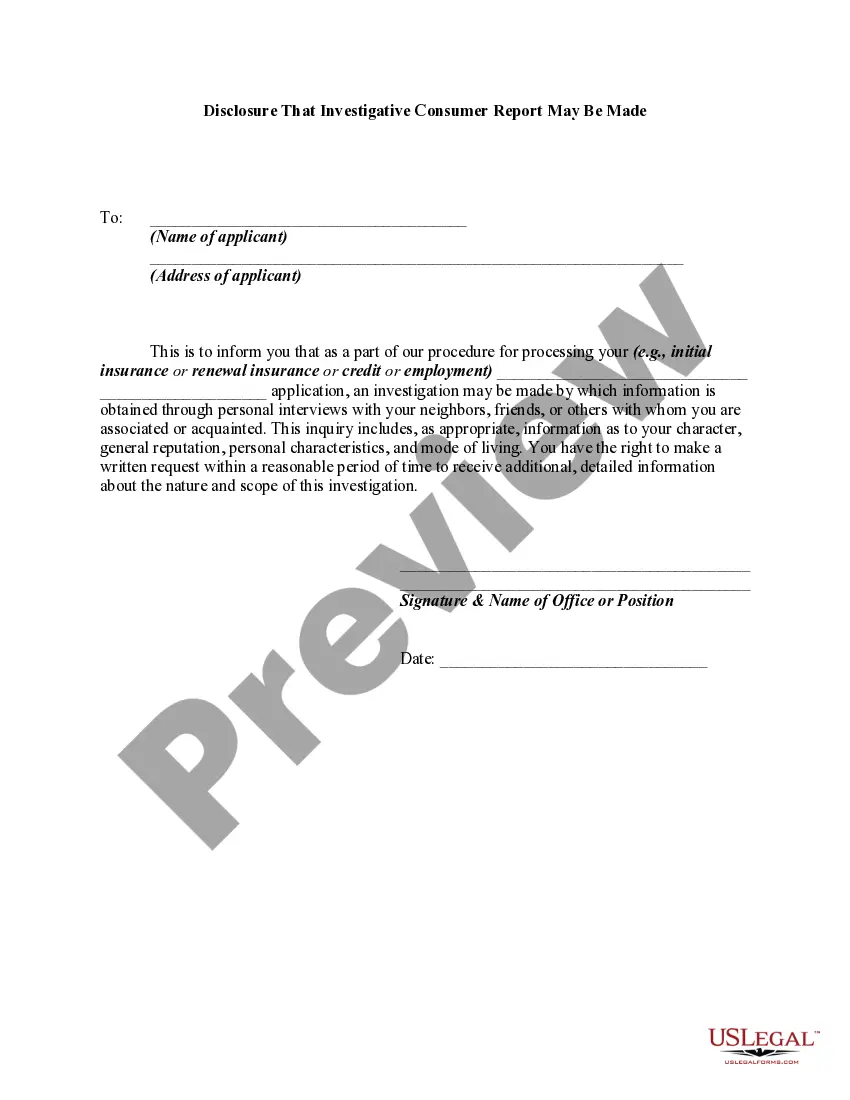
Consumer Reporting Agency In A Sentence In Hillsborough
Description

Get your form ready online
Our built-in tools help you complete, sign, share, and store your documents in one place.
Make edits, fill in missing information, and update formatting in US Legal Forms—just like you would in MS Word.
Download a copy, print it, send it by email, or mail it via USPS—whatever works best for your next step.
Sign and collect signatures with our SignNow integration. Send to multiple recipients, set reminders, and more. Go Premium to unlock E-Sign.
If this form requires notarization, complete it online through a secure video call—no need to meet a notary in person or wait for an appointment.
We protect your documents and personal data by following strict security and privacy standards.

Make edits, fill in missing information, and update formatting in US Legal Forms—just like you would in MS Word.

Download a copy, print it, send it by email, or mail it via USPS—whatever works best for your next step.

Sign and collect signatures with our SignNow integration. Send to multiple recipients, set reminders, and more. Go Premium to unlock E-Sign.

If this form requires notarization, complete it online through a secure video call—no need to meet a notary in person or wait for an appointment.

We protect your documents and personal data by following strict security and privacy standards.
Looking for another form?



Form popularity
FAQ
For help with solving regulated utility issues, consumers can reach PSC Consumer Assistance at 1-800-342-3552, by e-mail at contact@psc.state.fl, or through the PSC Web site at .FloridaPSC. Inquiries on services not regulated by the PSC and not footnoted should be initially forwarded to the service provider.
Nationwide consumer reporting companies There are three big nationwide providers of consumer reports: Equifax, TransUnion, and Experian.
You must: Tell the applicant or employee that you might use information in their consumer report for decisions related to their employment. Get written permission from the applicant or employee. Certify compliance to the company from which you are getting the applicant or employee's information.
Reports including personal knowledge or firsthand interaction, reports made among persons under common control, and reports other than credit (including skip tracing, law enforcement, dating, and laboratory reports) are not consumer reports.
A person that is subject to the provisions of this subsection and that uses a credit score, other than a credit score provided by a consumer reporting agency, may satisfy the obligation to provide a credit score by disclosing a credit score and associated key factors supplied by a consumer reporting agency.
Section 607(e) requires any person who obtains a consumer report for resale to take the following steps: Disclose the identity of the end-user to the source CRA. Identify to the source CRA each permissible purpose for which the report will be furnished to the end-user.
The bank must identify itself and certify to the reporting agency (consumer reporting agency) the purposes for which the information is sought. It must also certify that the information will be used for no other purpose (16 CFR 607).
Under the federal Fair Credit Reporting Act (FCRA) , all consumer reporting companies are required to provide you a copy of the information in your report if you request it.
The FTC's Bureau of Consumer Protection stops unfair, deceptive and fraudulent business practices by collecting reports from consumers and conducting investigations, suing companies and people that break the law, developing rules to maintain a fair marketplace, and educating consumers and businesses about their rights ...
Log into your account on a browser then search consumer reports, you'll find the link to the . org website et voilà!
