Payoff Letter For Judgement In Texas
Description
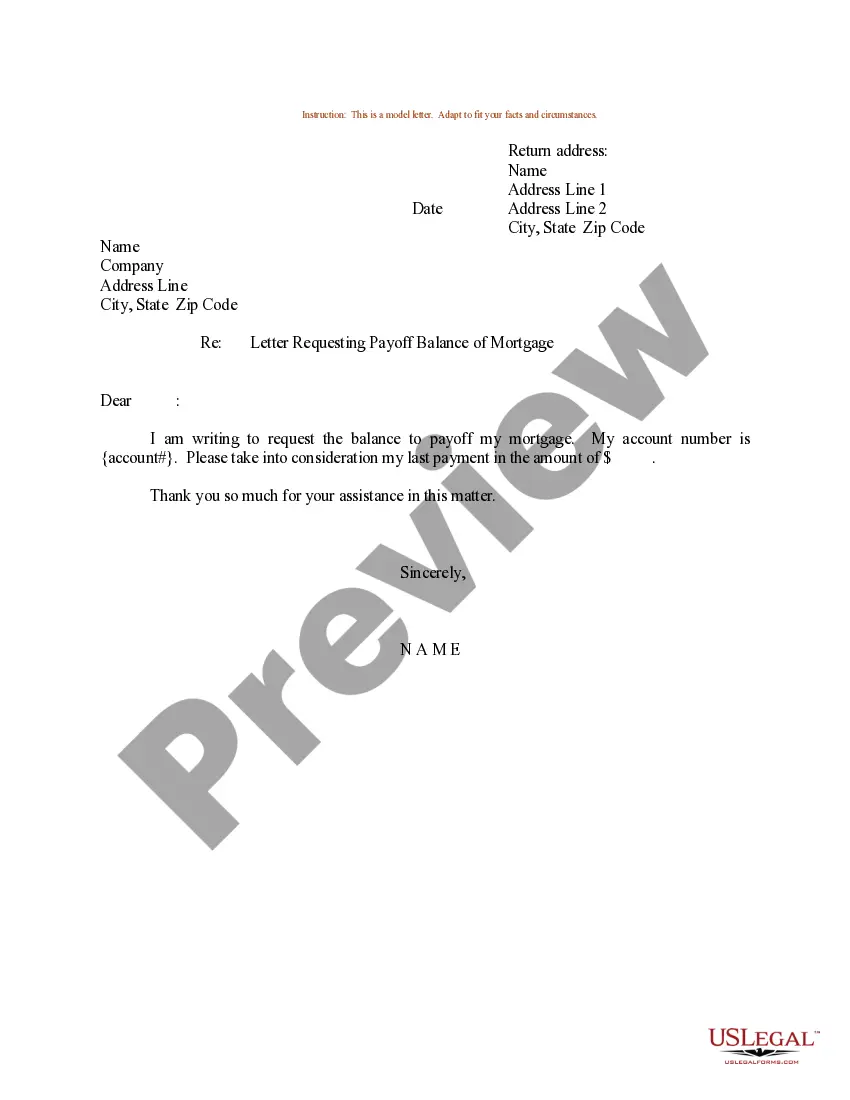
Get your form ready online
Our built-in tools help you complete, sign, share, and store your documents in one place.
Make edits, fill in missing information, and update formatting in US Legal Forms—just like you would in MS Word.
Download a copy, print it, send it by email, or mail it via USPS—whatever works best for your next step.
Sign and collect signatures with our SignNow integration. Send to multiple recipients, set reminders, and more. Go Premium to unlock E-Sign.
If this form requires notarization, complete it online through a secure video call—no need to meet a notary in person or wait for an appointment.
We protect your documents and personal data by following strict security and privacy standards.

Make edits, fill in missing information, and update formatting in US Legal Forms—just like you would in MS Word.

Download a copy, print it, send it by email, or mail it via USPS—whatever works best for your next step.

Sign and collect signatures with our SignNow integration. Send to multiple recipients, set reminders, and more. Go Premium to unlock E-Sign.

If this form requires notarization, complete it online through a secure video call—no need to meet a notary in person or wait for an appointment.

We protect your documents and personal data by following strict security and privacy standards.
Looking for another form?





Form popularity
FAQ
Post-Judgment Discovery Court rules state the losing party must be given at least 30 days to respond to a request. The losing party may file a written objection with the court within 30 days of receiving the request. If an objection is filed, the judge must hold a hearing to determine if the request is valid.
You are judgment proof if: You do not own anything of great value aside from exempt property like your homestead, a vehicle, household items and tools of your trade. Your income is from a protected (exempt) source.
Post-Judgment Discovery Court rules state the losing party must be given at least 30 days to respond to a request. The losing party may file a written objection with the court within 30 days of receiving the request. If an objection is filed, the judge must hold a hearing to determine if the request is valid.
You must file a Motion to Set Aside Default Judgment and Notice of Hearing within 30 days of the date the default judgment was signed by the judge. See Texas Rule of Civil Procedure 329(b). In Justice Court, the deadline is 14 days. See Texas Rule of Civil Procedure 505.3.
You may be able to undo, or set aside, this judgment if you didn't know about it or in a few other situations. You will not go to jail for having a judgment against you.
For that purpose the judgment debtor should approach the plaintiff/judgment creditor or his/her/its attorney to obtain the written consent to rescission of judgment. There is however no requirement in law that obliges a plaintiff/judgment creditor to give a consent to rescission of judgment.
Here are four ways to avoid paying a judgment: 1) Use asset protection tools such as an asset protection trust, 2) use legal exemptions, 3) negotiate with the creditor, 4) file for bankruptcy.
