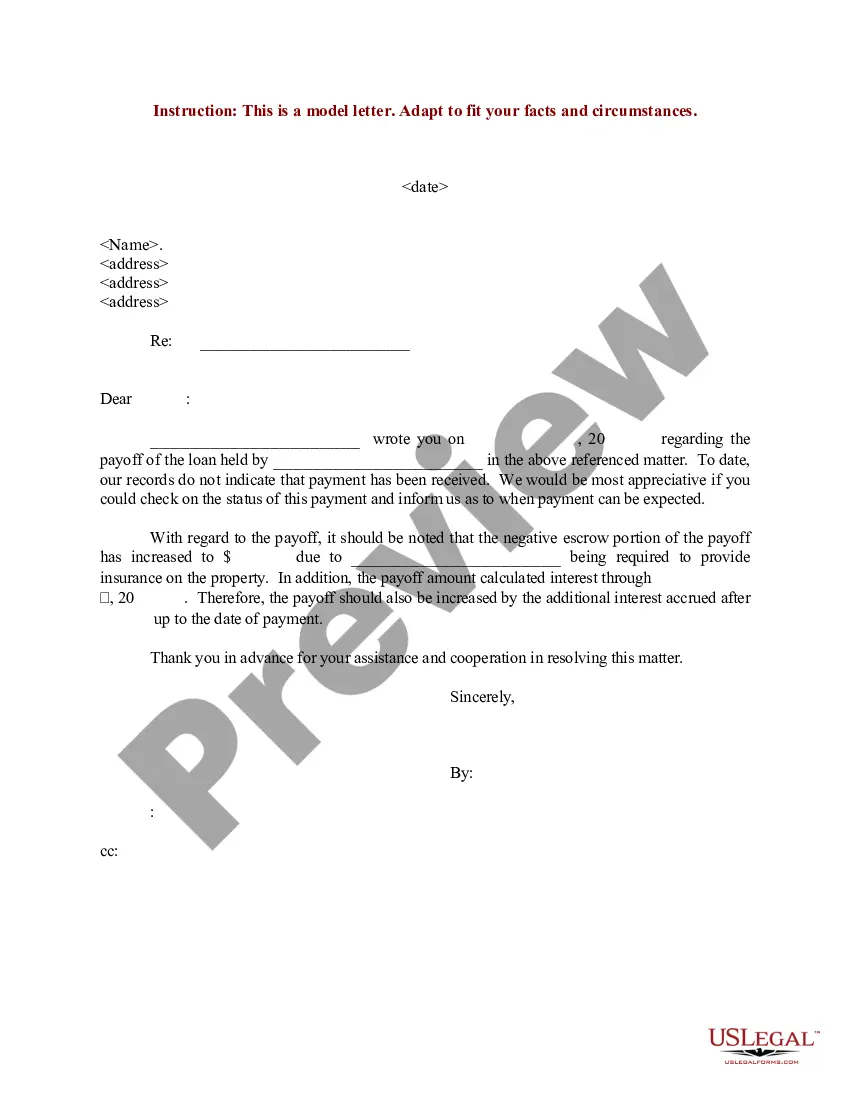
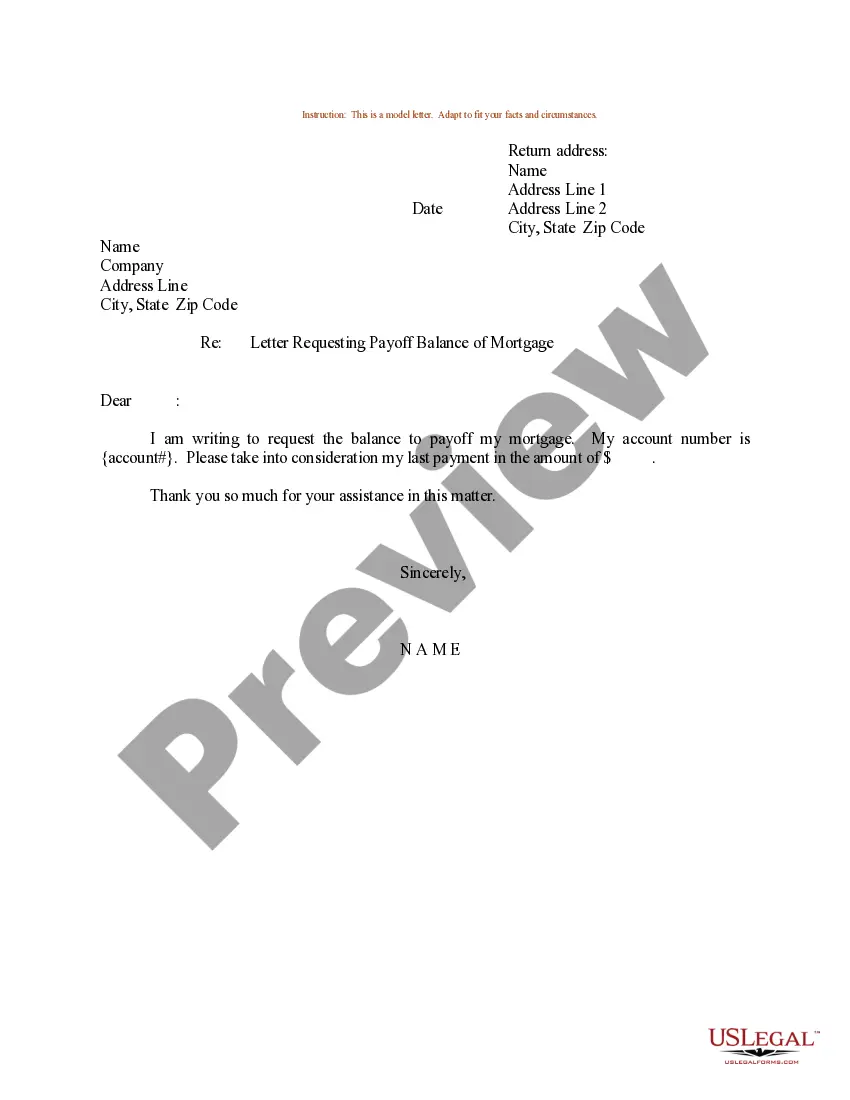
Letter Payoff Loan With Balance Transfer In Palm Beach
Description
Get your form ready online
Our built-in tools help you complete, sign, share, and store your documents in one place.
Make edits, fill in missing information, and update formatting in US Legal Forms—just like you would in MS Word.
Download a copy, print it, send it by email, or mail it via USPS—whatever works best for your next step.
Sign and collect signatures with our SignNow integration. Send to multiple recipients, set reminders, and more. Go Premium to unlock E-Sign.
If this form requires notarization, complete it online through a secure video call—no need to meet a notary in person or wait for an appointment.
We protect your documents and personal data by following strict security and privacy standards.

Make edits, fill in missing information, and update formatting in US Legal Forms—just like you would in MS Word.

Download a copy, print it, send it by email, or mail it via USPS—whatever works best for your next step.

Sign and collect signatures with our SignNow integration. Send to multiple recipients, set reminders, and more. Go Premium to unlock E-Sign.

If this form requires notarization, complete it online through a secure video call—no need to meet a notary in person or wait for an appointment.

We protect your documents and personal data by following strict security and privacy standards.
Looking for another form?
Form popularity
FAQ
You do not have to be an attorney to prepare a Florida quitclaim deed. Absent attorney fees, your costs would only be the recording fees that the county comptroller charges and transfer fees if the property is mortgaged.
– The Verdict. If properly executed, a Florida quitclaim deed usually requires two weeks to three months to be recorded. The parties involved in real estate transactions generally seek to record the deed immediately after the closing process is concluded.
You can electronically record documents online (eRecording) or you can bring your original documents to the Main Courthouse, South County Courthouse, North County Courthouse, West County Courthouse, Royal Palm Beach branch or mail your documents.
Most negative items should automatically fall off your credit reports seven years from the date of your first missed payment, at which point your credit score may rise. However, your score may start rebounding sooner if you are otherwise using credit responsibly.
However, it's important to understand that transferring a balance to a new credit card will not close the account of the original card — the balance will simply revert to zero.
After you complete a balance transfer, your old credit card will either have a zero balance or the remaining amount that wasn't transferred. In the case of a zero balance, you can decide whether to close the old account or to keep it open. (We'll go into the pros and cons of doing so next.)
Once that time period ends for your balance transfer credit card, the card's ongoing APR will apply to your remaining credit card balance. The higher the credit card balance is when the 0 percent APR period ends, the more interest you will accrue.
Start by finding a credit card with a lower interest rate than your current card, then transfer your balance (or a portion of it) to the new card. The idea is that the transferred balance on the new credit card will accrue low or no interest during an introductory period—usually anywhere from 6–24 months.