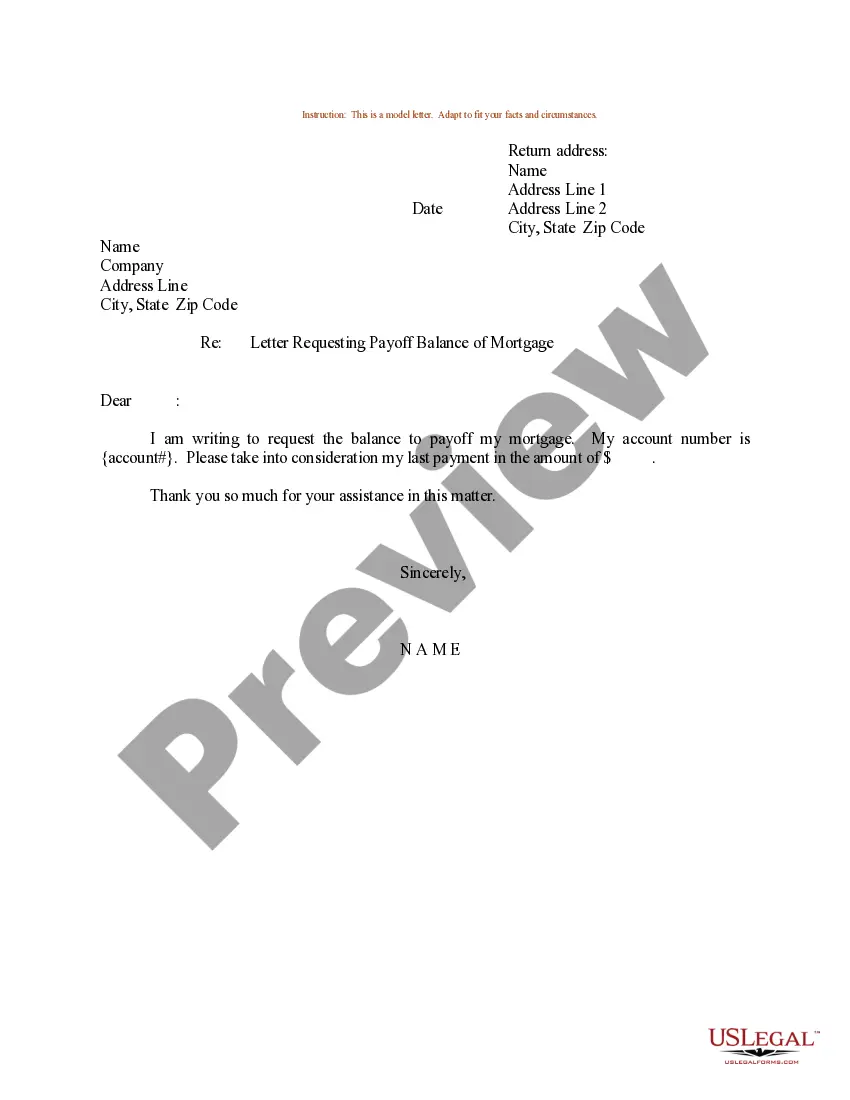
Loan Payoff Letter Example Without Notice Period In Maryland
Description
Get your form ready online
Our built-in tools help you complete, sign, share, and store your documents in one place.
Make edits, fill in missing information, and update formatting in US Legal Forms—just like you would in MS Word.
Download a copy, print it, send it by email, or mail it via USPS—whatever works best for your next step.
Sign and collect signatures with our SignNow integration. Send to multiple recipients, set reminders, and more. Go Premium to unlock E-Sign.
If this form requires notarization, complete it online through a secure video call—no need to meet a notary in person or wait for an appointment.
We protect your documents and personal data by following strict security and privacy standards.

Make edits, fill in missing information, and update formatting in US Legal Forms—just like you would in MS Word.

Download a copy, print it, send it by email, or mail it via USPS—whatever works best for your next step.

Sign and collect signatures with our SignNow integration. Send to multiple recipients, set reminders, and more. Go Premium to unlock E-Sign.

If this form requires notarization, complete it online through a secure video call—no need to meet a notary in person or wait for an appointment.

We protect your documents and personal data by following strict security and privacy standards.
Looking for another form?









Form popularity
FAQ
First, you'll need to contact your lender and let them know you want the information. Depending on your lender, you may have to sign in to an online account, call a helpline, or send a formal letter to start the request process.
Most debt settlement letters include: The date, name, and address of the credit card company. A notation after the address that this is regarding a hardship letter. The credit card number and amount of the debt. A short statement of your financial situation, why you're in that situation, and why full payment is a hardship.
You may request an exemption to the garnishment. You must make your request within 30 days of when the garnishment was served on the bank. Use the form Motion for Release of Property from Levy/Garnishment (DC-CV-036).
Time Limits on Collection The statute of limitations gives creditors 3 years to file a lawsuit against you for the debt you owe. If the case is brought to court and the judge rules in favor of the creditor, they then have only 12 years to collect the settlement.
Statutes of Limitations for Each State (In Number of Years) StateWritten contractsPromissory notes Kentucky 10 15 Louisiana 10 10 Maine 6 20 Maryland 3 647 more rows
3-year limit on lawsuits for debts To get a judgment, a creditor must bring the claim to court within 3 years after the debt comes due.
Because of something known as a statute of limitations, some debts become unenforceable after six years. This means that creditors can no longer chase you or take legal action against you for the amount owed.
If the unsecured creditors don't file a claim within the estate within 6 months of the date of death, they are barred from collecting the debt.
Statute of Limitations in Maryland Maryland is a consumer-friendly state. The statute of limitations allows a creditor three years to collect on debts. That's a shorter timeframe than many states.
Under Maryland's Consumer Debt Collection Act debt collectors may not... Use or threaten force or violence. Threaten criminal prosecution unless a violation of criminal law is involved. Disclose, or threaten to disclose, information affecting your reputation for creditworthiness if they know the information is false.
