Loan Payoff Letter Format Foreclosure In Maricopa
Description
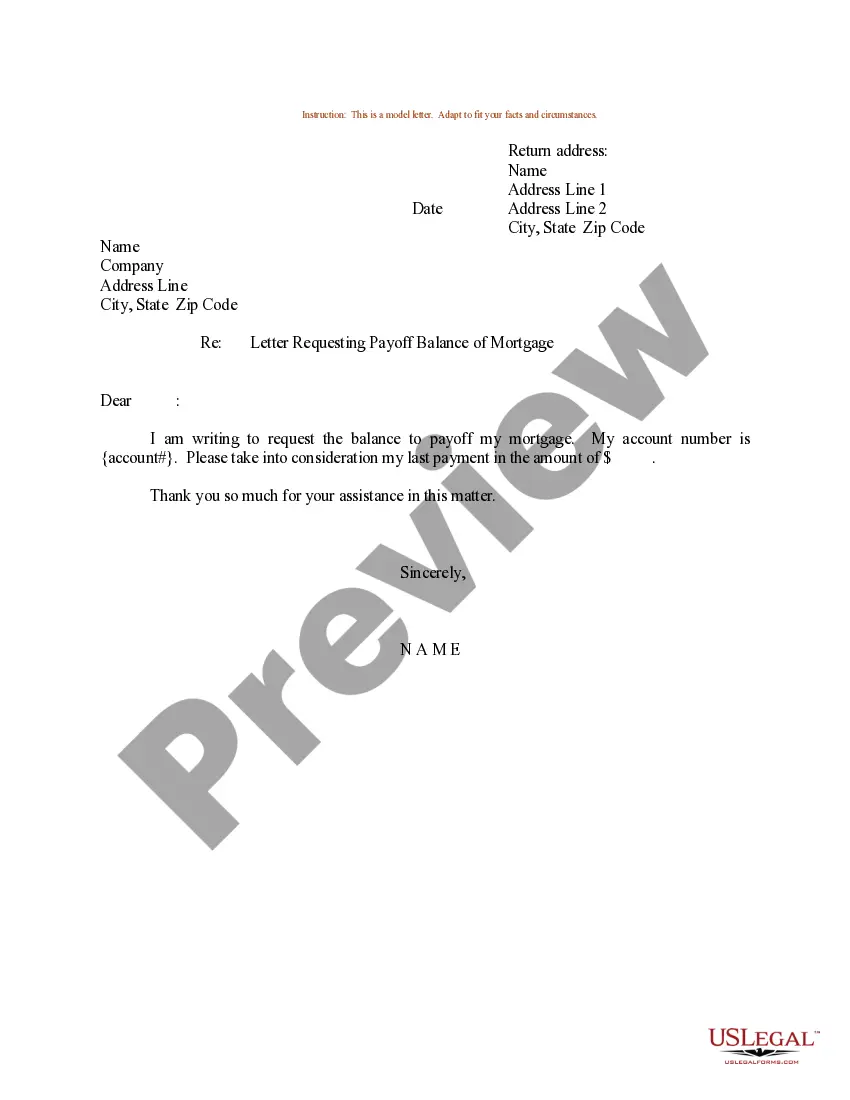
Get your form ready online
Our built-in tools help you complete, sign, share, and store your documents in one place.
Make edits, fill in missing information, and update formatting in US Legal Forms—just like you would in MS Word.
Download a copy, print it, send it by email, or mail it via USPS—whatever works best for your next step.
Sign and collect signatures with our SignNow integration. Send to multiple recipients, set reminders, and more. Go Premium to unlock E-Sign.
If this form requires notarization, complete it online through a secure video call—no need to meet a notary in person or wait for an appointment.
We protect your documents and personal data by following strict security and privacy standards.

Make edits, fill in missing information, and update formatting in US Legal Forms—just like you would in MS Word.

Download a copy, print it, send it by email, or mail it via USPS—whatever works best for your next step.

Sign and collect signatures with our SignNow integration. Send to multiple recipients, set reminders, and more. Go Premium to unlock E-Sign.

If this form requires notarization, complete it online through a secure video call—no need to meet a notary in person or wait for an appointment.

We protect your documents and personal data by following strict security and privacy standards.
Looking for another form?







Form popularity
FAQ
Under federal law, the servicer must generally send you a payoff statement within seven business days of your request, subject to a few exceptions. (12 C.F.R. § 1026.36.)
The statement is provided by the mortgage servicer and can be requested at any time. Accurate payoff information is crucial for managing financial decisions related to property ownership.
Under federal law, the servicer must generally send you a payoff statement within seven business days of your request, subject to a few exceptions. (12 C.F.R. § 1026.36.)
If the borrower's outstanding debt exceeds the property's current market value, the lender may refuse to proceed with a deed in lieu of foreclosure.
Under federal law, the servicer usually can't start a foreclosure until the borrower is over 120 days delinquent on payments, subject to a few exceptions. (12 C.F.R. § 1024.41). This 120-day period provides most homeowners ample opportunity to submit a loss mitigation application to the servicer.
Federal law states that a bank may initiate foreclosure after 120 days of missed payments.
§ 33-814). If the anti-deficiency law isn't applicable, the lender may generally obtain a deficiency judgment by filing a separate lawsuit within 90 days after the nonjudicial foreclosure sale. (Ariz. Rev.
Notice of the Foreclosure In Arizona, the trustee starts the foreclosure process by the recording of a notice of sale in the county recorder's office. The notice must include the date, time, and place of the sale. The sale date can't be sooner than the 91st day after the notice of sale's recording date.
In nonjudicial pre-foreclosure situations, the pre-foreclosure process is usually quick. For example, the pre-foreclosure process can be as short as 111 days in California. This includes a 90-day default notice period and a 21-day foreclosure sale notice.

