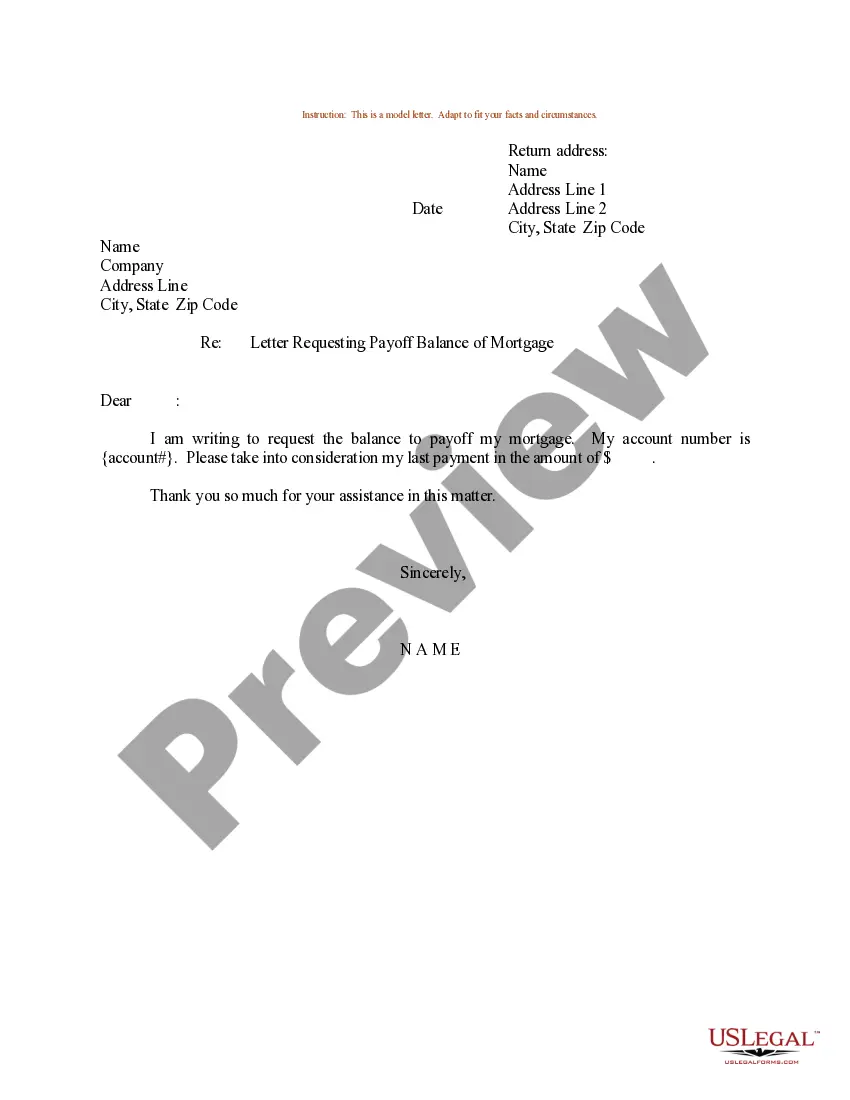
Payoff Mortgage Form Sample For Business In Broward
Description
Get your form ready online
Our built-in tools help you complete, sign, share, and store your documents in one place.
Make edits, fill in missing information, and update formatting in US Legal Forms—just like you would in MS Word.
Download a copy, print it, send it by email, or mail it via USPS—whatever works best for your next step.
Sign and collect signatures with our SignNow integration. Send to multiple recipients, set reminders, and more. Go Premium to unlock E-Sign.
If this form requires notarization, complete it online through a secure video call—no need to meet a notary in person or wait for an appointment.
We protect your documents and personal data by following strict security and privacy standards.

Make edits, fill in missing information, and update formatting in US Legal Forms—just like you would in MS Word.

Download a copy, print it, send it by email, or mail it via USPS—whatever works best for your next step.

Sign and collect signatures with our SignNow integration. Send to multiple recipients, set reminders, and more. Go Premium to unlock E-Sign.

If this form requires notarization, complete it online through a secure video call—no need to meet a notary in person or wait for an appointment.

We protect your documents and personal data by following strict security and privacy standards.
Looking for another form?






Form popularity
FAQ
There's a process to getting the mortgage payoff statement. First, you'll need to contact your lender and let them know you want the information. Depending on your lender, you may have to sign in to an online account, call a helpline, or send a formal letter to start the request process.
Once these requirements are satisfied, the quitclaim deed must be filed with the county clerk's office in the Florida county where the property is located.
After consulting with the property owner, the attorney will prepare the quitclaim deed to ensure that the owner's objectives are realized and that the legal description it accurate. Next, an attorney can determine whether the transfer is exempt from documentary stamp taxes.
The median property tax rate in Broward County is 1.44%, which is significantly higher than both the national median of 0.99% and the Florida state median of 1.14%. With the median home value in Broward County at $357,080, the typical annual property tax bill reaches $4,521, which exceeds the national median of $2,690.
IMPORTANT: Deeds related to Broward County properties must be recorded with the Broward County Records Division in downtown Fort Lauderdale.
If properly executed, a Florida quitclaim deed usually requires two weeks to three months to be recorded. The parties involved in real estate transactions generally seek to record the deed immediately after the closing process is concluded.
The median property tax rate in Broward County is 1.44%, which is significantly higher than both the national median of 0.99% and the Florida state median of 1.14%.
You are 65 years of age, or older, on January 1; You qualify for, and receive, the Florida Homestead Exemption; Your total 'Household Adjusted Gross Income' for everyone who lives on the property cannot exceed statutory limits.
A person can file a quitclaim deed by (1) entering the relevant information on a quitclaim deed form, (2) signing the deed with two witnesses and a notary, and (3) recording the deed at the county comptroller's office. In Florida, quitclaim deeds must have the name and address of both the grantor and the grantee.
Broward County sales tax details The minimum combined 2025 sales tax rate for Broward County, Florida is 7.0%. This is the total of state, county, and city sales tax rates. The Florida sales tax rate is currently 6.0%. The Broward County sales tax rate is 1.0%.

