E Commerce Agreement Format In Virginia
Description


Get your form ready online
Our built-in tools help you complete, sign, share, and store your documents in one place.
Make edits, fill in missing information, and update formatting in US Legal Forms—just like you would in MS Word.
Download a copy, print it, send it by email, or mail it via USPS—whatever works best for your next step.
Sign and collect signatures with our SignNow integration. Send to multiple recipients, set reminders, and more. Go Premium to unlock E-Sign.
If this form requires notarization, complete it online through a secure video call—no need to meet a notary in person or wait for an appointment.
We protect your documents and personal data by following strict security and privacy standards.

Make edits, fill in missing information, and update formatting in US Legal Forms—just like you would in MS Word.

Download a copy, print it, send it by email, or mail it via USPS—whatever works best for your next step.

Sign and collect signatures with our SignNow integration. Send to multiple recipients, set reminders, and more. Go Premium to unlock E-Sign.

If this form requires notarization, complete it online through a secure video call—no need to meet a notary in person or wait for an appointment.

We protect your documents and personal data by following strict security and privacy standards.
Looking for another form?









Form popularity
FAQ
The hierarchical structure of an ecommerce website should be no more than 3 levels deep, which means that a single homepage should be at the top of the hierarchy followed by the categories (level 1), subcategories (level 2), and then product pages (level 3).
How to make an eCommerce website in 8 steps Pick the right eCommerce platform. Design your eCommerce website. Create and optimize your product pages. Set up payments. Set up shipping and delivery. Choose, register and connect your domain name. Test and launch your eCommerce site. Market and promote your eCommerce website.
It also says, "The most straightforward way to structure an e-commerce team is to think in terms of the business drivers of an e-commerce site." It lists six drivers of e-commerce business: 1) Product; 2) Brand & Content; 3) Marketing; 4) Trading & Conversion; 5) Operations; and 6) Fulfillment.
Procedure to Start an E-commerce Company Step 1: Decide Your Business Model. Step 2: Domain Name Registration. Step 3: Design E-commerce Company Website. Step 4: Building a Brand. Step 5: Business Registration. Step 6: Open a Bank Account. Step 7: Tax Registration - Obtain GST Registration.
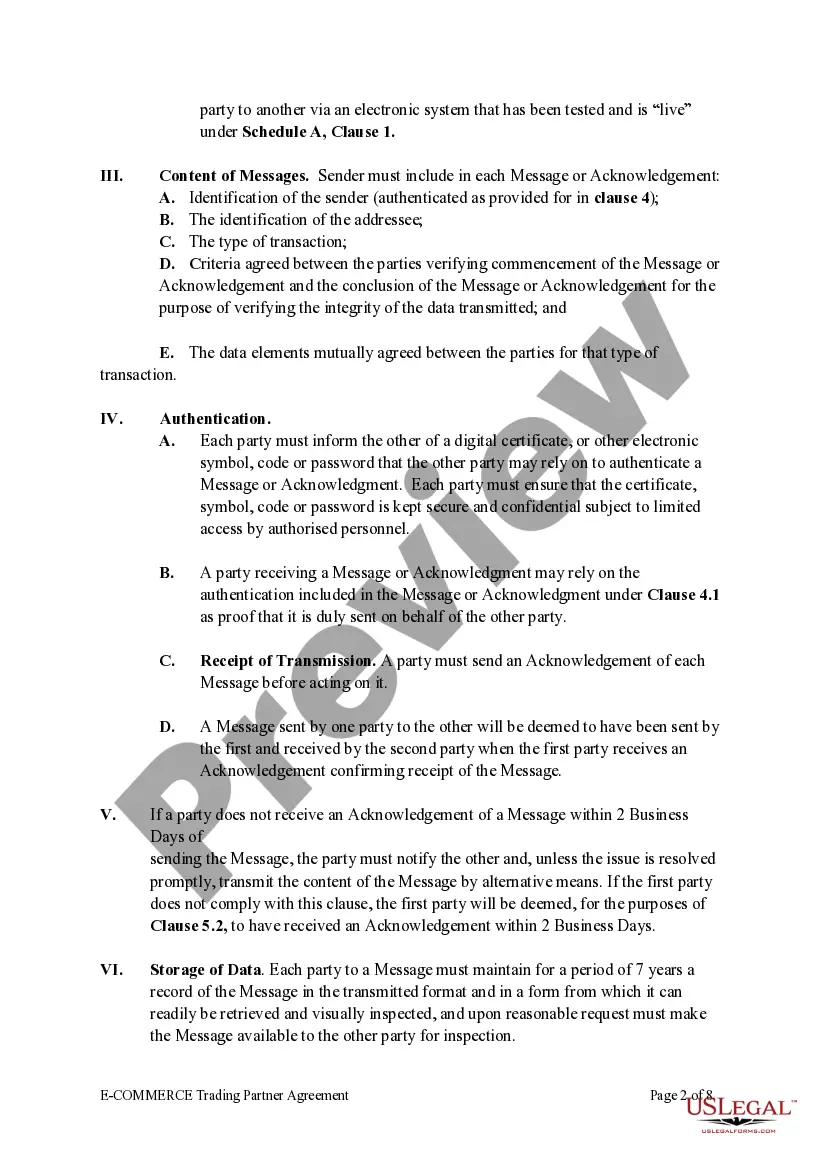
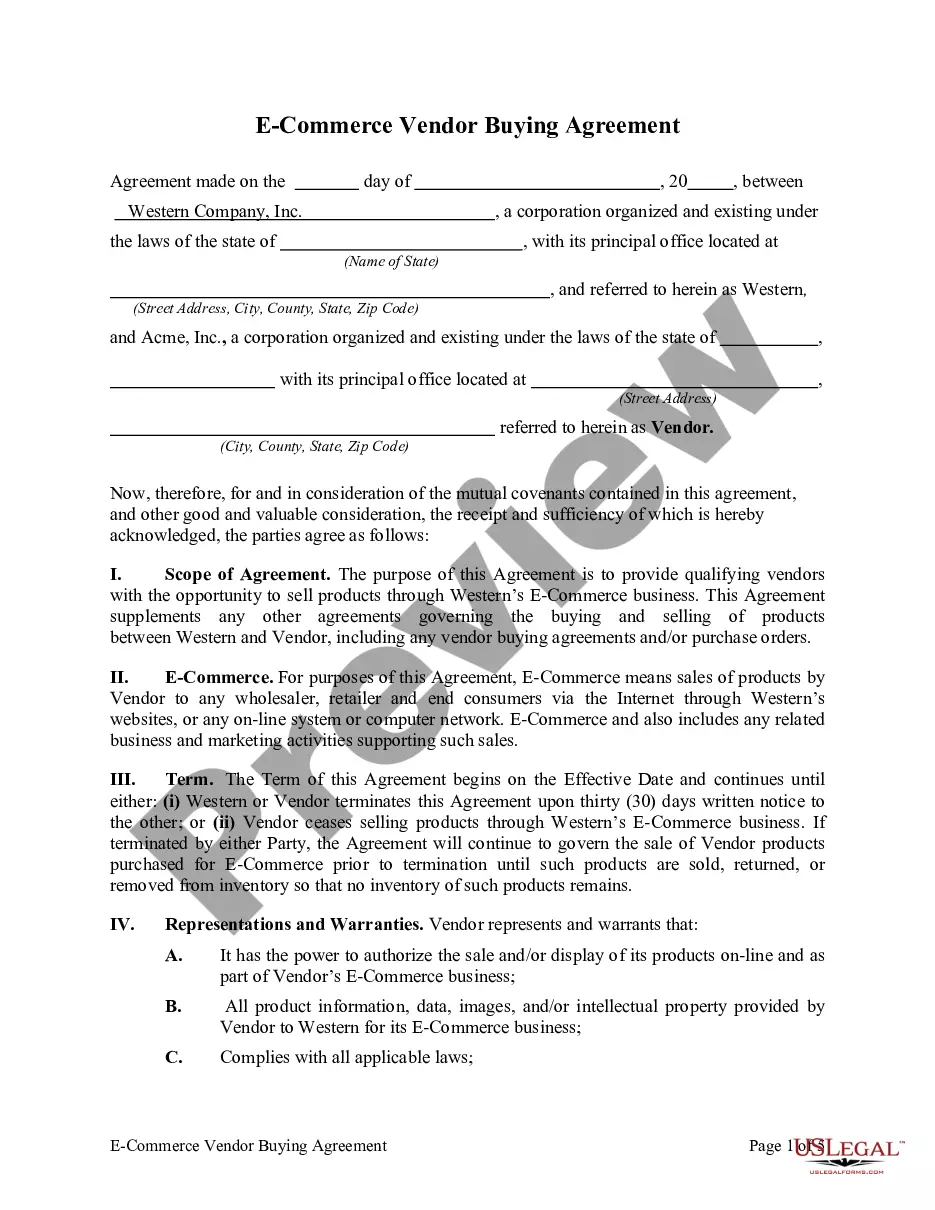
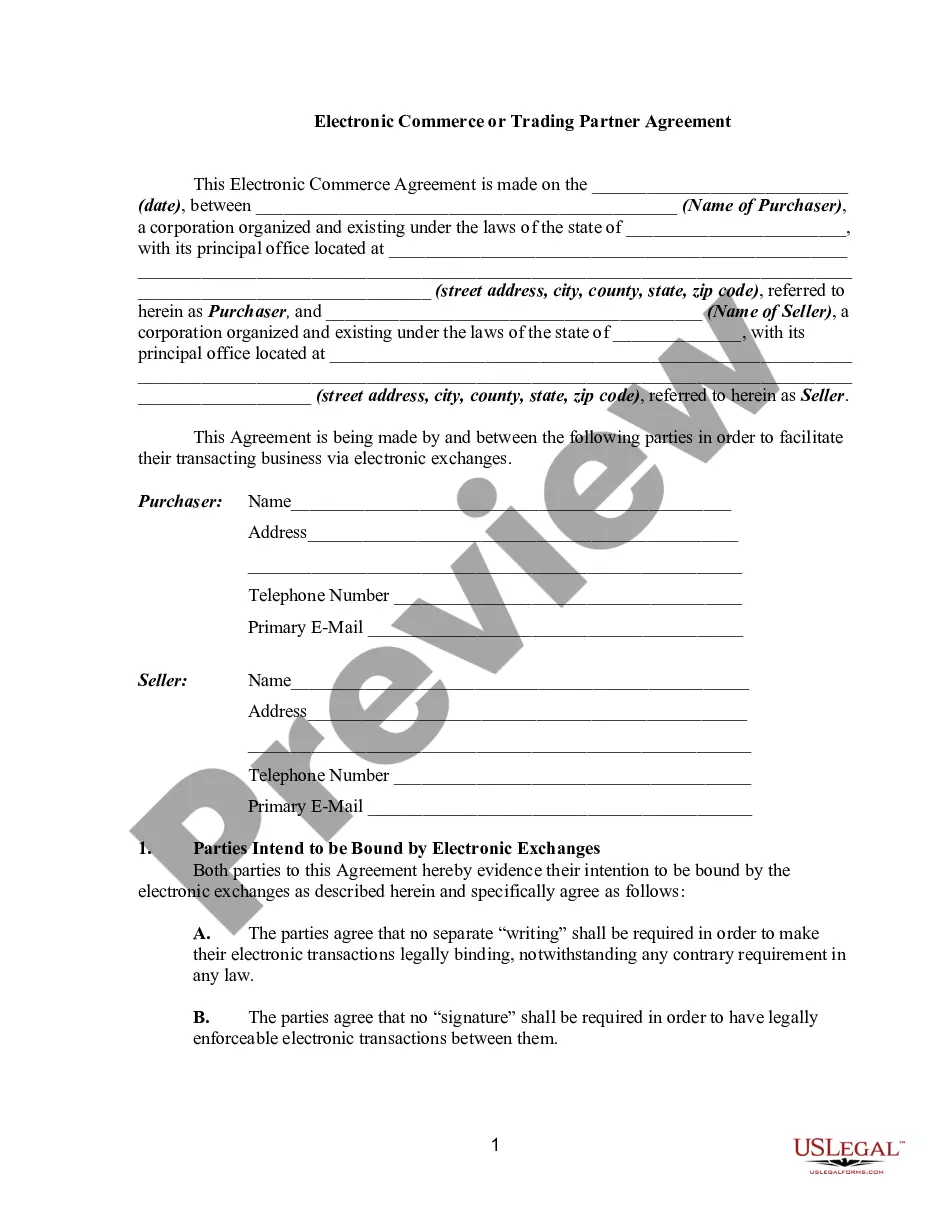
ECommerce agreements disclose the contractual relationship and obligations between a website owner and its commercial users.
The hierarchical structure of an ecommerce website should be no more than 3 levels deep, which means that a single homepage should be at the top of the hierarchy followed by the categories (level 1), subcategories (level 2), and then product pages (level 3).
Write high quality product reviews to help shoppers decide on the right product for their needs. Avoid issues related to crawling and URL design that are specific to ecommerce sites. Design a site navigation structure and link between pages to help Google understand what is most important on your ecommerce site.
How to write a business contract Determine why you need a contract. Define all applicable parties. Include all essential elements of a contract. Select the appropriate governing law and jurisdiction. Write everything in plain language. Use repeatable language and formats when possible. Use tables, lists, and other tools.
While the fundamentals of a paper-based contract apply to e-contracts, the techniques for concluding the e-contract are derived from Indian Contract Law and are nearly identical to paper-based contracts. E-commerce refers to the purchasing and selling of information, products, and services through computer networks.