E Commerce Agreement Template With Answers In Utah
Description



Get your form ready online
Our built-in tools help you complete, sign, share, and store your documents in one place.
Make edits, fill in missing information, and update formatting in US Legal Forms—just like you would in MS Word.
Download a copy, print it, send it by email, or mail it via USPS—whatever works best for your next step.
Sign and collect signatures with our SignNow integration. Send to multiple recipients, set reminders, and more. Go Premium to unlock E-Sign.
If this form requires notarization, complete it online through a secure video call—no need to meet a notary in person or wait for an appointment.
We protect your documents and personal data by following strict security and privacy standards.

Make edits, fill in missing information, and update formatting in US Legal Forms—just like you would in MS Word.

Download a copy, print it, send it by email, or mail it via USPS—whatever works best for your next step.

Sign and collect signatures with our SignNow integration. Send to multiple recipients, set reminders, and more. Go Premium to unlock E-Sign.

If this form requires notarization, complete it online through a secure video call—no need to meet a notary in person or wait for an appointment.

We protect your documents and personal data by following strict security and privacy standards.
Looking for another form?







Form popularity
FAQ
Link in Footer: Place a link to the terms and conditions in the footer of every page on your website. During Checkout: Include a checkbox for customers to agree to the terms and conditions during the checkout process. Plain Language: Use clear and simple language to make the terms easily understandable.
The hierarchical structure of an ecommerce website should be no more than 3 levels deep, which means that a single homepage should be at the top of the hierarchy followed by the categories (level 1), subcategories (level 2), and then product pages (level 3).
You can legally write your own terms and conditions agreement. While some companies rely on lawyers to write their terms for them — like platforms that target minors under 18 or deal with sensitive information — this is not always necessary, and you don't need one to create a legally-enforceable agreement.
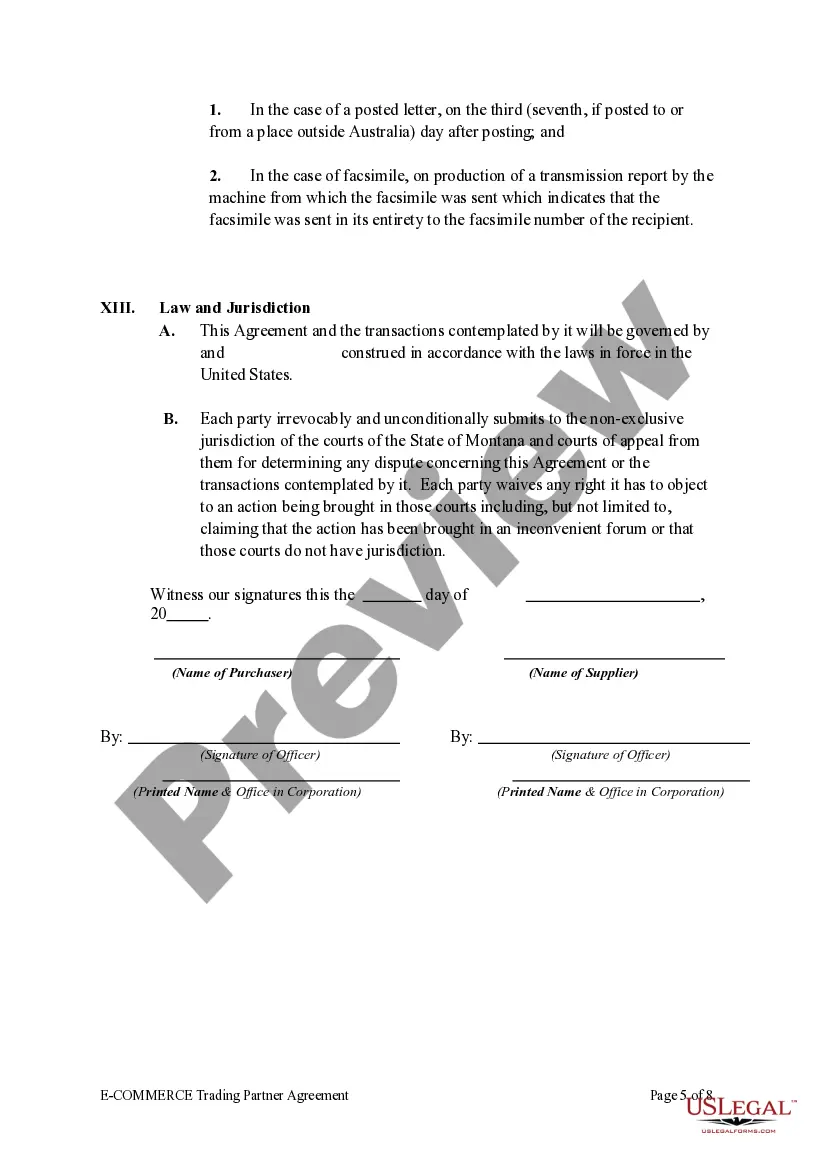
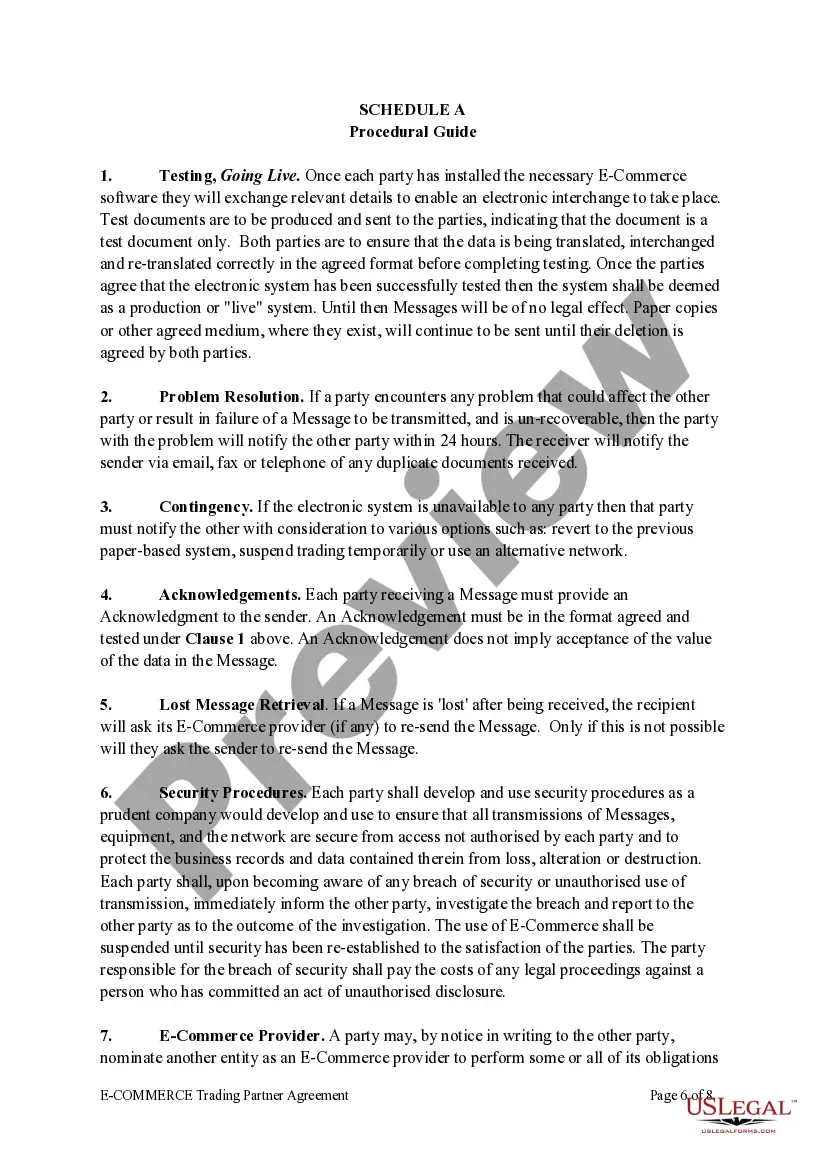
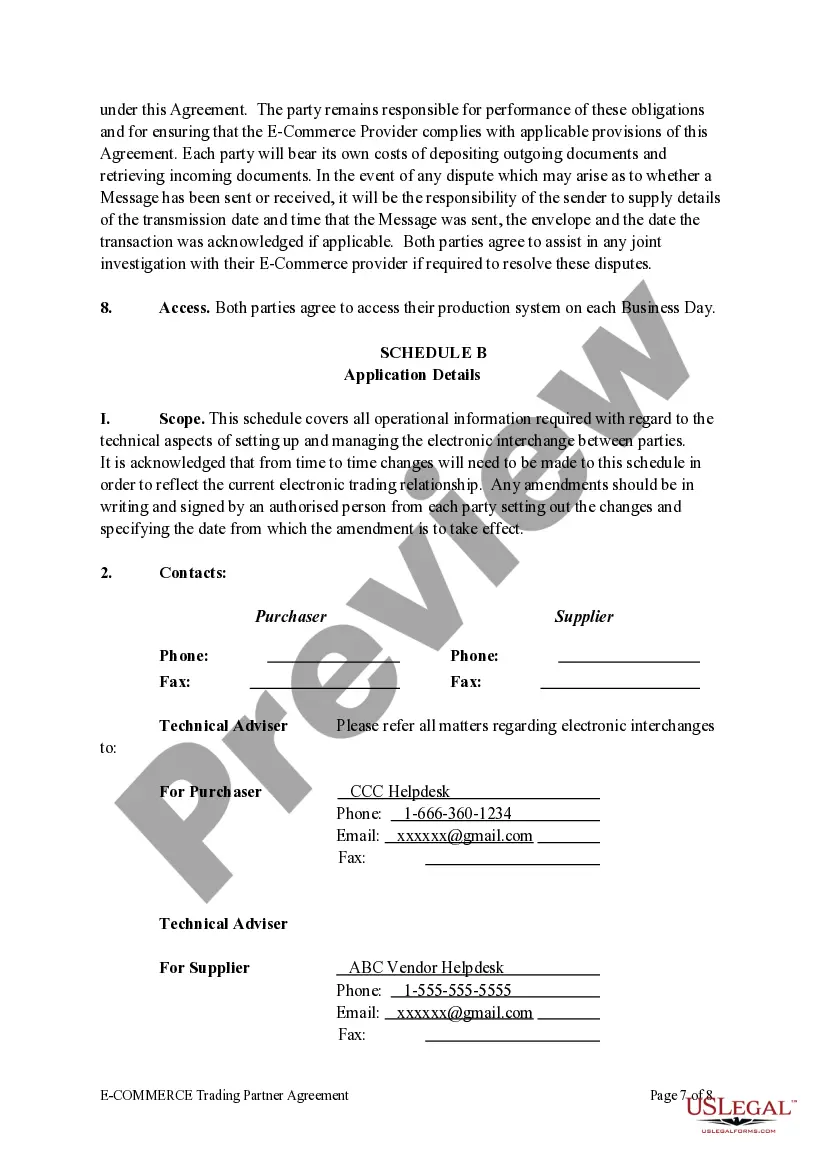
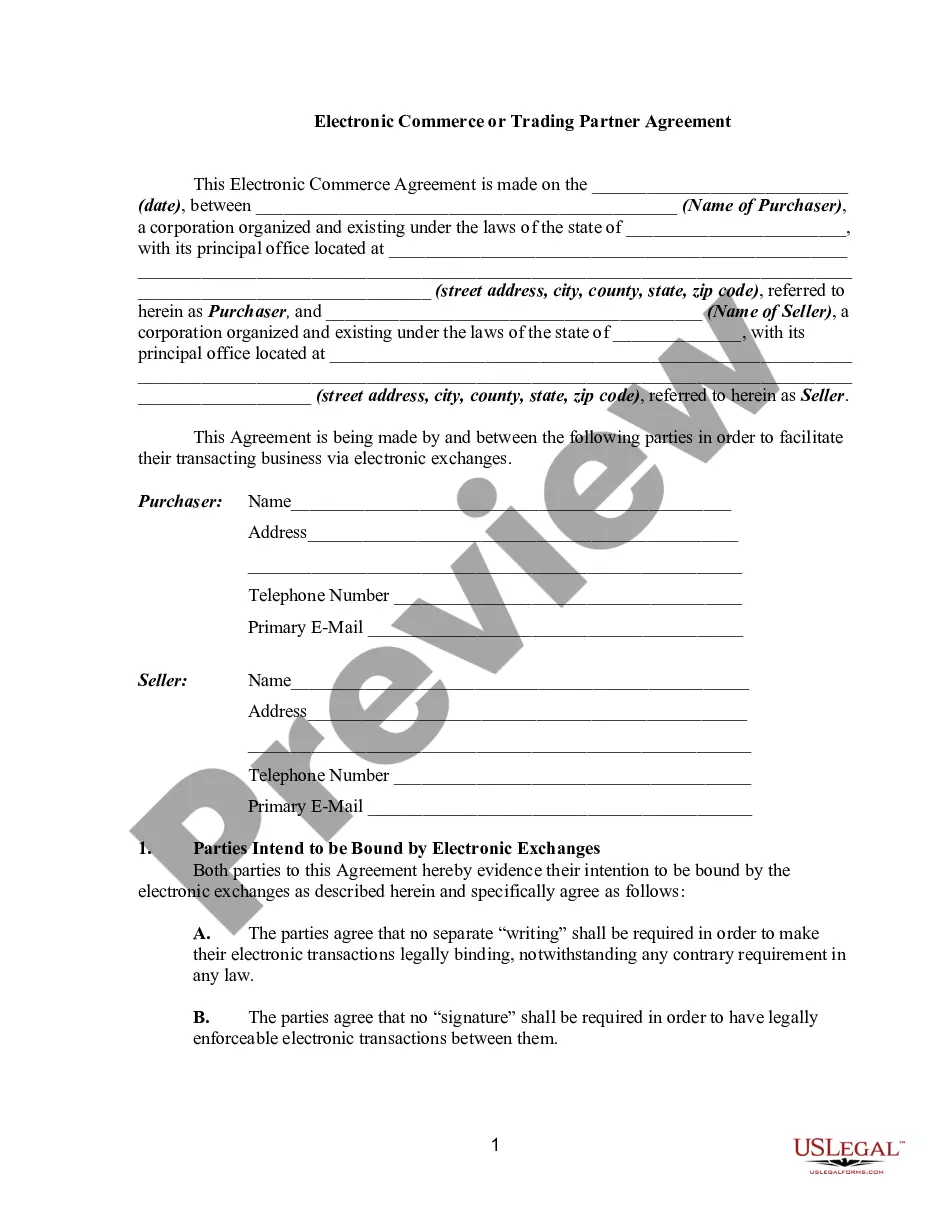
ECommerce agreements disclose the contractual relationship and obligations between a website owner and its commercial users.
Some quick examples are the use of the content (copyright) , the rules that users must follow while interacting with one another on the website / app and, finally, rules related to the cancellation or suspension of a user's account etc.
What are Terms of Service (ToS)? Terms of Service can be referred to in various ways: Terms and Conditions, Terms of Use, End User License Agreement (EULA). These names usually represent more or less the same thing: a legally binding agreement between the owner of a website/ app and their users.
commerce (electronic commerce) is the buying and selling of goods and services, or the transmitting of funds or data, over an electronic network, primarily the internet.
ECommerce agreements disclose the contractual relationship and obligations between a website owner and its commercial users.
Business-to-Business (B2B) Business-to-Consumer (B2C) Consumer-to-Consumer (C2C) Consumer-to-Business (C2B)
In general, a good contract template will include: Names and contact info of everyone involved. Details about the goods or services being offered. How and when payments should be made. How long the agreement lasts. What each party needs to do. How to end the contract if needed. Ways to solve disagreements.