Annual Meeting Do For Nonprofit Organization In Chicago
Description
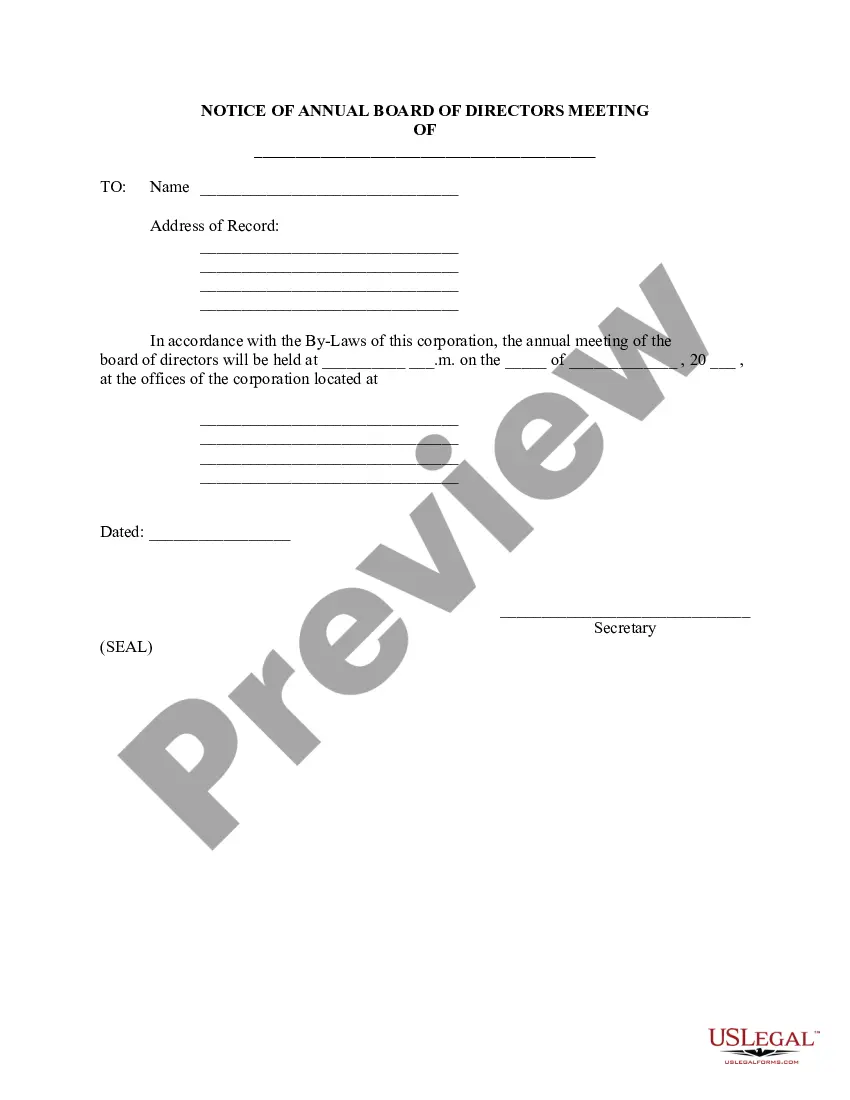



Get your form ready online
Our built-in tools help you complete, sign, share, and store your documents in one place.
Make edits, fill in missing information, and update formatting in US Legal Forms—just like you would in MS Word.
Download a copy, print it, send it by email, or mail it via USPS—whatever works best for your next step.
Sign and collect signatures with our SignNow integration. Send to multiple recipients, set reminders, and more. Go Premium to unlock E-Sign.
If this form requires notarization, complete it online through a secure video call—no need to meet a notary in person or wait for an appointment.
We protect your documents and personal data by following strict security and privacy standards.

Make edits, fill in missing information, and update formatting in US Legal Forms—just like you would in MS Word.

Download a copy, print it, send it by email, or mail it via USPS—whatever works best for your next step.

Sign and collect signatures with our SignNow integration. Send to multiple recipients, set reminders, and more. Go Premium to unlock E-Sign.

If this form requires notarization, complete it online through a secure video call—no need to meet a notary in person or wait for an appointment.

We protect your documents and personal data by following strict security and privacy standards.
Looking for another form?







Form popularity
FAQ
In general, exempt organizations are required to file annual returns, although there are exceptions. If an organization does not file a required return or files late, the IRS may assess penalties.
The chair calls the meeting to order with a simple statement. They should say something along the lines of: “Good morning/evening, everyone! It's state the date and time, and I'd like to call the meeting of organization name to order.”
President: The president of your board of directors is the head of your nonprofit board. They preside at board meetings and create meeting agendas. This individual also supervises all of the business affairs of the board and acts as the primary contact for the group.
Tips on How to Run a Nonprofit Board Meeting Set clear objectives. Create a focused meeting agenda. Prepare meeting packets. Start and end on time. Set out guidelines or procedures. Encourage input from everyone. Take detailed meeting minutes. Conduct regular post-meeting surveys.
Here are some key considerations you should take into consideration at this mid-year mark. What is the purpose of an annual meeting for a nonprofit? Annual meetings are typically required under an organization's governing documents.
How to Run a Successful Nonprofit Board Meeting in 8 Steps Send Out the Agenda Early. Start and End on Time. Implement Robert's Rules of Order. Ensure You Have Someone Responsible for Detailed Meeting Minutes. Focus on Strategy. Give Everyone a Chance to Speak. Ensure Everyone Knows What They're Responsible For.
To reduce risk, most nonprofits take special care to enact the 49% rule. That means that the percentage of board members that are considered interested directors is limited to less than half of the total number of members.
In California, for instance, the Corporations Code includes certain mandatory rules for how nonprofit corporations conduct meetings, but there is nothing at all about using or adopting Robert's Rules of Order or any other specific manual.
The officers of the organization prepare the agenda with assistance from the organization advisor. An agenda starts with a list of general business items. Specific topics that are to be discussed at the meeting are placed under the proper agenda item in an outline format.
Among many nonprofit board responsibilities is determining when and how to gather. In many states, the law actually requires that boards meet at least once a year. However, there are also reasons that you might call a board meeting outside of the minimum requirement.

