Extension Time In Pcr In Maricopa
Description
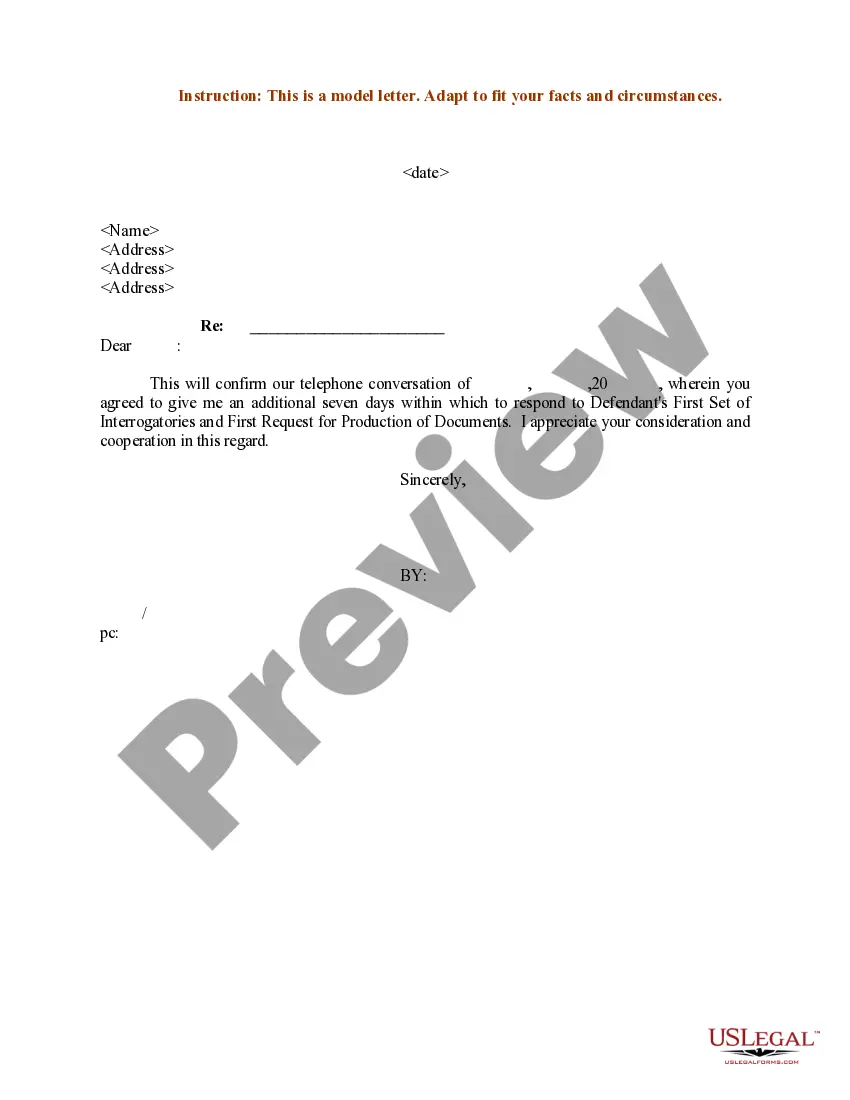
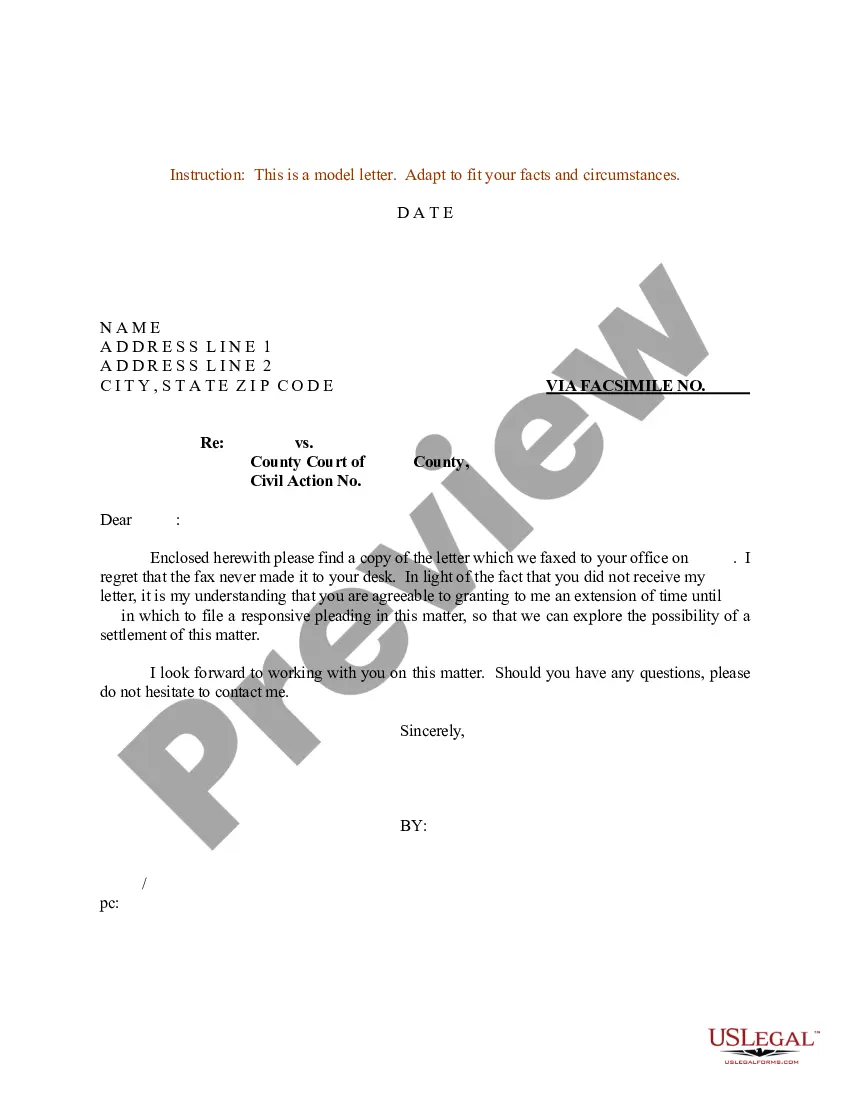
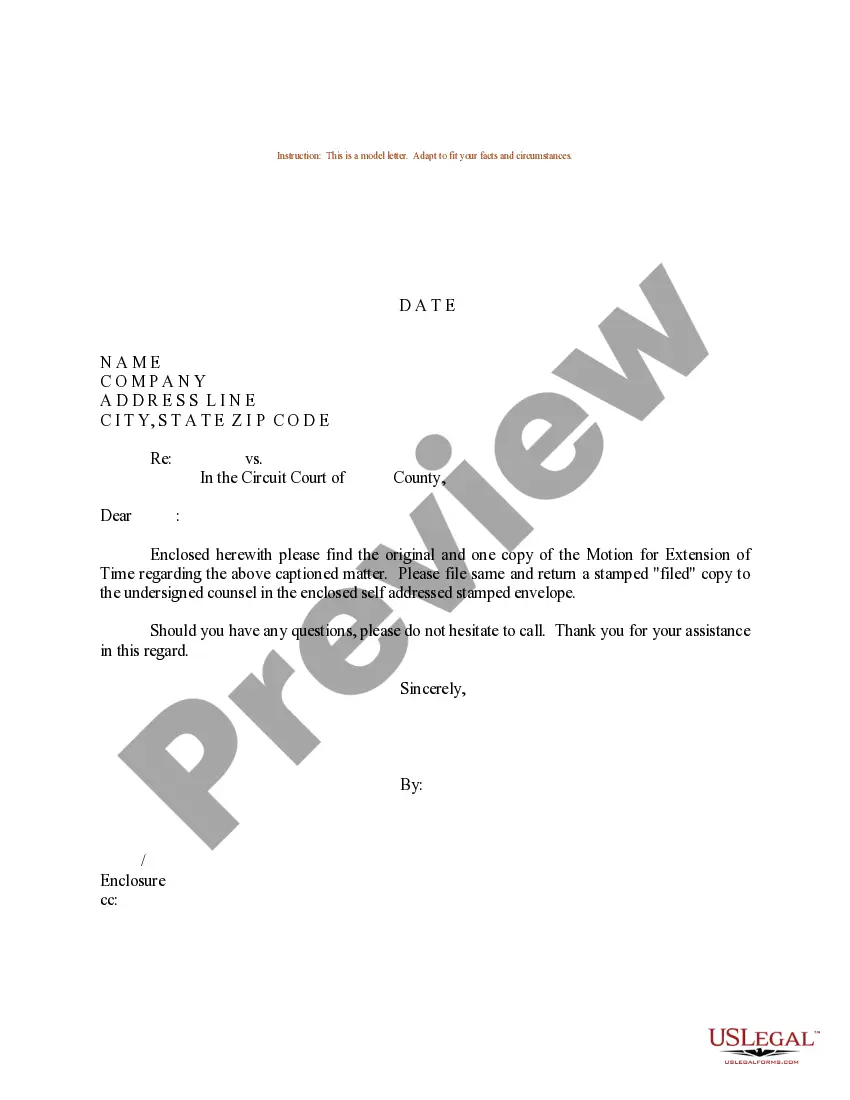

Get your form ready online
Our built-in tools help you complete, sign, share, and store your documents in one place.
Make edits, fill in missing information, and update formatting in US Legal Forms—just like you would in MS Word.
Download a copy, print it, send it by email, or mail it via USPS—whatever works best for your next step.
Sign and collect signatures with our SignNow integration. Send to multiple recipients, set reminders, and more. Go Premium to unlock E-Sign.
If this form requires notarization, complete it online through a secure video call—no need to meet a notary in person or wait for an appointment.
We protect your documents and personal data by following strict security and privacy standards.

Make edits, fill in missing information, and update formatting in US Legal Forms—just like you would in MS Word.

Download a copy, print it, send it by email, or mail it via USPS—whatever works best for your next step.

Sign and collect signatures with our SignNow integration. Send to multiple recipients, set reminders, and more. Go Premium to unlock E-Sign.

If this form requires notarization, complete it online through a secure video call—no need to meet a notary in person or wait for an appointment.

We protect your documents and personal data by following strict security and privacy standards.
Looking for another form?







Form popularity
FAQ
Post-Conviction Relief. Process. A defendant who requests post-conviction relief asks the court to vacate or modify a judgment of conviction, or to reduce or modify a sentence. The process for requesting post-conviction relief is contained in Rules 32 and 33 of the Arizona Rules of Criminal Procedure.
Step : 3 Extension Generally, the reaction mixture is heated to a temperature intermediate between denaturation and annealing at this stage. 72°C is the ideal temperature for Taq polymerase. The polymerase extends the primers from 5' to 3'.
A typical PCR cycle includes an extension step at 72°C after denaturation of double-stranded DNA and annealing of oligonucleotide primers. At this temperature the thermostable poly-merase replicates the DNA at an optimal rate that depends on the buffer and nature of the DNA template ( 1 ).
Any person who pled guilty or no contest, admitted a probation violation, or whose probation was automatically violated based upon a plea of guilty or no contest shall have the right to file a post-conviction relief proceeding, and this proceeding shall be known as a Rule 32 of-right proceeding.
The inverse fusion PCR was run by using Phusion DNA-polymerase (0.02 units µl−1) under the following conditions: 98°C for 3 min, 25 cycles of 98°C – 20 s, 58°C – 30 s, 72°C – 30 s kb−1 and a final extension step at 72°C for 7 min.
The final stage is the extension step (20 sec to 1 min at 72 °C), which is performed so that the DNA polymerase extends the primer sequences from the 3' of each primer to the end of the amplicon. A 1 min extension is typically sufficient to synthesize PCR fragments up to 2 kilobases (kb).
Extension is achieved by using the loosened nucleotides of each base to grow the complementary DNA strand. The end result is two double-stranded products of DNA. The temperature that is used during the extension phase is dependent on the DNA polymerase that is used.
Winning Post-Conviction Relief You must be able to prove that the trial court's decision was unfair and that you have grounds for relief. PCR can only be granted under certain circumstances, such as constitutional violations or newly emerged evidence.
Step 2, annealing: the temperature is lowered to enable the DNA primers to attach to the template DNA. Step 3, extending: the temperature is raised again and the new strand of DNA is made by the Taq polymerase enzyme. These three stages are repeated 20-40 times, doubling the number of DNA copies each time.
The final extension step follows completion of the last PCR cycle. In this step, the PCR mixture is incubated at the extension temperature (generally 72°C) for a final 5–15 minute period.

