Confirmation Letter Sample For Business In Collin
Description


Get your form ready online
Our built-in tools help you complete, sign, share, and store your documents in one place.
Make edits, fill in missing information, and update formatting in US Legal Forms—just like you would in MS Word.
Download a copy, print it, send it by email, or mail it via USPS—whatever works best for your next step.
Sign and collect signatures with our SignNow integration. Send to multiple recipients, set reminders, and more. Go Premium to unlock E-Sign.
If this form requires notarization, complete it online through a secure video call—no need to meet a notary in person or wait for an appointment.
We protect your documents and personal data by following strict security and privacy standards.

Make edits, fill in missing information, and update formatting in US Legal Forms—just like you would in MS Word.

Download a copy, print it, send it by email, or mail it via USPS—whatever works best for your next step.

Sign and collect signatures with our SignNow integration. Send to multiple recipients, set reminders, and more. Go Premium to unlock E-Sign.

If this form requires notarization, complete it online through a secure video call—no need to meet a notary in person or wait for an appointment.

We protect your documents and personal data by following strict security and privacy standards.
Looking for another form?






Form popularity
FAQ
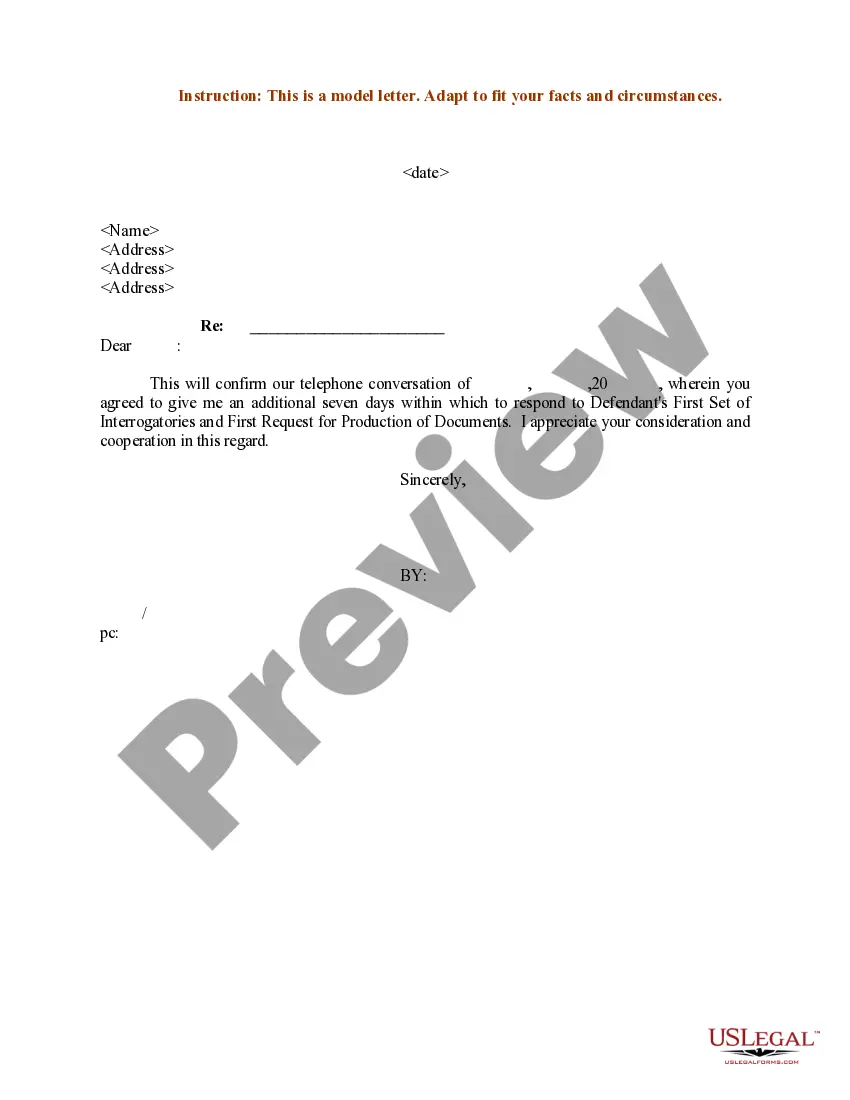
A confirmation letter is an official letter given to a person by another party to confirm that they accepted or approved a particular request. A letter of confirmation usually contains essential details pertaining to matters like purchases or the acquisition of products.
If you need to write a confirmation letter, here are five helpful steps you can use to write your own: Include a letter header. Start with an explanation. Add detailed information. Highlight attachments. End with a supportive statement.
Confirmation Letter Format Header: Includes the company's name, address, and official contact information. Date: Includes the date on which the letter is being sent. Recipient's information: Includes the recipient's name, title, and official address. Subject: It describes the purpose of the letter.
Confirmation letters include the following components: Recipient Information: The name and contact information of the recipient. Sender Information: The name and contact information of the sender. Date: The date on which the letter is sent. Subject: A brief subject line indicating the purpose of the letter.
Introduce yourself and let the Priest know you are preparing for confirmation. Talk about your sponsor and the activities you have done together. Explain how your family background influences you to be a faithful Catholic. Mention you would want to be baptized on a given date. End with a note of thanks
How to write a confirmation letter in 5 steps Include a letter header. At the top of your confirmation letter, you can include a header with contact information for yourself and the recipient. Start with an explanation. Add detailed information. Highlight attachments. End with a supportive statement.
If you need to write a confirmation letter, here are five helpful steps you can use to write your own: Include a letter header. Start with an explanation. Add detailed information. Highlight attachments. End with a supportive statement.
Writing the Confirmation Letter Step 1: Start with a Proper Salutation. Address the recipient using their professional title and name. Step 2: Clearly State the Purpose of the Letter. Step 3: Provide Relevant Details. Step 4: Include Any Necessary Instructions or Next Steps. Step 5: Express Gratitude and Offer Assistance.

