Sample Nonprofit Gift Acknowledgement Letter With No Experience In Santa Clara
Description



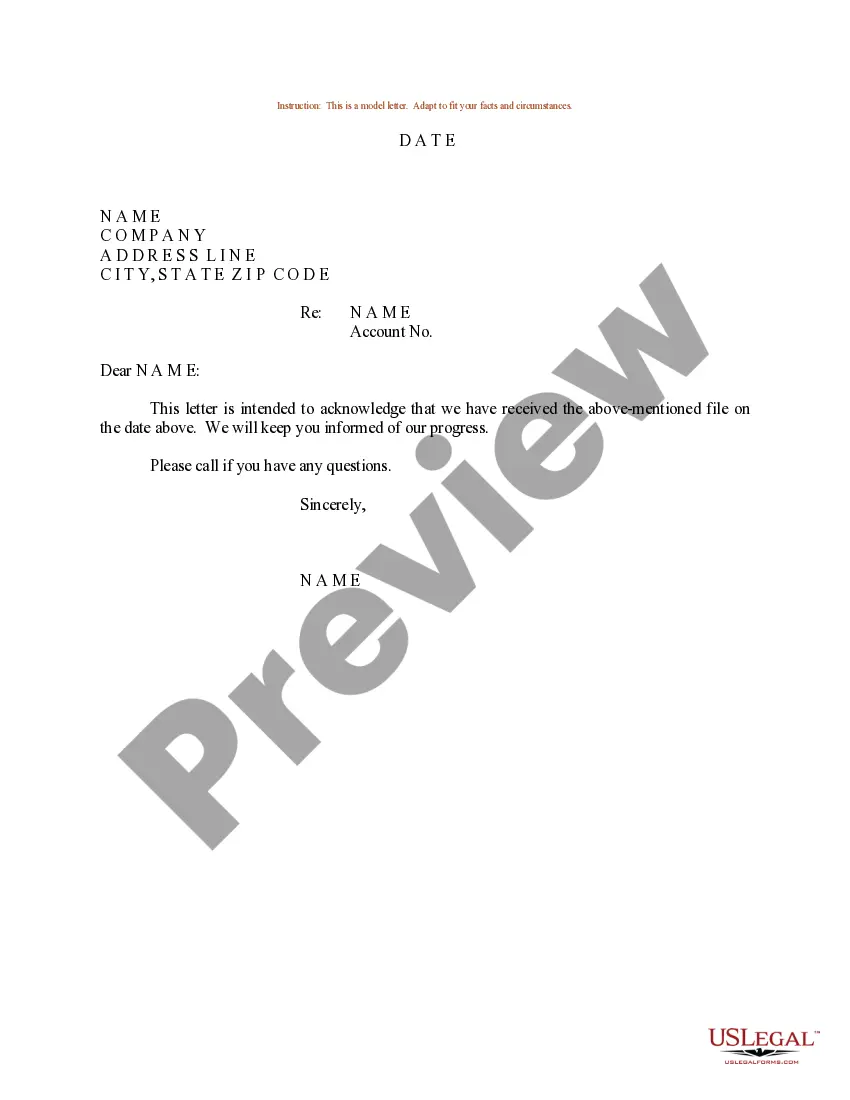
Get your form ready online
Our built-in tools help you complete, sign, share, and store your documents in one place.
Make edits, fill in missing information, and update formatting in US Legal Forms—just like you would in MS Word.
Download a copy, print it, send it by email, or mail it via USPS—whatever works best for your next step.
Sign and collect signatures with our SignNow integration. Send to multiple recipients, set reminders, and more. Go Premium to unlock E-Sign.
If this form requires notarization, complete it online through a secure video call—no need to meet a notary in person or wait for an appointment.
We protect your documents and personal data by following strict security and privacy standards.

Make edits, fill in missing information, and update formatting in US Legal Forms—just like you would in MS Word.

Download a copy, print it, send it by email, or mail it via USPS—whatever works best for your next step.

Sign and collect signatures with our SignNow integration. Send to multiple recipients, set reminders, and more. Go Premium to unlock E-Sign.

If this form requires notarization, complete it online through a secure video call—no need to meet a notary in person or wait for an appointment.

We protect your documents and personal data by following strict security and privacy standards.
Looking for another form?







Form popularity
FAQ
Outline the information that needs to be included in the letter Start with a professional greeting. Identify the person the letter is acknowledging. Describe the action that is being acknowledged. Express gratitude for the action taken. Include any relevant details. Close with a professional sign-off. Add contact information.
While we recommend sending donation acknowledgment letters to all of your donors, you are legally obligated to send documentation to donors who have given a gift of $250 or more.
A letter of acknowledgement aims to intimate the concerned party that the documents or items requested in a previous communication have been received. The acknowledgement letter is a professional courtesy extended by businesses to maintain professional relationships.
A gift acknowledgment letter, also known as a donation acknowledgment letter, is a formal document sent by a nonprofit to donors to express gratitude for their contributions. This appreciation message also serves as a way for donors to claim tax exemptions and reap the financial benefit of giving to your cause.
How do you write a fundraising letter? Key steps Start with a personalized greeting. Explain your mission. Describe your current initiative. Outline your project's needs and what you hope to accomplish. Add meaningful photographs or infographics. Show the tangible impact associated with specific donation amounts.
While we recommend sending donation acknowledgment letters to all of your donors, you are legally obligated to send documentation to donors who have given a gift of $250 or more. The IRS requires nonprofit organizations to provide a formal acknowledgment letter to these donors for tax purposes.
Here are a few effective methods: Verbal Acknowledgment. Sometimes, a simple spoken acknowledgment carries the most weight. Written Acknowledgment. Written acknowledgment works just as well, especially for contributions that might otherwise go unnoticed. Tangible s. Digital Badges and Signifiers.
How to Write a Gift Acknowledgment Letter State the purpose of your letter. Start your gift acknowledgment letter with a confirmation of the donation. Make your letter visually engaging. Personalize your note. Explain the impact of the gift. Express heartfelt gratitude. Invite supporters to stay involved.
How do you fill out an acknowledgment letter? Date of receipt: State when the document or goods were received. Description: Provide a concise description of the received document or goods. Confirmation statement: Include a statement confirming the safe receipt of the document or goods.
Thank-you letters should always be written in a personal, down-to-earth voice. You want to show your appreciation for the effort your donor has made and show how far their donation has gone. You should always address the donor by name, and focus on how they've helped your organization.
