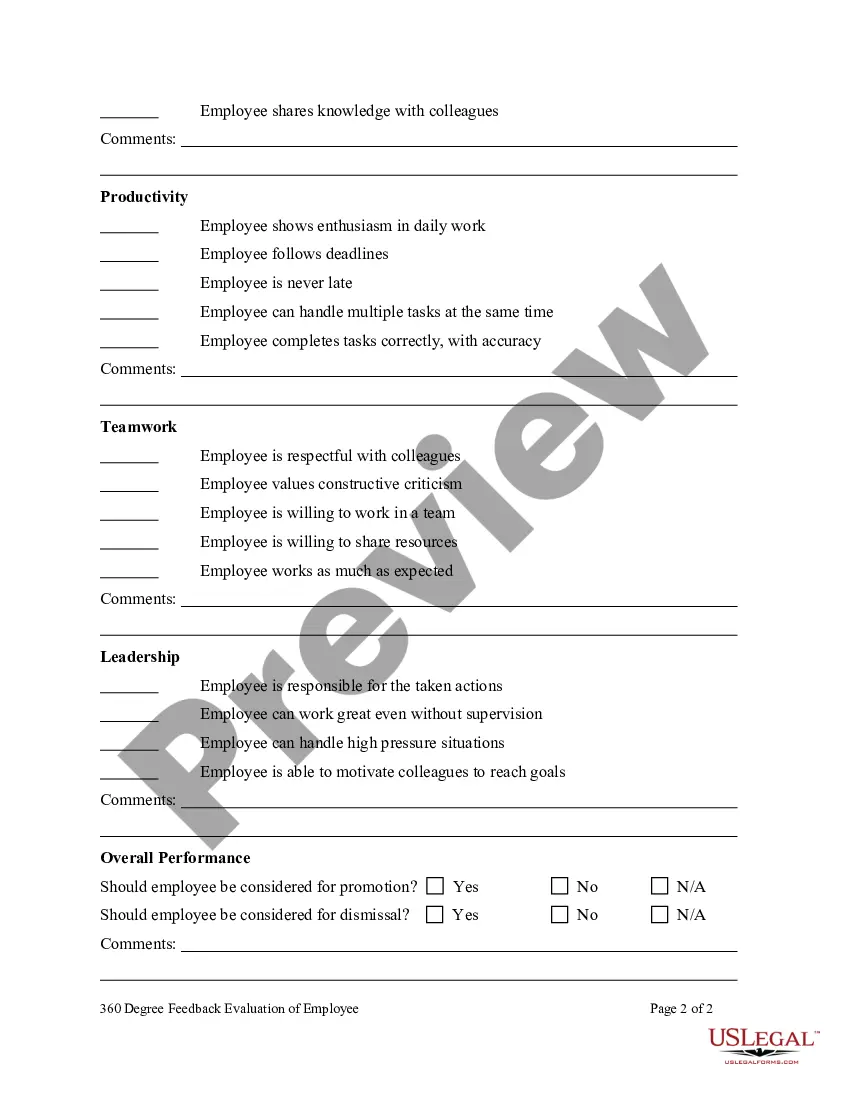
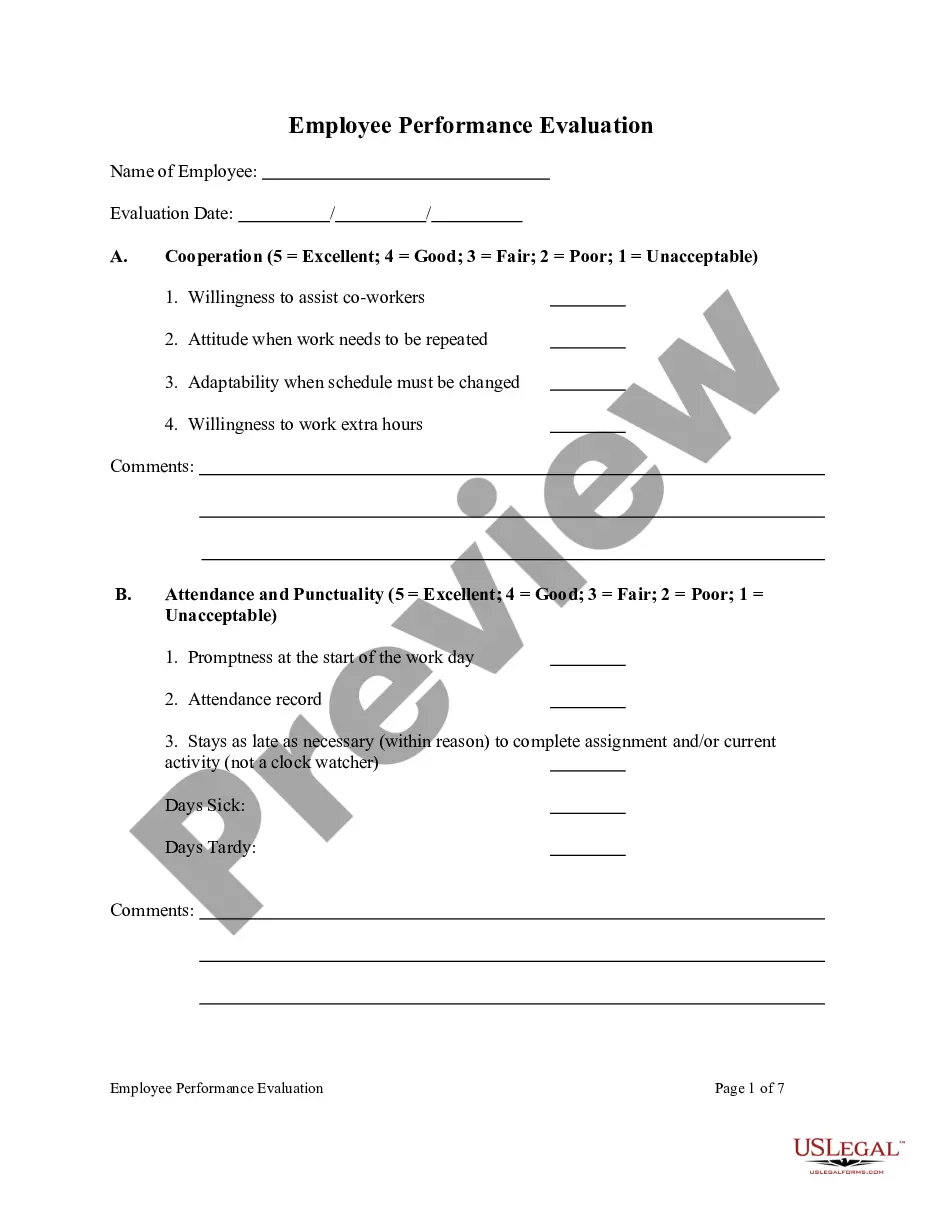
360 Feedback Template For Peers In San Antonio
Description

Get your form ready online
Our built-in tools help you complete, sign, share, and store your documents in one place.
Make edits, fill in missing information, and update formatting in US Legal Forms—just like you would in MS Word.
Download a copy, print it, send it by email, or mail it via USPS—whatever works best for your next step.
Sign and collect signatures with our SignNow integration. Send to multiple recipients, set reminders, and more. Go Premium to unlock E-Sign.
If this form requires notarization, complete it online through a secure video call—no need to meet a notary in person or wait for an appointment.
We protect your documents and personal data by following strict security and privacy standards.

Make edits, fill in missing information, and update formatting in US Legal Forms—just like you would in MS Word.

Download a copy, print it, send it by email, or mail it via USPS—whatever works best for your next step.

Sign and collect signatures with our SignNow integration. Send to multiple recipients, set reminders, and more. Go Premium to unlock E-Sign.

If this form requires notarization, complete it online through a secure video call—no need to meet a notary in person or wait for an appointment.

We protect your documents and personal data by following strict security and privacy standards.
Looking for another form?







Form popularity
FAQ
10 Open-Ended 360-Degree Feedback Questions What would you say are this person's strengths? What is one thing this employee should start doing? What is one thing this employee should continue doing? What is one thing this employee should stop doing? How well does this person manage their time and workload?
360-degree feedback (sometimes called 360 feedback) is feedback given to an employee from multiple sources as a form of performance management. These sources are typically colleagues, peers, direct reports, and/or clients.
How do you write a good 360 feedback? Add specific examples highlighting the strengths and areas with room for employee development. Instead of criticizing, provide actionable feedback with insights on how to improve. If you're unsure what's good feedback, you can use performance management software to help you.
How to design an effective 360 degree feedback questionnaire Identify the themes you want to measure. Create specific 360 questions based on your themes. Example 360 degree feedback questionnaire questions. Define your 360 degree feedback questionnaire rating scale. In conclusion.
“Your positivity always helps keep spirits high on our team.” 23. “I'm a big fan of your management style. Your (hands-on/hands-off/creative/detail-oriented) approach has really helped me to thrive in my role.”
Negative 360 Degree Feedback Examples For Managers From Their Boss. Here are six examples highlighting common areas where managers may receive negative feedback from their superiors and providing insights into areas for improvement: 1. “Your team's productivity has been consistently below expectations.
Best Practices for Writing Peer Reviews Be Specific and Actionable Vague feedback like “you're doing a good job” or “you need to improve” doesn't help the recipient. Balance Positives and Constructive Feedback ... Focus on Behaviors, Not Personalities ... Offer Solutions, Not Just Criticism ... Be Timely
One of the key steps to report 360-degree feedback results is to communicate the purpose and benefits of the process to your clients and their employees. You should explain why they received 360-degree feedback, how it aligns with their goals and values, and how it can help them grow and succeed.
Here are some best practices to ensure your peer reviews are both impactful and constructive: Be Specific and Actionable ... Balance Positives and Constructive Feedback ... Focus on Behaviors, Not Personalities ... Offer Solutions, Not Just Criticism ... Be Timely
