360 Evaluation Process In Oakland
Description

Get your form ready online
Our built-in tools help you complete, sign, share, and store your documents in one place.
Make edits, fill in missing information, and update formatting in US Legal Forms—just like you would in MS Word.
Download a copy, print it, send it by email, or mail it via USPS—whatever works best for your next step.
Sign and collect signatures with our SignNow integration. Send to multiple recipients, set reminders, and more. Go Premium to unlock E-Sign.
If this form requires notarization, complete it online through a secure video call—no need to meet a notary in person or wait for an appointment.
We protect your documents and personal data by following strict security and privacy standards.

Make edits, fill in missing information, and update formatting in US Legal Forms—just like you would in MS Word.

Download a copy, print it, send it by email, or mail it via USPS—whatever works best for your next step.

Sign and collect signatures with our SignNow integration. Send to multiple recipients, set reminders, and more. Go Premium to unlock E-Sign.

If this form requires notarization, complete it online through a secure video call—no need to meet a notary in person or wait for an appointment.

We protect your documents and personal data by following strict security and privacy standards.
Looking for another form?







Form popularity
FAQ
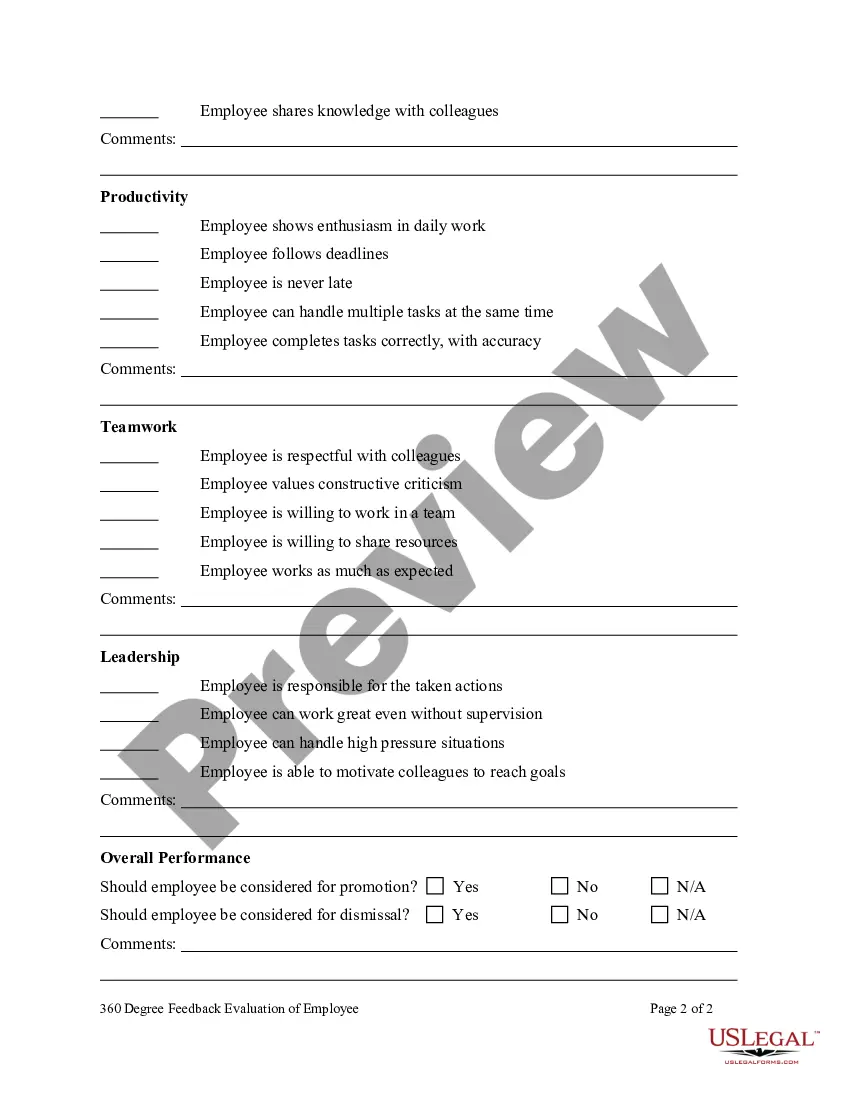
However, 360 reviews can be very quick – read on to learn more. Jack Zenger and Joseph Folkman, co-founders of the leadership development training firm Zenger Folkman believe that the 360 degree assessment should be no longer than 15 to 20 minutes.
Tips for Successfully Implementing a 360 Feedback Initiative at Your Organization Clarify the goals for the 360 feedback initiative. Address individual and organization readiness. Design the process. Select or design the tool. Identify and prepare participants. Prepare the organization. Administer the assessment.
Increases self-awareness – A 360-degree evaluation allows employees to take an in-depth look at their strengths and weaknesses. This is done not just from how they assess themselves but also from the eyes of their peers and managers.
7 steps for designing an effective 360 degree feedback review program Set clear goals. Train raters. Focus on natural strengths. Involve managers and leaders. Create buy-in and trust in the 360 development program. Know what to ask and how to ask it. Personalise the 360 degree feedback program to your organisation.
When you fill the form: Be honest and critical. Analyze your failures and mention the reasons for it. Keep the words minimal. Identify weaknesses. Mention your achievements. Link achievements to the job description and the organization's goals. Set the goals for the next review period. Resolve conflicts and grievances.
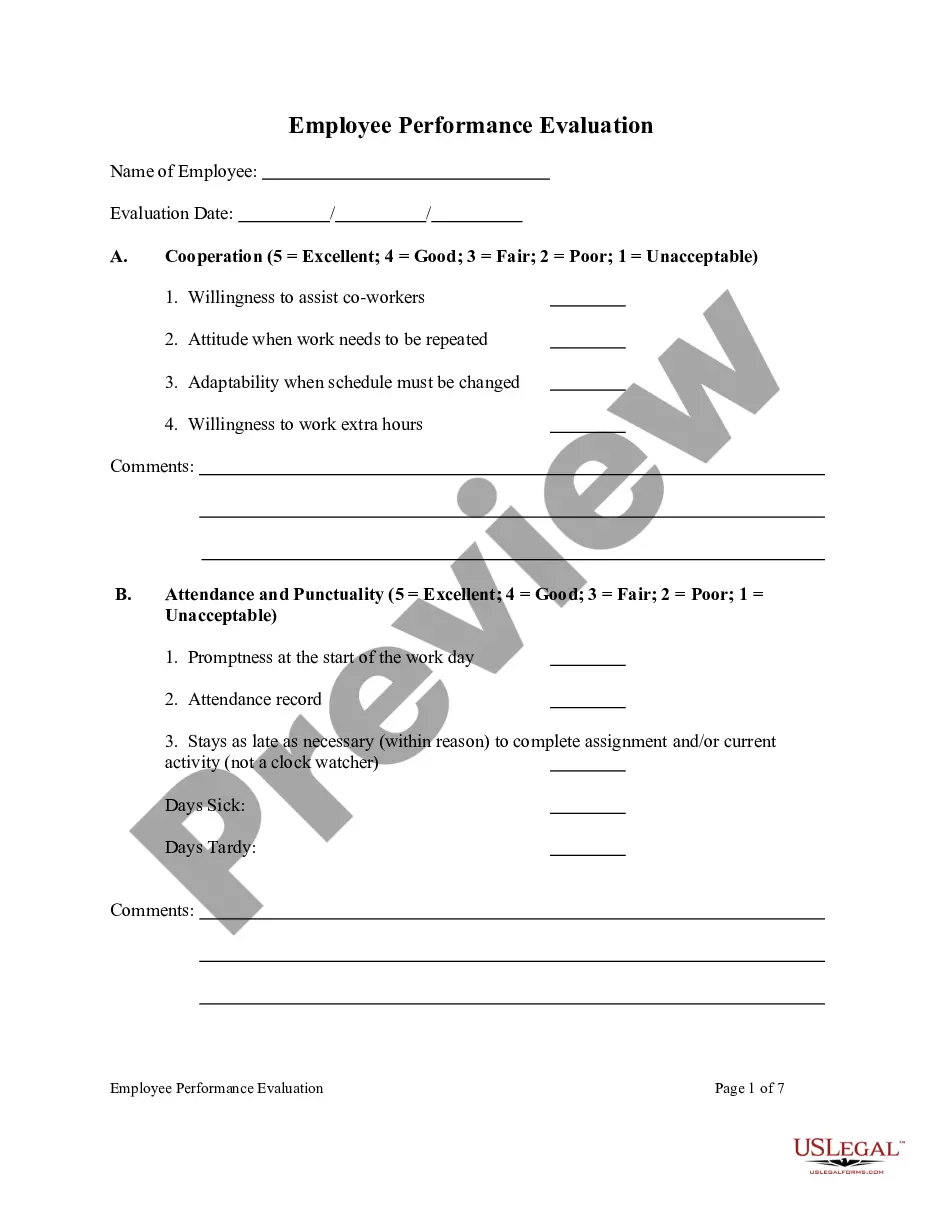
How to conduct 360 reviews Establish criteria for rating each employee. Invest time into developing useful, relevant questions that provide valuable insight. Choose who will assess each employee. Send surveys. Send the survey to the employee. Schedule the 360 evaluation. Review ratings with employee. Follow up on progress.
How to conduct 360 reviews Establish criteria for rating each employee. Invest time into developing useful, relevant questions that provide valuable insight. Choose who will assess each employee. Send surveys. Send the survey to the employee. Schedule the 360 evaluation. Review ratings with employee. Follow up on progress.
8-Step 360 Degree Feedback Process Timeline Define the Purpose of the 360 Degree Review. Select Raters. Design the Questionnaire. Communicate the 360 Degree Feedback. Distributing surveys. Collate and Analyze Feedback. Conduct Feedback Discussion. Implement Action Plan.
When you fill the form: Be honest and critical. Analyze your failures and mention the reasons for it. Keep the words minimal. Identify weaknesses. Mention your achievements. Link achievements to the job description and the organization's goals. Set the goals for the next review period. Resolve conflicts and grievances.
Figure 1: The Six Basic Steps of Evaluation Step 1: Understand the evaluation design. Step 2: Identify the evaluation questions. Step 3: Establish cooperative agreements. Step 4: Sample cases and collect your data. Step 5: Analyze your data. Step 6: Interpret your results.