360-degree Feedback Questionnaire For Managers In Minnesota
Description

Get your form ready online
Our built-in tools help you complete, sign, share, and store your documents in one place.
Make edits, fill in missing information, and update formatting in US Legal Forms—just like you would in MS Word.
Download a copy, print it, send it by email, or mail it via USPS—whatever works best for your next step.
Sign and collect signatures with our SignNow integration. Send to multiple recipients, set reminders, and more. Go Premium to unlock E-Sign.
If this form requires notarization, complete it online through a secure video call—no need to meet a notary in person or wait for an appointment.
We protect your documents and personal data by following strict security and privacy standards.

Make edits, fill in missing information, and update formatting in US Legal Forms—just like you would in MS Word.

Download a copy, print it, send it by email, or mail it via USPS—whatever works best for your next step.

Sign and collect signatures with our SignNow integration. Send to multiple recipients, set reminders, and more. Go Premium to unlock E-Sign.

If this form requires notarization, complete it online through a secure video call—no need to meet a notary in person or wait for an appointment.

We protect your documents and personal data by following strict security and privacy standards.
Looking for another form?










Form popularity
FAQ
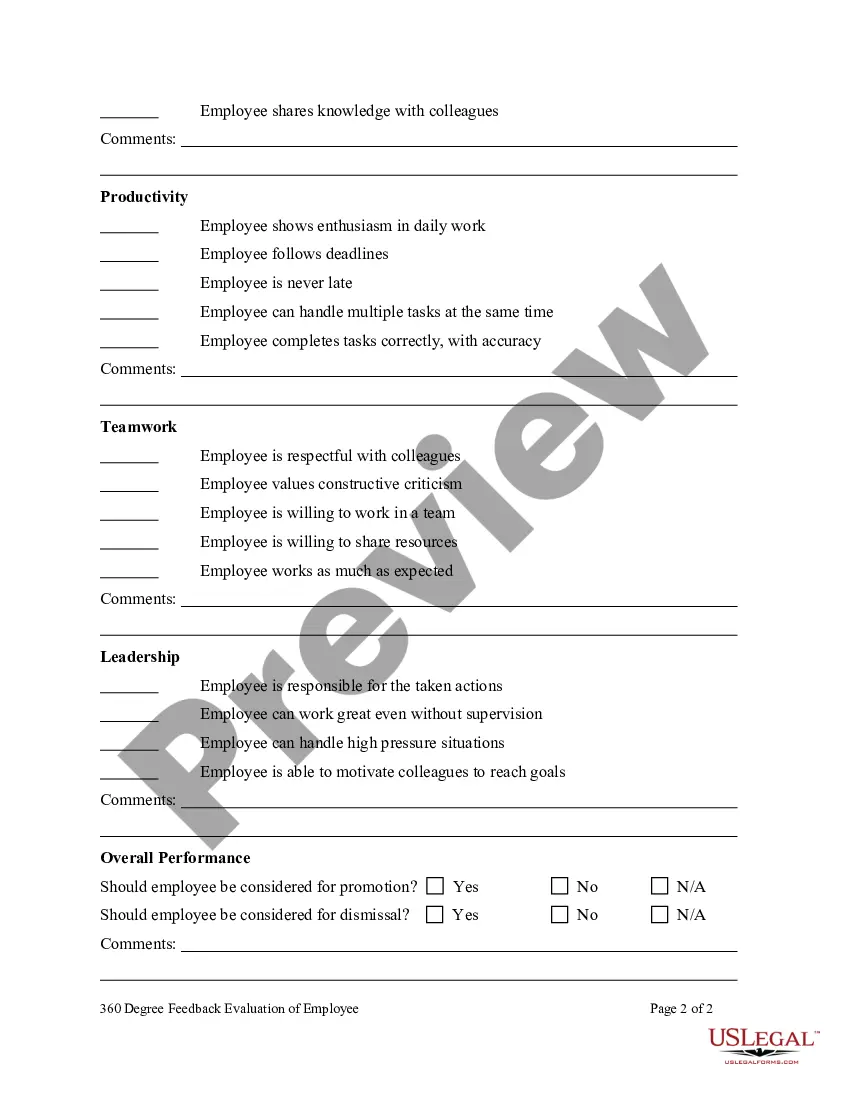
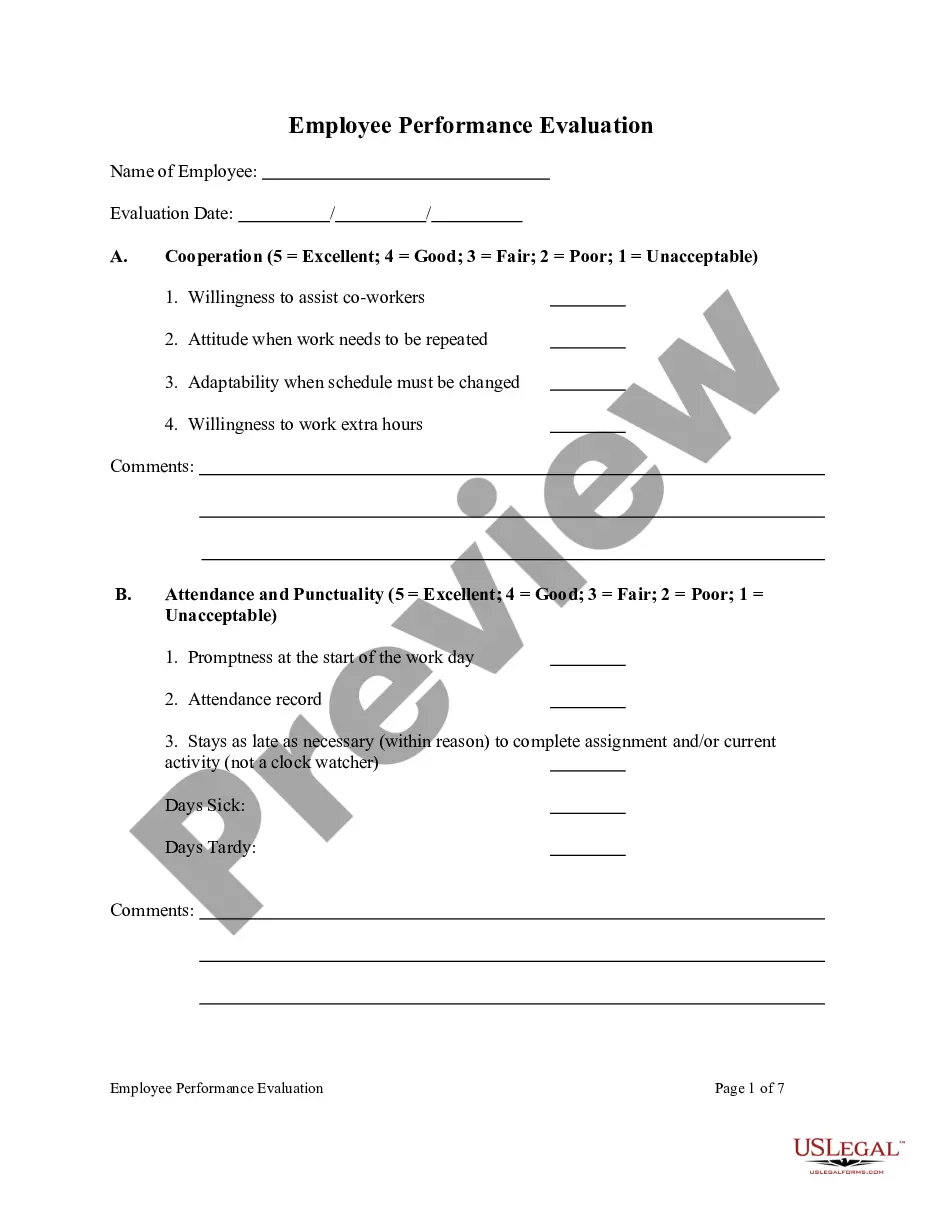
What Is 360-degree Feedback? Also called a multirater tool, 360-degree feedback is a process to survey a group of people who work around a leader about the leader's performance and behavior.
360 Feedback questionnaires measure subjective workplace behaviors and competencies. They provide information on how others perceive a coworker, direct report, or manager. The focus of a 360 evaluation should be on subjective areas such as teamwork, character, communication, and leadership effectiveness.
“I appreciate how you always listen to our ideas and encourage open communication within the team. It makes us feel valued and respected.” Highlighting this behaviour reinforces its positive impact on team morale.
10 Open-Ended 360-Degree Feedback Questions What would you say are this person's strengths? What is one thing this employee should start doing? What is one thing this employee should continue doing? What is one thing this employee should stop doing? How well does this person manage their time and workload?
Open-ended questions Examples include "How would you describe your manager's leadership style?" and "What are some areas where your manager could improve their leadership skills?"
Open-ended questions for 360 degree feedback assessments What else would you like to share about this employee? What has this employee done particularly well? What would make this employee more effective in their role? What other comments do you have?
A 360 leadership assessment is a feedback tool for measuring a leader's skills, behaviours, and competencies. A 360 degree leadership review collects anonymous feedback about a leader from the people working most closely with them. These people may include direct reports, peers, customers, suppliers and managers.
What is it? The 360 Degree Feedback Tool is designed to give you insight into other people's perception of your leadership abilities and behaviour. The process includes getting confidential feedback from line managers, peers and direct reports. This can be helpful to highlight strengths or areas for development.
“I always feel more (optimistic/confident/energised/inspired) after our one-on-one meetings.” 10. “Your (work ethic/dedication/perseverance/can-do attitude/passion/creativity) sets an incredible example for the whole team.”
