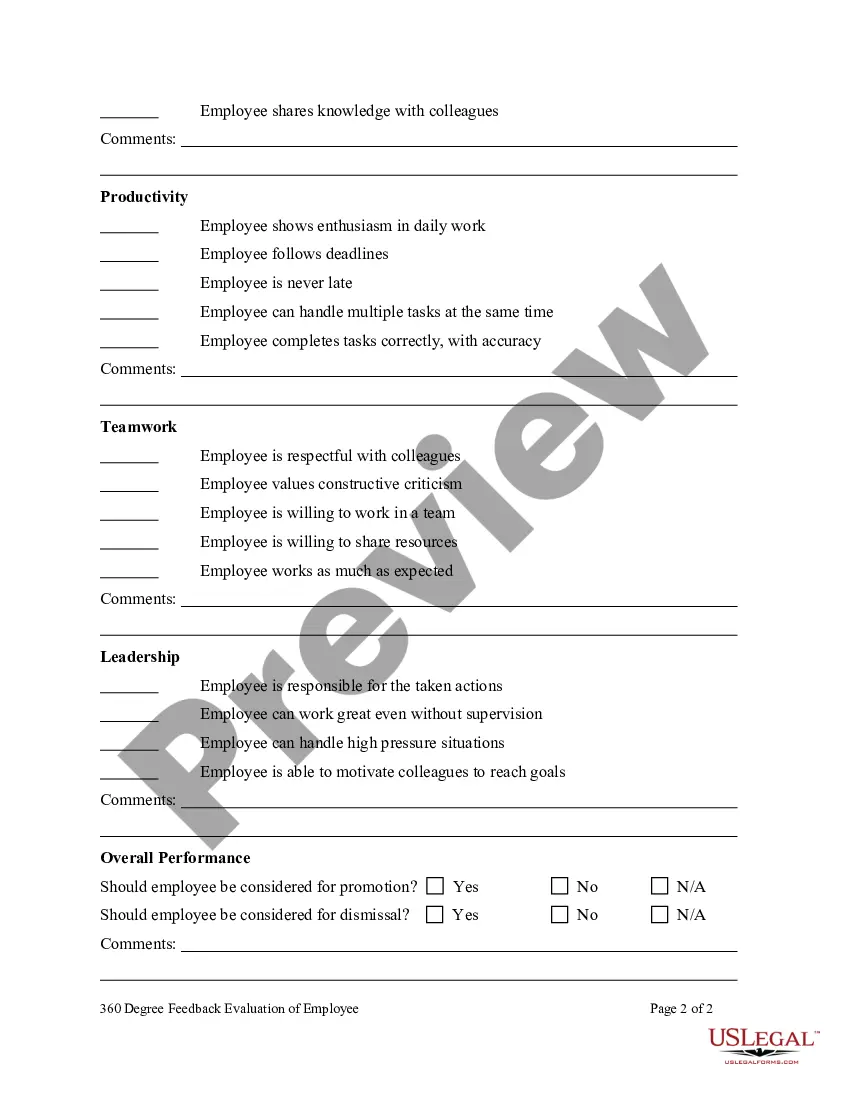
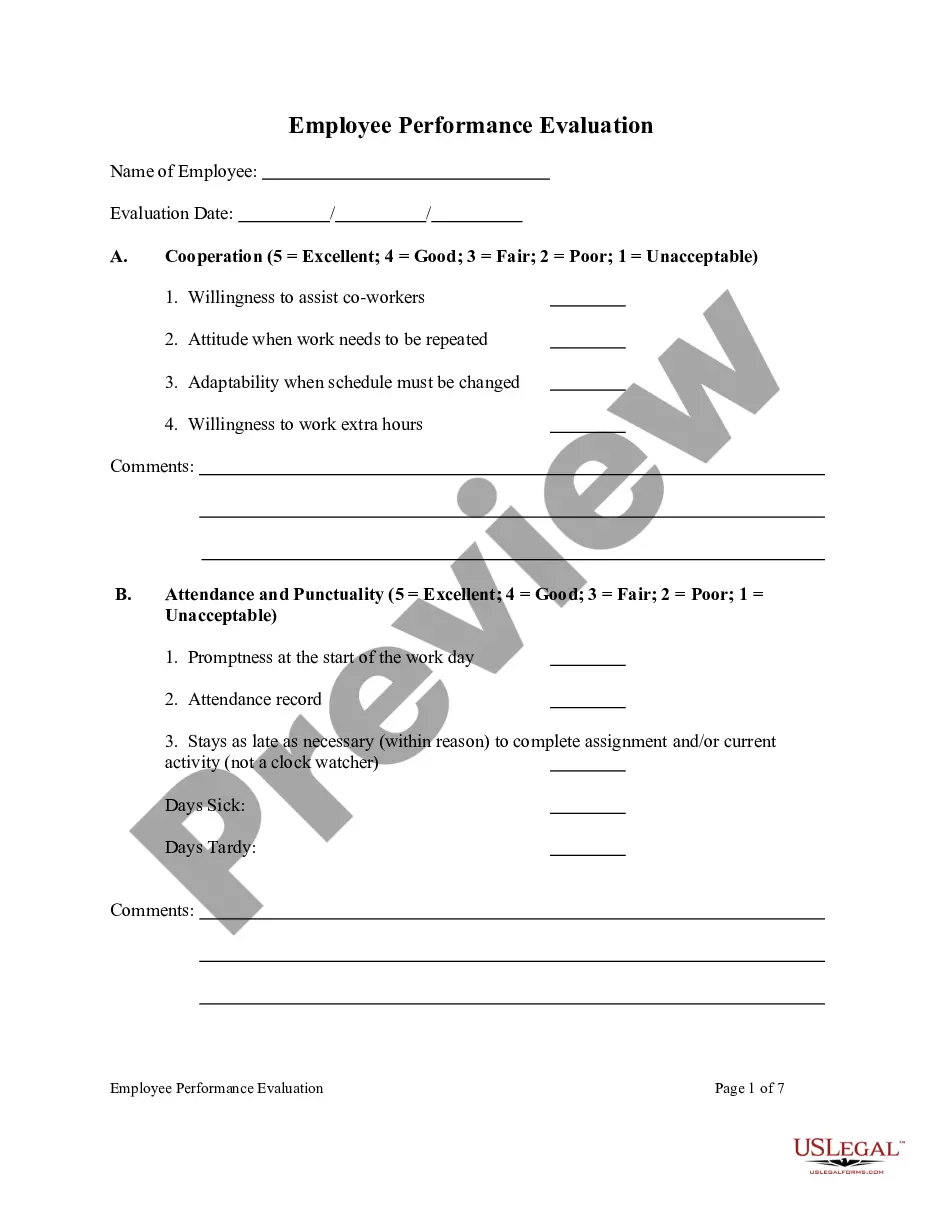
360 Degree Feedback Questionnaire For Employees In Fulton
Description

Get your form ready online
Our built-in tools help you complete, sign, share, and store your documents in one place.
Make edits, fill in missing information, and update formatting in US Legal Forms—just like you would in MS Word.
Download a copy, print it, send it by email, or mail it via USPS—whatever works best for your next step.
Sign and collect signatures with our SignNow integration. Send to multiple recipients, set reminders, and more. Go Premium to unlock E-Sign.
If this form requires notarization, complete it online through a secure video call—no need to meet a notary in person or wait for an appointment.
We protect your documents and personal data by following strict security and privacy standards.

Make edits, fill in missing information, and update formatting in US Legal Forms—just like you would in MS Word.

Download a copy, print it, send it by email, or mail it via USPS—whatever works best for your next step.

Sign and collect signatures with our SignNow integration. Send to multiple recipients, set reminders, and more. Go Premium to unlock E-Sign.

If this form requires notarization, complete it online through a secure video call—no need to meet a notary in person or wait for an appointment.

We protect your documents and personal data by following strict security and privacy standards.
Looking for another form?



Form popularity
FAQ
Open-ended questions for 360 degree feedback assessments What else would you like to share about this employee? What has this employee done particularly well? What would make this employee more effective in their role? What other comments do you have?
10 Open-Ended 360-Degree Feedback Questions What would you say are this person's strengths? What is one thing this employee should start doing? What is one thing this employee should continue doing? What is one thing this employee should stop doing? How well does this person manage their time and workload?
What is 360 degree feedback? 360 degree feedback (also known as multi-source or multi rater feedback assessment) is a way for individuals to understand their personal strengths and weaknesses, using the constructive feedback of others who work with them the most.
360 Degree Feedback Examples for Decision-Making “Emily is skilled at weighing the pros and cons of different options, making informed decisions that benefit the organization.” “Michael could improve his decision-making by considering alternative perspectives and solutions.”
360 Degree Feedback Examples for Time Management “John consistently meets deadlines and manages his time effectively, ensuring that projects are completed on schedule.” “Emily is skilled at prioritizing tasks and managing her workload, minimizing stress and maximizing productivity.”
A 360-degree assessment is a method that systematically collects feedback about an individual's performance from peers, direct reports, colleagues, and superiors within the organization. Overall, it provides a comprehensive, 360-degree view of a leader's strengths and opportunities for growth.
Feedback Like a Pro: 3 Simple Questions to Ask 1. What am I/you doing great? 2. Where do I/you get stuck? 3. How can I/you do even better?
360 Feedback questionnaires measure subjective workplace behaviors and competencies. They provide information on how others perceive a coworker, direct report, or manager. The focus of a 360 evaluation should be on subjective areas such as teamwork, character, communication, and leadership effectiveness.
Be concise and specific Rein in your impulses to be laconic or verbose and instead, be absolutely specific. Answering feedback based on the questions asked allows recipients to understand the cause behind the feedback as well as understand it better.
