360 Feedback Template For Peers In Alameda
Description

Get your form ready online
Our built-in tools help you complete, sign, share, and store your documents in one place.
Make edits, fill in missing information, and update formatting in US Legal Forms—just like you would in MS Word.
Download a copy, print it, send it by email, or mail it via USPS—whatever works best for your next step.
Sign and collect signatures with our SignNow integration. Send to multiple recipients, set reminders, and more. Go Premium to unlock E-Sign.
If this form requires notarization, complete it online through a secure video call—no need to meet a notary in person or wait for an appointment.
We protect your documents and personal data by following strict security and privacy standards.

Make edits, fill in missing information, and update formatting in US Legal Forms—just like you would in MS Word.

Download a copy, print it, send it by email, or mail it via USPS—whatever works best for your next step.

Sign and collect signatures with our SignNow integration. Send to multiple recipients, set reminders, and more. Go Premium to unlock E-Sign.

If this form requires notarization, complete it online through a secure video call—no need to meet a notary in person or wait for an appointment.

We protect your documents and personal data by following strict security and privacy standards.
Looking for another form?









Form popularity
FAQ
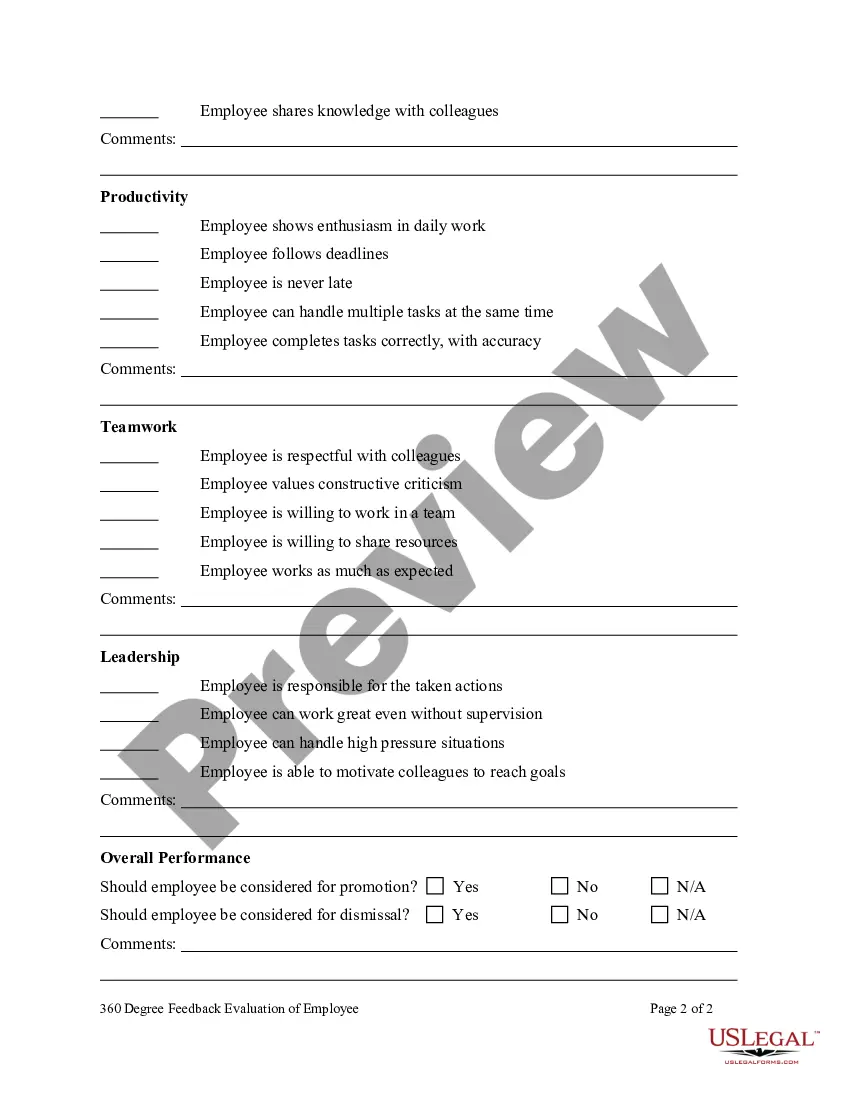
What should I include in 360 feedback? Start by recognizing their strengths and positive qualities, highlighting specific areas of excellence. Identify specific areas for improvement and offer constructive feedback for their development. Provide behavioral examples for your observations.
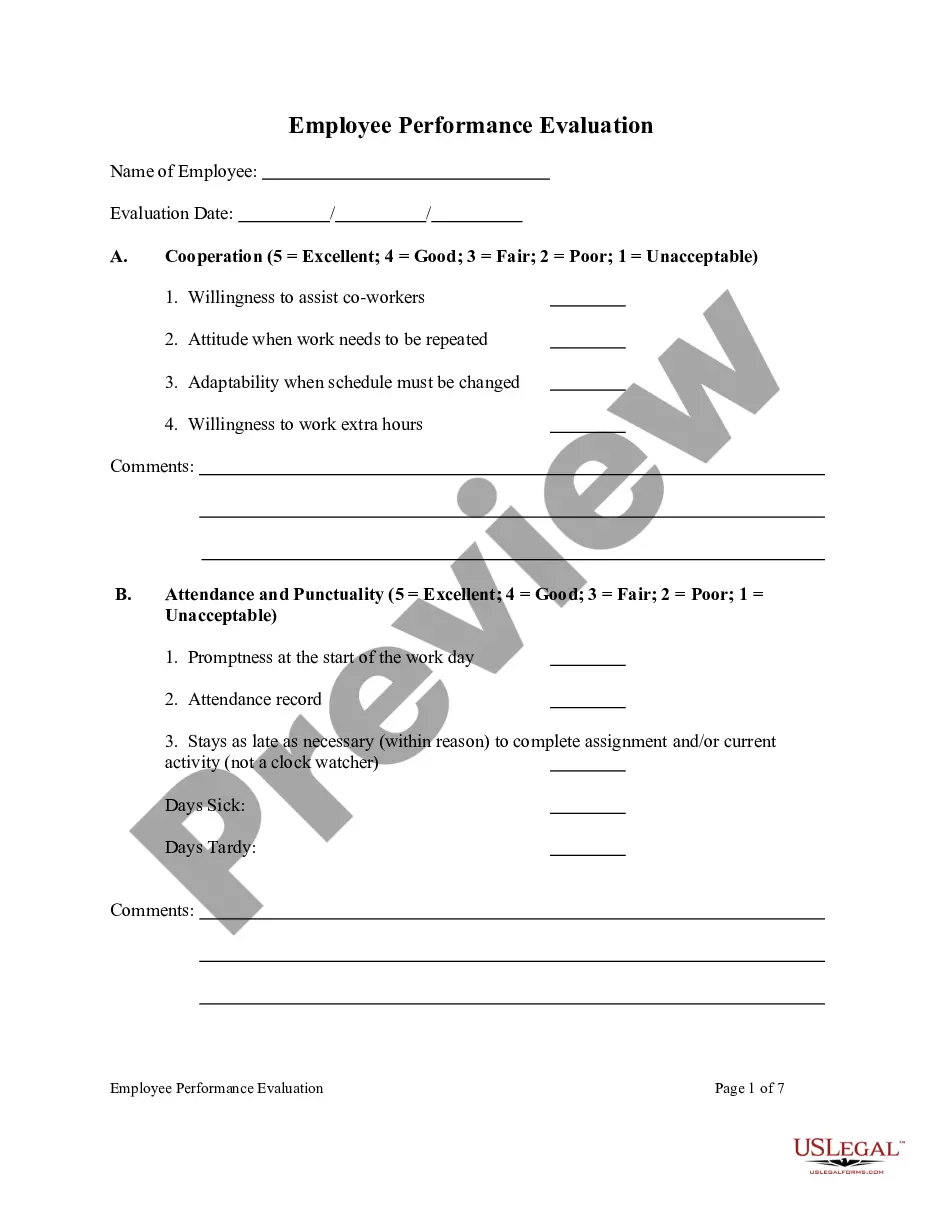
How to design an effective 360 degree feedback questionnaire Identify the themes you want to measure. Create specific 360 questions based on your themes. Example 360 degree feedback questionnaire questions. Define your 360 degree feedback questionnaire rating scale. In conclusion.
Examples of positive feedback: You can be relied on to troubleshoot problems and come up with effective solutions when others are at a loss. Your attention to detail is remarkable. You set the bar high when it comes to managing priorities. Your workspaces/reports/filing systems are always so well-organized.
Best Practices for Writing Peer Reviews Be Specific and Actionable Vague feedback like “you're doing a good job” or “you need to improve” doesn't help the recipient. Balance Positives and Constructive Feedback ... Focus on Behaviors, Not Personalities ... Offer Solutions, Not Just Criticism ... Be Timely
360 Degree Feedback Examples for Collaboration “Emily is skilled at building strong relationships with her colleagues, fostering a positive and productive work environment.” “Samantha could improve her collaboration by actively seeking input from others and incorporating their ideas.”
Examples of reinforcing employee feedback “Something I really appreciate about you is...." ... “I think you did a great job when you… ... “I would love to see you do more of X as it relates to Y” ... “I really think you have a superpower around X” ... “One of the things I admire about you is…”
“A 360-degree review is a talent development tool used to provide the recipient with feedback from all directions,” Inoa said. “This typically includes upward feedback from their direct reports, peer feedback from those they work closely with, and downward feedback from their manager.”
To make a feedback session effective, define clear objectives, create a safe and respectful environment, encourage active participation, provide specific and actionable feedback, listen actively, offer support and resources for performance improvement, and follow up on agreed-upon action plans.
During the feedback process: Make it a two-way conversation and encourage questions. Remember that there are positives and negatives to each piece of feedback. Be objective, genuine, and non-judgmental. Use behavioral examples and refer to job context – and be specific.
How to design an effective 360 degree feedback questionnaire Identify the themes you want to measure. Create specific 360 questions based on your themes. Example 360 degree feedback questionnaire questions. Define your 360 degree feedback questionnaire rating scale. In conclusion.