360 Evaluation Process
Description

Get your form ready online
Our built-in tools help you complete, sign, share, and store your documents in one place.
Make edits, fill in missing information, and update formatting in US Legal Forms—just like you would in MS Word.
Download a copy, print it, send it by email, or mail it via USPS—whatever works best for your next step.
Sign and collect signatures with our SignNow integration. Send to multiple recipients, set reminders, and more. Go Premium to unlock E-Sign.
If this form requires notarization, complete it online through a secure video call—no need to meet a notary in person or wait for an appointment.
We protect your documents and personal data by following strict security and privacy standards.

Make edits, fill in missing information, and update formatting in US Legal Forms—just like you would in MS Word.

Download a copy, print it, send it by email, or mail it via USPS—whatever works best for your next step.

Sign and collect signatures with our SignNow integration. Send to multiple recipients, set reminders, and more. Go Premium to unlock E-Sign.

If this form requires notarization, complete it online through a secure video call—no need to meet a notary in person or wait for an appointment.

We protect your documents and personal data by following strict security and privacy standards.
Looking for another form?



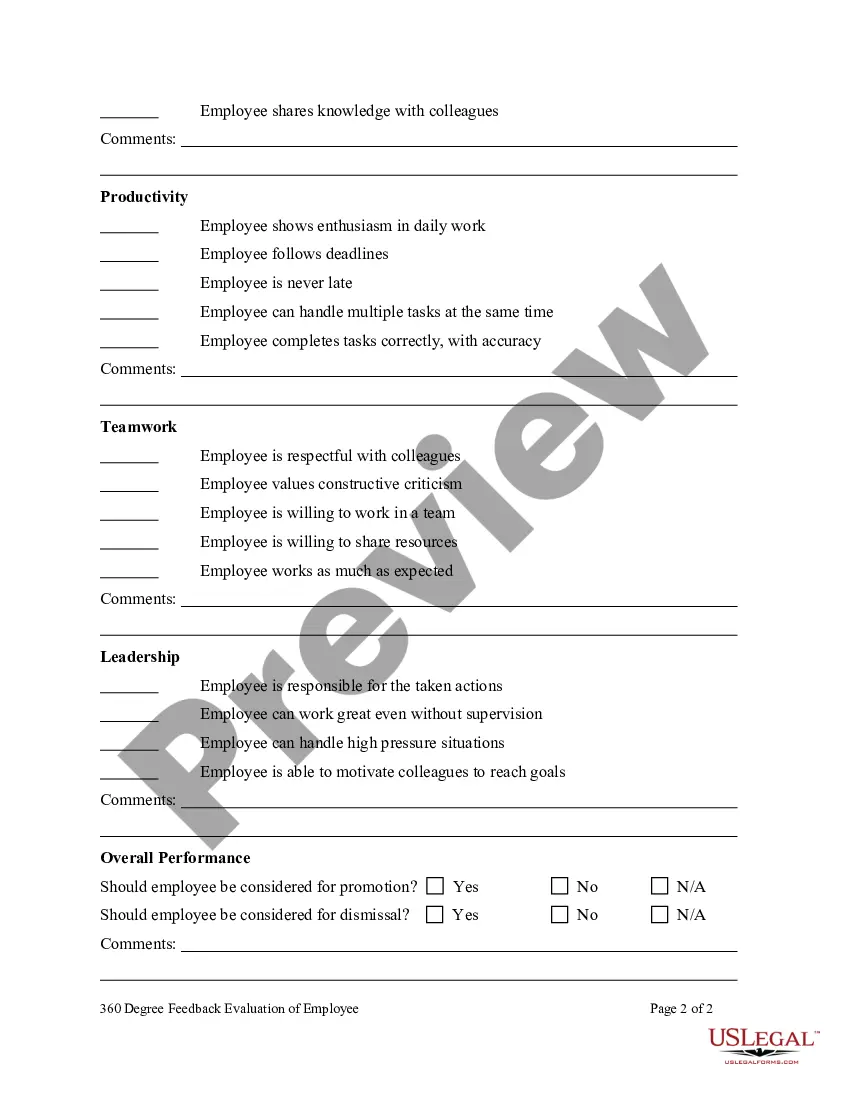
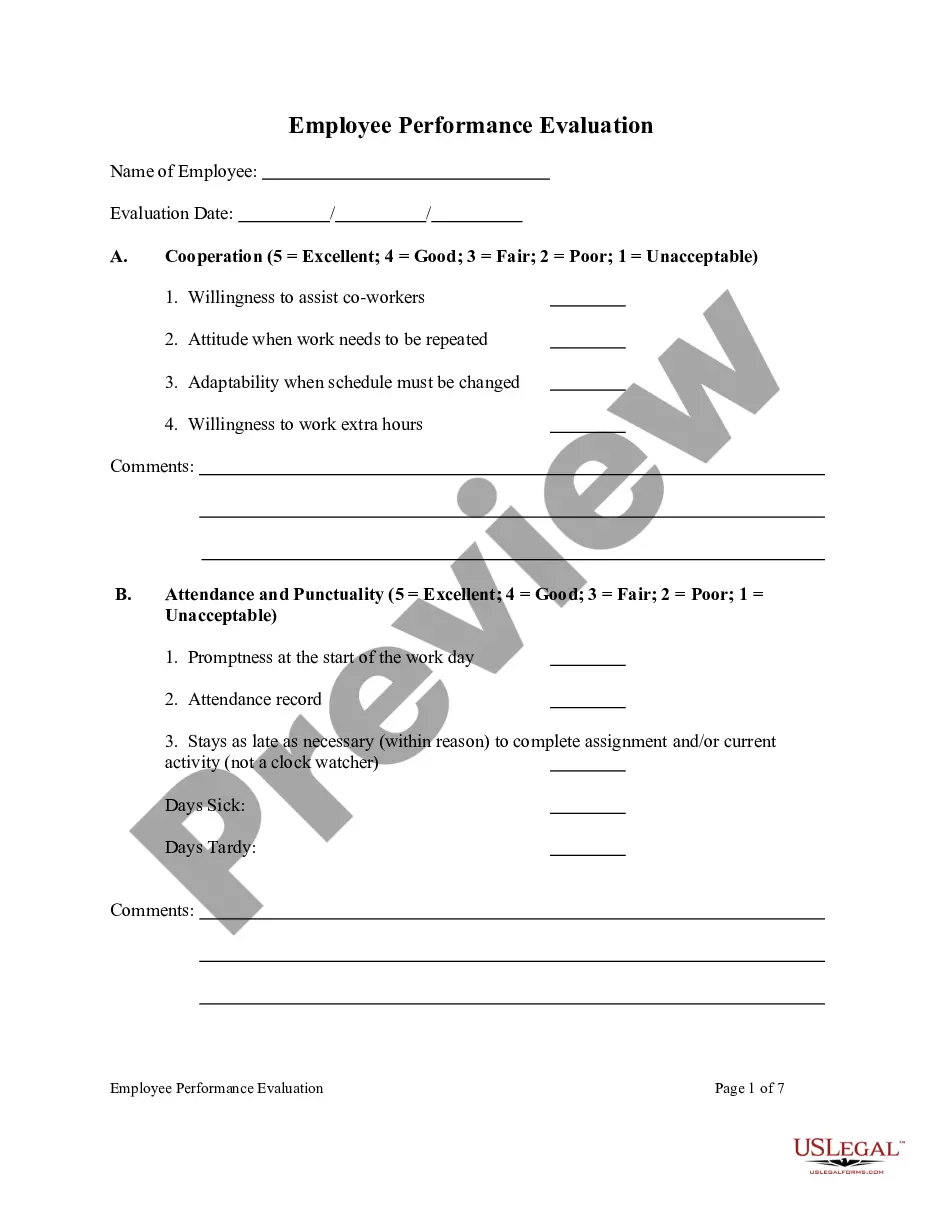
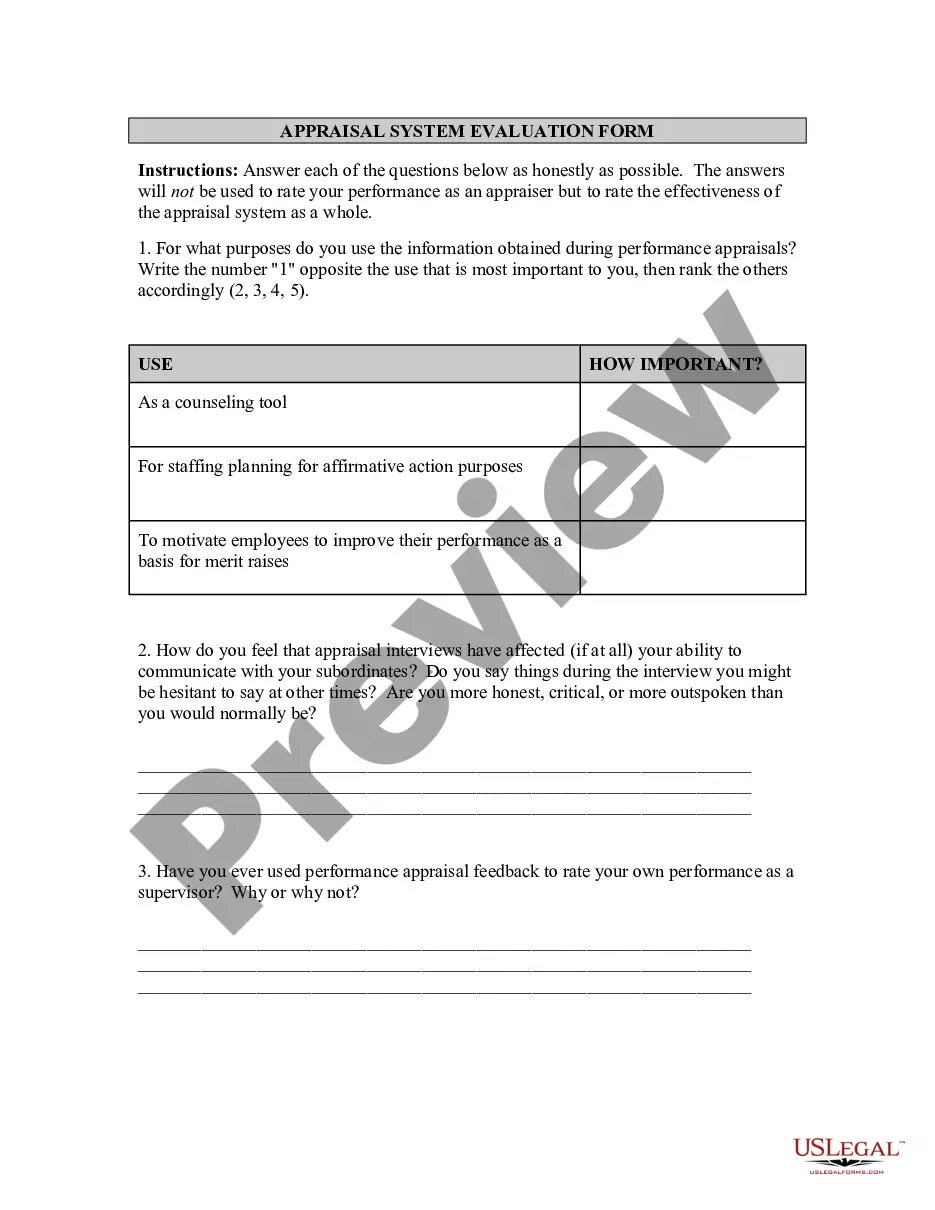
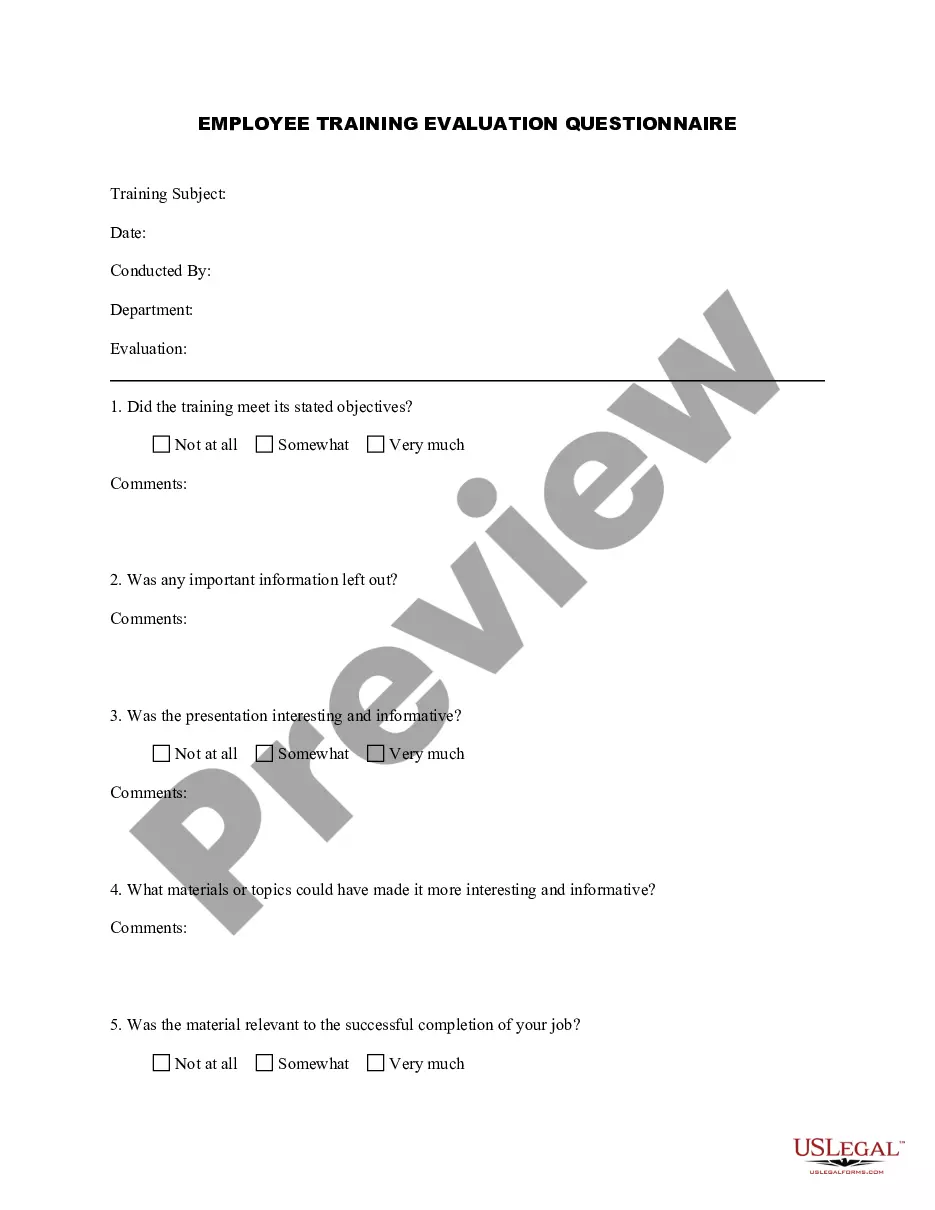
How to fill out 360 Degree Feedback Evaluation Of Employee?
Whether for commercial reasons or personal matters, everyone must confront legal circumstances at some stage in their life. Completing legal documents requires meticulous attention, starting from selecting the correct form template. For instance, if you choose an incorrect version of a 360 Evaluation Process, it will be declined when you submit it. Therefore, it is essential to obtain a trustworthy source of legal documents like US Legal Forms.
If you need to acquire a 360 Evaluation Process template, follow these simple steps: Find the sample you require by using the search bar or catalog navigation. Review the form’s description to ensure it fits your circumstances, state, and county. Click on the form’s preview to view it. If it is not the right document, return to the search feature to locate the 360 Evaluation Process sample you need. Download the file if it aligns with your needs.
- If you already have a US Legal Forms profile, simply click Log in to access previously saved templates in My documents.
- If you do not have an account yet, you can download the form by clicking Buy now.
- Choose the suitable pricing option.
- Complete the profile registration form.
- Select your payment method: use a credit card or PayPal account.
- Choose the document format you prefer and download the 360 Evaluation Process.
- Once it is downloaded, you can fill out the form using editing software or print it and complete it manually.
- With an extensive US Legal Forms catalog available, you never have to waste time searching for the appropriate sample across the internet.
- Utilize the library’s user-friendly navigation to find the correct template for any circumstance.
Form popularity
FAQ
The difference between a 180 and 360 review is significant in terms of feedback sources. A 180 review usually includes input from one manager and one peer, while a 360 evaluation process encompasses feedback from various stakeholders, including peers, supervisors, and even subordinates. This broader feedback pool allows for a more nuanced understanding of an employee's strengths and weaknesses. When organizations prioritize the 360 evaluation process, they promote a culture of openness and continuous improvement.
A 360-degree appraisal typically consists of four components: self-assessment, peer reviews, manager feedback, and subordinate evaluations. Each component contributes to a comprehensive view of an employee's performance and behavior. This multifaceted approach enhances the effectiveness of the 360 evaluation process by incorporating diverse insights. By considering all these perspectives, organizations can foster growth and development in their employees.
The difference between 180 and 360 reviews revolves around the number of feedback sources. A 180 review collects feedback from two key individuals, while a 360 evaluation process includes a broader range of perspectives from multiple colleagues and supervisors. This broader input helps organizations gain a more complete understanding of an employee's performance. Consequently, using the 360 evaluation process can lead to more insightful and actionable feedback.
The primary difference lies in the scope of feedback collected. A 360 review gathers input from multiple sources, including peers, subordinates, and supervisors, providing a well-rounded perspective. In contrast, a 180 review typically includes input from just two sources, often a manager and a peer. This makes the 360 evaluation process more comprehensive and effective for identifying strengths and areas for improvement in an employee's performance.
Some individuals refer to a 180 review to describe a simpler evaluation that includes feedback from just one peer and one manager, rather than the comprehensive approach of a 360 evaluation process. This shorter feedback cycle can feel more manageable for some organizations. However, the 360 evaluation process offers a more holistic view of an employee's performance by incorporating multiple perspectives. Therefore, understanding the distinction can help organizations choose the right approach.
The 360 evaluation process can sometimes lead to biased feedback, as personal relationships may influence responses. Additionally, if not implemented correctly, it can create anxiety among employees about being evaluated by peers and managers. Moreover, the process requires careful management to ensure that feedback is constructive and not harmful. Ultimately, organizations must handle the 360 evaluation process thoughtfully to avoid these pitfalls.
The 360 evaluation method is an assessment technique that collects feedback from a variety of sources to provide a holistic view of an employee's performance. This method often involves gathering input from supervisors, peers, and subordinates, allowing for a comprehensive understanding of an individual's strengths and weaknesses. Implementing the 360 evaluation process helps create a culture of accountability and supports ongoing professional development. Utilizing platforms like US Legal Forms can streamline the execution of this evaluation method, making it easier for organizations to gather and analyze feedback.
Good 360 feedback questions focus on key performance areas and aim to elicit actionable insights. Examples include inquiries about communication skills, teamwork, and leadership abilities. It's crucial to ask clear and specific questions to ensure the feedback is valuable and relevant. By incorporating well-crafted questions into the 360 evaluation process, organizations can gain a deeper understanding of employee performance and areas for improvement.
Numerous software solutions are available for conducting 360 appraisals, each designed to streamline the evaluation process. These tools often include features such as customizable questionnaires, anonymous feedback collection, and detailed reporting capabilities. Platforms like US Legal Forms can simplify the implementation of the 360 evaluation process, ensuring that organizations can easily gather and analyze feedback. Investing in the right software enhances the effectiveness of the 360 evaluation process and supports employee development.
The 360 degree evaluation process is a comprehensive feedback system that gathers input from various sources about an individual's performance. Typically, it collects insights from peers, supervisors, and direct reports, providing a well-rounded view of strengths and areas for improvement. This process helps employees understand their impact in the workplace and encourages professional growth. By utilizing the 360 evaluation process, organizations can foster a culture of open communication and continuous development.