Special Meeting Sample For School In Phoenix
Description



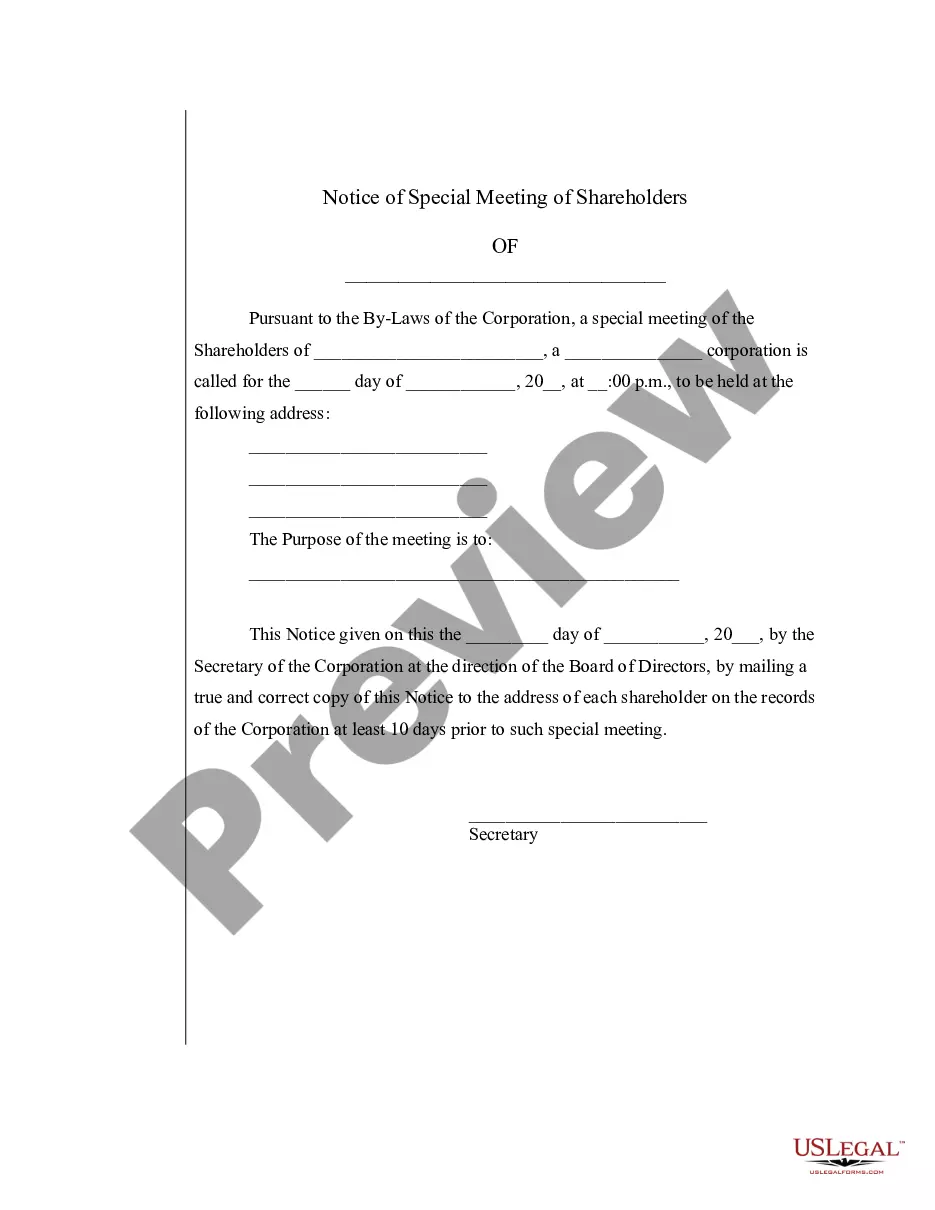
Get your form ready online
Our built-in tools help you complete, sign, share, and store your documents in one place.
Make edits, fill in missing information, and update formatting in US Legal Forms—just like you would in MS Word.
Download a copy, print it, send it by email, or mail it via USPS—whatever works best for your next step.
Sign and collect signatures with our SignNow integration. Send to multiple recipients, set reminders, and more. Go Premium to unlock E-Sign.
If this form requires notarization, complete it online through a secure video call—no need to meet a notary in person or wait for an appointment.
We protect your documents and personal data by following strict security and privacy standards.

Make edits, fill in missing information, and update formatting in US Legal Forms—just like you would in MS Word.

Download a copy, print it, send it by email, or mail it via USPS—whatever works best for your next step.

Sign and collect signatures with our SignNow integration. Send to multiple recipients, set reminders, and more. Go Premium to unlock E-Sign.

If this form requires notarization, complete it online through a secure video call—no need to meet a notary in person or wait for an appointment.

We protect your documents and personal data by following strict security and privacy standards.
Looking for another form?




Form popularity
FAQ
These are things like defining the rules of governance, e.g., bylaws, policies, recruitment and election of board members. Defining the performance expectations of board members. Hiring, appraising, and setting compensation for the executive director.
For example, a company may call a special meeting to discuss a major decision, such as a merger or acquisition. A school board may call a special meeting to address a specific issue, such as a budget shortfall.
Typical topics and decisions addressed in board meetings include: Strategic planning: Setting the overall direction and long-term goals of the organization. Financial oversight: Reviewing financial statements, approving budgets, and making investment decisions.
Conversations with other board members, administrators, teachers, parents and others from around the district can and do happen frequently, but remember, they are just conversations. No debate, decision making or votes happen during those conversations.
These topics range from new facility projects to curriculum changes and testing requirements. While some of these topics may seem straightforward, others can be quite complex. It is important to remember that each topic is important and has the potential to impact students in a positive or negative way.
Occasionally, special meetings need to be called because of an urgent or special matter. ing to Robert's Rules of Order, special meetings always require previous notice. Here are a few valid reasons for calling a special meeting: An urgent matter needs to be dealt with before the next regular meeting.
5 Tips to Conduct a School Board Meeting Enforce School Board Meeting Policies. School boards usually contain policies to guide each board meeting. Invest in Meeting Management Software. Distribute Meeting Agenda. Collaborate with Board Members. Distribute Post-Meeting Action Items.

