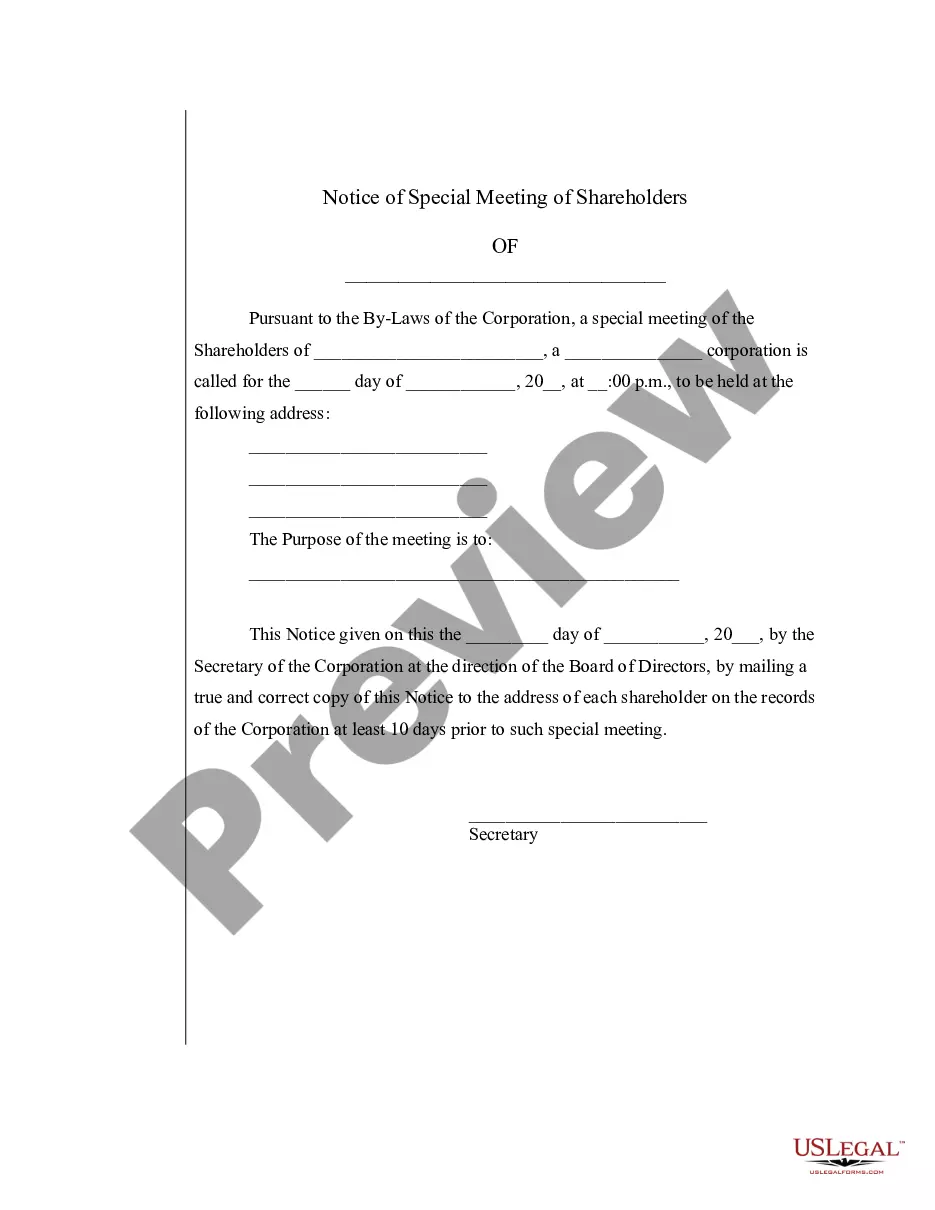
Special Meeting Sample For Pds In Montgomery
Description



Get your form ready online
Our built-in tools help you complete, sign, share, and store your documents in one place.
Make edits, fill in missing information, and update formatting in US Legal Forms—just like you would in MS Word.
Download a copy, print it, send it by email, or mail it via USPS—whatever works best for your next step.
Sign and collect signatures with our SignNow integration. Send to multiple recipients, set reminders, and more. Go Premium to unlock E-Sign.
If this form requires notarization, complete it online through a secure video call—no need to meet a notary in person or wait for an appointment.
We protect your documents and personal data by following strict security and privacy standards.

Make edits, fill in missing information, and update formatting in US Legal Forms—just like you would in MS Word.

Download a copy, print it, send it by email, or mail it via USPS—whatever works best for your next step.

Sign and collect signatures with our SignNow integration. Send to multiple recipients, set reminders, and more. Go Premium to unlock E-Sign.

If this form requires notarization, complete it online through a secure video call—no need to meet a notary in person or wait for an appointment.

We protect your documents and personal data by following strict security and privacy standards.
Looking for another form?






Form popularity
FAQ
In addition to specifying the date, time and location of the meeting, special meeting notices should make note of all agenda items. Unless the bylaws indicate something different, board members should only be discussing the business that was stated in the notice for the special meeting.
What to include in a meeting agenda Clarify and define goals. Ask participants for input. List key questions for discussion. Identify the purpose of each task. Allocate time to spend on each agenda item. Identify who leads each topic. End each meeting with a review.
Special meetings are ones that are unscheduled, as opposed to ones that occur at a regular, fixed time and place. Emergency meetings consist solely of situations that call for immediate action to protect the public peace, health or safety.
Start with a quick introduction or recap of the issue. Come prepared with questions to pose to the group. Keep the conversation on track and within the scheduled timeframe. Provide a brief summary of any conclusions, next steps, or follow-up items before moving to the next agenda item.
What are the 4 Ps of a meeting agenda? They are Purpose, Product, People, and Process. The meeting agenda should be distributed ahead of time and should include the discussion topics, time allocations, and any materials participants need to review beforehand.
A special meeting is a gathering of people that is called for a specific purpose or reason. It is different from a regular meeting because it is not scheduled in advance and is only held when necessary.
How to write a meeting agenda Clarify meeting objectives. Invite participant input. Outline key questions for discussion. Define each task's purpose. Allocate time for agenda items. Assign topic facilitators. Write the meeting agenda. Team meeting agenda.
Here are five steps to write a notice of meeting letter: Create a header. Start by creating a header for the notice of meeting letter. Write meeting information. Below the header, write a brief paragraph that includes the meeting's information. List the agenda. Conclude the letter. Revise the letter.
Special Committee Meetings – Urgent meetings of the committee are called Special Committee Meetings and are usually called to deal with a dispute or grievance or other matters of urgency. Minutes from the committee meeting are not available to the members. General Meetings - General meetings are for all members.
a special meeting may be called at any time by the presiding officer of the governing body of a public agency or by a majority of the members of the governing body emphasis added…
