Special Meeting Sample With Signature In Illinois
Description



Get your form ready online
Our built-in tools help you complete, sign, share, and store your documents in one place.
Make edits, fill in missing information, and update formatting in US Legal Forms—just like you would in MS Word.
Download a copy, print it, send it by email, or mail it via USPS—whatever works best for your next step.
Sign and collect signatures with our SignNow integration. Send to multiple recipients, set reminders, and more. Go Premium to unlock E-Sign.
If this form requires notarization, complete it online through a secure video call—no need to meet a notary in person or wait for an appointment.
We protect your documents and personal data by following strict security and privacy standards.

Make edits, fill in missing information, and update formatting in US Legal Forms—just like you would in MS Word.

Download a copy, print it, send it by email, or mail it via USPS—whatever works best for your next step.

Sign and collect signatures with our SignNow integration. Send to multiple recipients, set reminders, and more. Go Premium to unlock E-Sign.

If this form requires notarization, complete it online through a secure video call—no need to meet a notary in person or wait for an appointment.

We protect your documents and personal data by following strict security and privacy standards.
Looking for another form?





Form popularity
FAQ
While signing the minutes strengthens the evidence, failure to sign minutes does not invalidate them. There is also no requirement to approve minutes of a meeting at a subsequent meeting. Another question which typically arises with respect to minutes of meetings is whether directors should keep their own notes.
Following are 10 steps that can help you compose an effective meeting minutes report: Make an outline. Include factual information. Write down the purpose. Record decisions made. Add details for the next meeting. Be concise. Consider recording. Edit and proofread.
Many organizations require that the presiding officer and recording secretary sign the minutes once approved, she adds, so it's important to check your bylaws to ensure the proper signatures are included. The minutes should reflect what took place in motions — the action of the board, not the dialogue, says Bowie.
Here are five steps to write a notice of meeting letter: Create a header. Start by creating a header for the notice of meeting letter. Write meeting information. Below the header, write a brief paragraph that includes the meeting's information. List the agenda. Conclude the letter. Revise the letter.
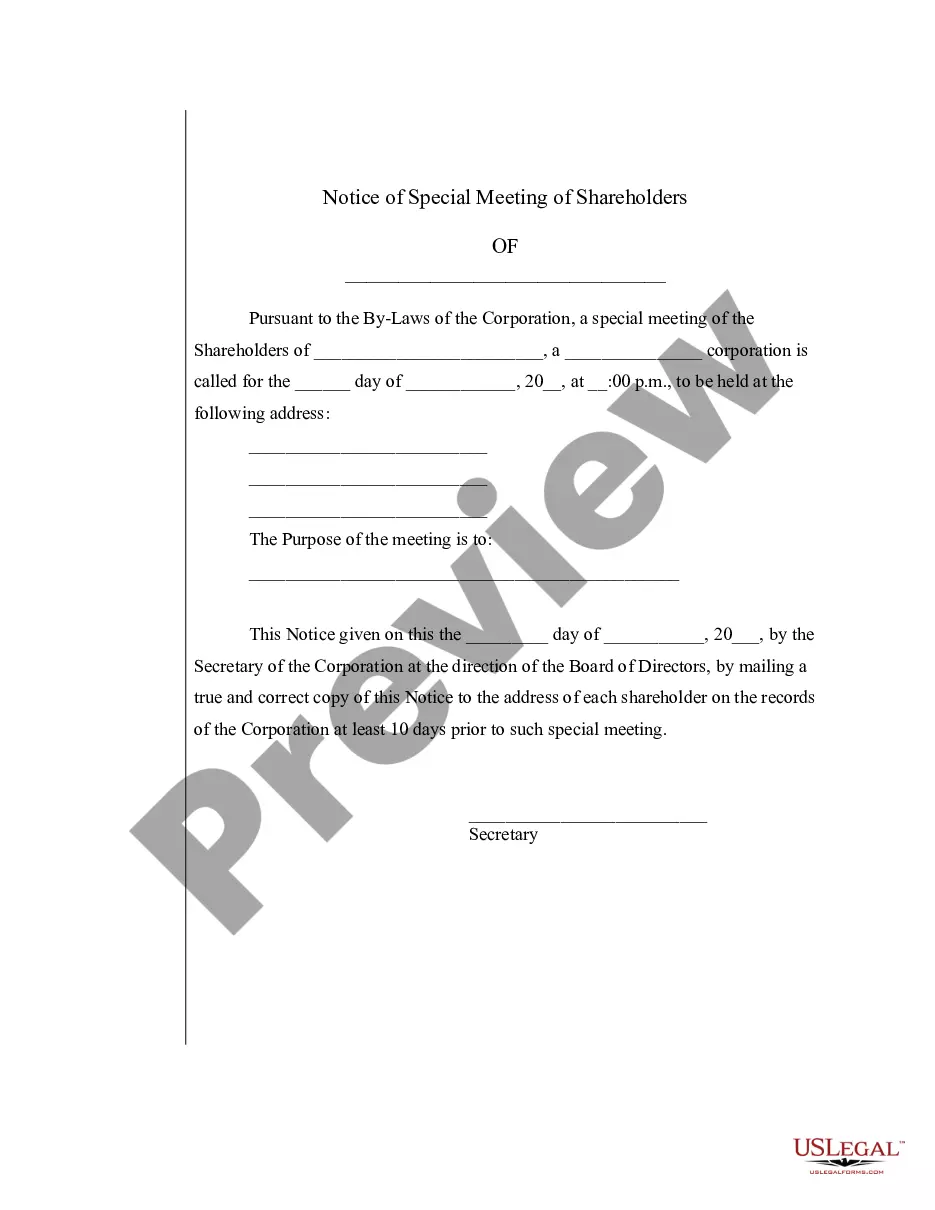
A special meeting is a gathering of people that is called for a specific purpose or reason. It is different from a regular meeting because it is not scheduled in advance and is only held when necessary.
6.2 Minutes of a General Meeting should be signed and dated by the Chairman of the meeting or in the event of death or inability of the Chairman, by any director duly authorized by the Board for the purpose, within thirty days of the General Meeting.
Robert's Rules (Section -16) state that “the minutes should contain mainly a record of what was done at the meeting, not what was said by the members.” Minutes are not transcripts of meetings; rather, the document contains a record of actions taken by the body, organized by the meeting's order of business (agenda).
Generally speaking, in order to be legally binding, general meeting minutes must be signed by general meeting officials and sometimes by certain other participants. The articles of association provide the answers on this matter.
Check it out: Step 1: Write a Direct Subject Line. Step 2: Use a Professional Greeting & Intro. Step 3: Explain the Need for the Meeting. Step 4: Request a Response. Step 5: Offer to Prepare and Send an Agenda. Step 6: Closing & Signature. Sample 5: Request for an Urgent Meeting Regarding a Crisis.
For example, a company may call a special meeting to discuss a major decision, such as a merger or acquisition. A school board may call a special meeting to address a specific issue, such as a budget shortfall.

