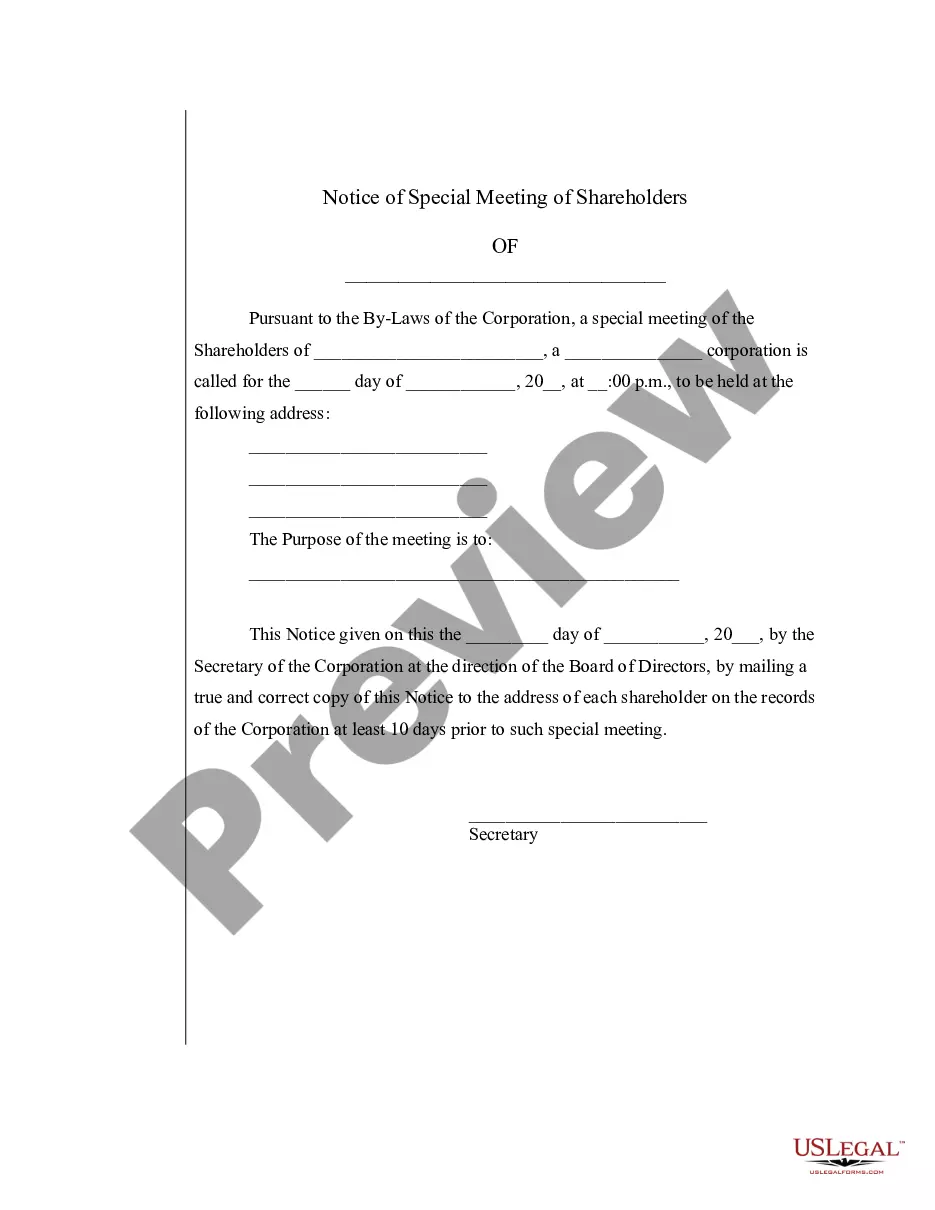
Special Meeting Sample With Board Members In Contra Costa
Description



Get your form ready online
Our built-in tools help you complete, sign, share, and store your documents in one place.
Make edits, fill in missing information, and update formatting in US Legal Forms—just like you would in MS Word.
Download a copy, print it, send it by email, or mail it via USPS—whatever works best for your next step.
Sign and collect signatures with our SignNow integration. Send to multiple recipients, set reminders, and more. Go Premium to unlock E-Sign.
If this form requires notarization, complete it online through a secure video call—no need to meet a notary in person or wait for an appointment.
We protect your documents and personal data by following strict security and privacy standards.

Make edits, fill in missing information, and update formatting in US Legal Forms—just like you would in MS Word.

Download a copy, print it, send it by email, or mail it via USPS—whatever works best for your next step.

Sign and collect signatures with our SignNow integration. Send to multiple recipients, set reminders, and more. Go Premium to unlock E-Sign.

If this form requires notarization, complete it online through a secure video call—no need to meet a notary in person or wait for an appointment.

We protect your documents and personal data by following strict security and privacy standards.
Looking for another form?



Form popularity
FAQ
At a minimum, minutes should include: Name and kind of meeting. Date, place, and time that the meeting began and ended. Names of the chair and secretary or their substitute. Names of voting members attending and whether a quorum was present. Names of guests and their subject matter.
How to write meeting minutes reports Make an outline. Prior to the meeting, create an outline by picking or designing a template. Write down the purpose. Record the purpose of the meeting as either the meeting title or as a distinct section. 5, Compose action items. Be concise. Edit and proofread.
How to write meeting minutes Organization name. Meeting purpose. Start and end times. Date and location. List of attendees and absentees, if necessary. Space for important information like motions passed or deadlines given. Space for your signature and the meeting leader's signature.
How to prepare a board meeting agenda in 10 steps Step 1: Identify who will own the agenda. Step 2: Review the previous meeting's agenda. Step 3: Use a board agenda template. Step 4: Ask for input. Step 5: Prioritize agenda items. Step 6: Set clear time allocations. Step 7: Finalize the agenda.
Occasionally, special meetings need to be called because of an urgent or special matter. ing to Robert's Rules of Order, special meetings always require previous notice. Here are a few valid reasons for calling a special meeting: An urgent matter needs to be dealt with before the next regular meeting.
Meeting minutes are the written record of what was discussed and decided during a meeting. They typically include the date and time of the meeting, a list of attendees, a summary of the topics discussed, decisions made, action items assigned, and the time of adjournment.
What information do board meeting minutes contain? Meeting date, time and location. Type of meeting. Names and titles of attendees and guests. Any absent board directors. Quorum. Notes about directors who left early or re-entered the meeting. Board approvals, resolutions and acceptance of reports. Overview of discussions.
A proper meeting notice should include: Date, Time, and Venue: Clear details on when and where the meeting will take place. Purpose of the Meeting: A brief description of the meeting's objectives. Agenda: An outline of topics to be discussed; this helps attendees prepare for the meeting.
Keeping board members informed and up-to-date on important industry trends, regulatory changes, and organizational processes is critical for effective governance. Dedicating time during board meetings to educational sessions can empower directors to make more strategic and impactful decisions.
Board meetings are formal gatherings held by the board of directors that aim to discuss major problems, areas of concern, vote on decisions, review performance, consider policy issues, and, in some cases, perform the legal duties of the board.

