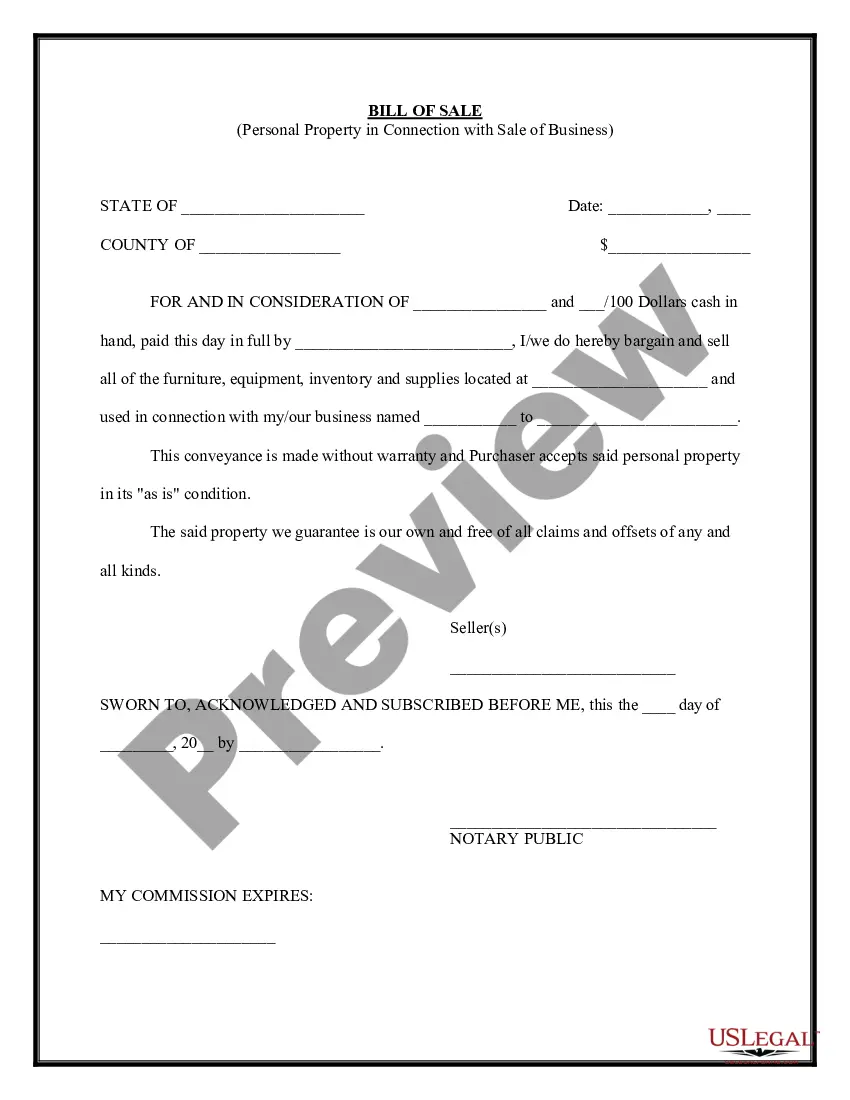
Personal Property Tax For Business In Oakland
Description
Get your form ready online
Our built-in tools help you complete, sign, share, and store your documents in one place.
Make edits, fill in missing information, and update formatting in US Legal Forms—just like you would in MS Word.
Download a copy, print it, send it by email, or mail it via USPS—whatever works best for your next step.
Sign and collect signatures with our SignNow integration. Send to multiple recipients, set reminders, and more. Go Premium to unlock E-Sign.
If this form requires notarization, complete it online through a secure video call—no need to meet a notary in person or wait for an appointment.
We protect your documents and personal data by following strict security and privacy standards.

Make edits, fill in missing information, and update formatting in US Legal Forms—just like you would in MS Word.

Download a copy, print it, send it by email, or mail it via USPS—whatever works best for your next step.

Sign and collect signatures with our SignNow integration. Send to multiple recipients, set reminders, and more. Go Premium to unlock E-Sign.

If this form requires notarization, complete it online through a secure video call—no need to meet a notary in person or wait for an appointment.

We protect your documents and personal data by following strict security and privacy standards.
Looking for another form?
Form popularity
FAQ
Who is responsible for the property taxes? By California law, whoever owns the property on January 1st of the current calendar year is responsible for taxes up until the close of escrow date. Once the close of escrow is completed, the new owner is responsible for that year's property taxes at a prorated amount.
As it stands, commercial properties in California are primarily taxed at a foundational rate of 1% of their assessed value, thanks to the provisions set forth by Proposition 13. This means if a commercial property has an assessed value of $1 million, the base property tax owed would be $10,000.
Business Personal Property includes all supplies, equipment and any fixtures used in the operation of a business. Exempt from reporting are business inventory, application software and licensed vehicles (except Special Equipment (SE) tagged and off-road vehicles).
California's property tax rate is 1% of assessed value (also applies to real property) plus any bonded indebtedness voted in by the taxpayers.
Commercial & Industrial Property Tax Minnesota exempts personal property, including machinery and inventory, from the property tax, which lowers the effective tax rate for real and personal property.
If your business or organization owns a lot of equipment, you might decide to move your business to New York, where only real property (like land and the structures attached to it) are subject to taxation.
Business Personal Property Tax is a tax assessed on tangible personal property businesses own. This type of property includes equipment, furniture, computers, machinery, and inventory, among other items not permanently attached to a building or land.
California Constitution Article XIII and Revenue and Taxation Code section 201 state that all property is taxable unless it is stated that it is exempt. Business personal property is not exempt.