Movable Property In Business In Collin
Description
Get your form ready online
Our built-in tools help you complete, sign, share, and store your documents in one place.
Make edits, fill in missing information, and update formatting in US Legal Forms—just like you would in MS Word.
Download a copy, print it, send it by email, or mail it via USPS—whatever works best for your next step.
Sign and collect signatures with our SignNow integration. Send to multiple recipients, set reminders, and more. Go Premium to unlock E-Sign.
If this form requires notarization, complete it online through a secure video call—no need to meet a notary in person or wait for an appointment.
We protect your documents and personal data by following strict security and privacy standards.
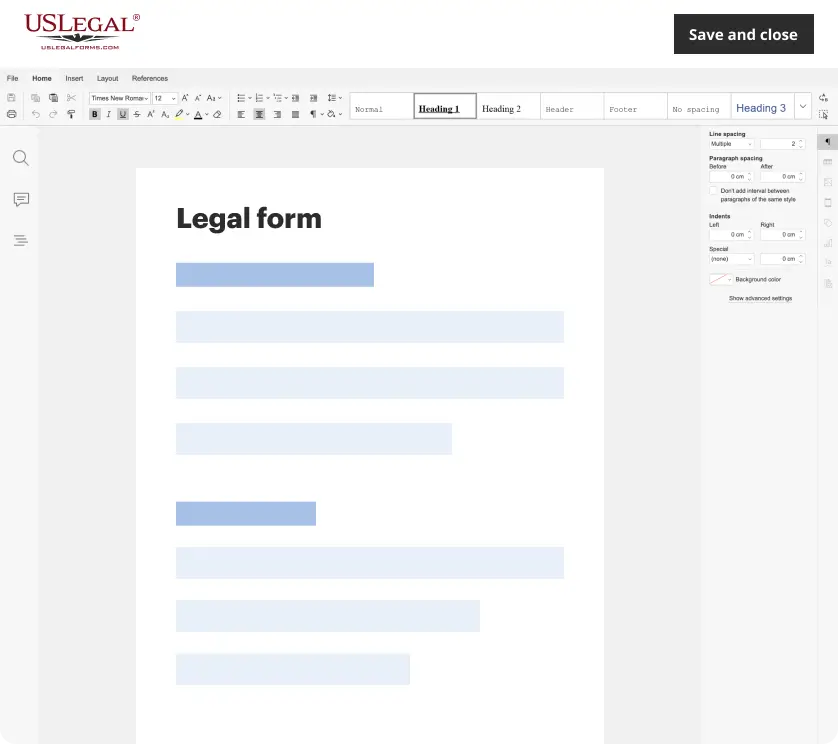
Make edits, fill in missing information, and update formatting in US Legal Forms—just like you would in MS Word.
Download a copy, print it, send it by email, or mail it via USPS—whatever works best for your next step.
Sign and collect signatures with our SignNow integration. Send to multiple recipients, set reminders, and more. Go Premium to unlock E-Sign.
If this form requires notarization, complete it online through a secure video call—no need to meet a notary in person or wait for an appointment.
We protect your documents and personal data by following strict security and privacy standards.
Looking for another form?








Form popularity
FAQ
Converting residential property into commercial property involves several key steps, including applying for change of use planning permission. This process ensures that the building is suitable for business purposes and that any alterations to the property are approved and legally compliant.
Transitioning from Residential to Commercial Apply for a special permit known as a zoning variance. Request rezoning. Keep the property as is.
Research local zoning laws - Look for zoning maps online and compare zoning trends. Switching a property from residential to commercial requires requesting a change of zone. This can only be done once it is proved that the switch would benefit the entire community.
You typically have to get permission from the city to do this and that usually requires providing them with detailed plans and attending city planning meetings. Your property has to meet certain rules and standards to ensure it complies with commercial standards and building codes.
Business owners are required by State law to render personal property that is used in a business or used to produce income. This property includes furniture and fixtures, equipment, machinery, computers, inventory held for sale or rental, raw materials, finished goods, and work in process.
Section 42.002 - Personal Property (a) The following personal property is exempt under Section 42.001(a): (1) home furnishings, including family heirlooms; (2) provisions for consumption; (3) farming or ranching vehicles and implements; (4) tools, equipment, books, and apparatus, including boats and motor vehicles used ...
For taxation purposes, there are two basic types of property: real property (land, buildings, and other items attached to land) and personal property (property that can be owned and is not permanently attached to the land or building such as inventory, furniture, fixtures, equipment and machinery).
"Personal property" in Texas refers to items that a person owns. These things can be tangible—like a vehicle or household furniture—or intangible, like intellectual property. Personal property is not attached to real property and can be moved.
Other types of personal property can include vehicles, boats and collectibles, antiques, books and pensions. Personal property is viewed as an asset and can be used in determining a person's net worth.

