First Wort Hopping
Description
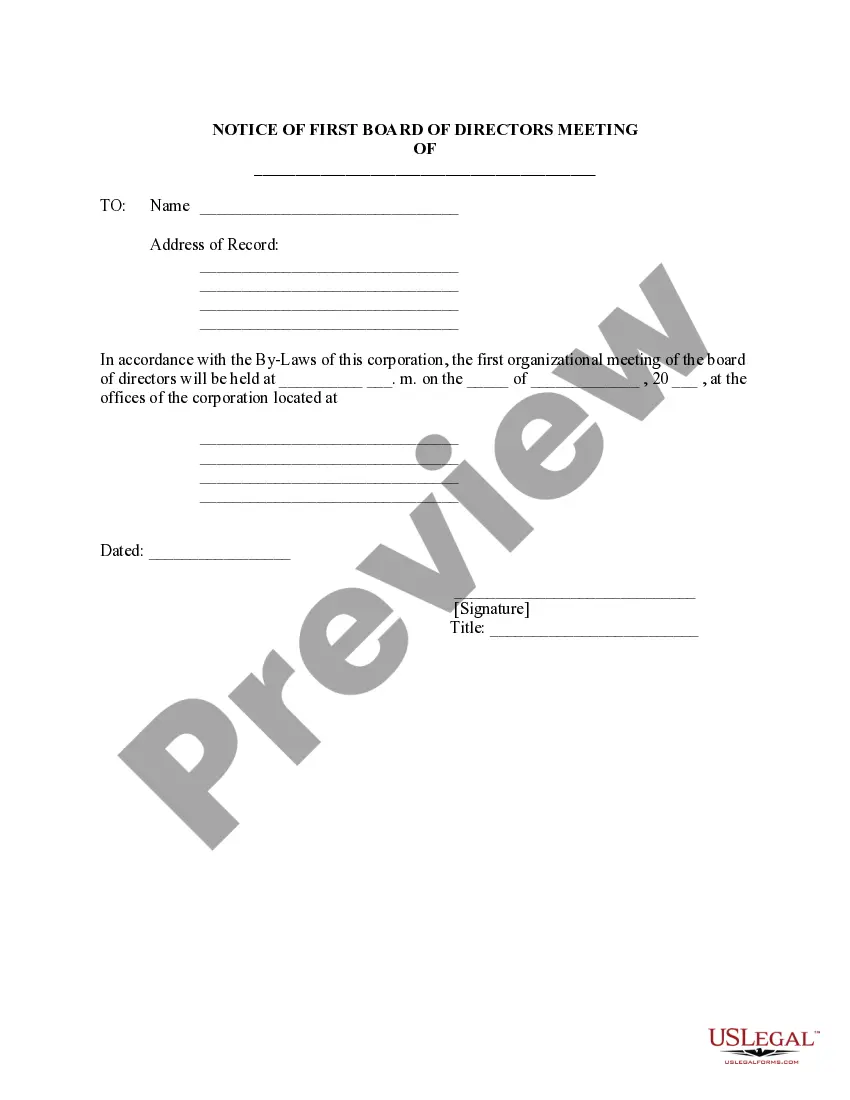






How to fill out Notice Of First Stockholders Meeting - Corporate Resolutions?
- Review the form preview and description carefully to confirm it meets your needs and complies with local regulations.
- If the selected form isn't quite right, utilize the search feature to find a better match for your requirements.
- Choose the document to purchase. Click 'Buy Now' and select the subscription plan that fits your needs. Remember that creating an account is necessary to access the forms library.
- Complete your purchase by entering your payment details via credit card or PayPal for your subscription.
- Download your selected form and save it directly to your device, ensuring it's accessible through the 'My Forms' section in your account whenever needed.
By using US Legal Forms, you're not only gaining access to a user-friendly platform with an extensive collection of over 85,000 legal documents but also ensuring the accuracy and legality of your forms with expert assistance. This experience streamlines the often complex process of legal documentation.
Start your journey today by visiting US Legal Forms, and unlock the efficiency of getting your legal documents right the first time!
Form popularity
FAQ
The hops utilization factor is a measurement that indicates how effectively hops convert into flavors and bitterness during the brewing process. This factor can vary based on factors such as timing, temperature, and the brewing method used. By understanding this concept, brewers can refine their techniques, including first wort hopping, to achieve the best possible results.
Mash hopping involves adding hops during the mash process, while first wort hopping occurs before boiling the wort. The key differences lie in their timing and the resulting flavors; first wort hopping typically yields smoother hop characteristics due to the extraction method. Understanding these two techniques allows brewers to tweak their recipes based on desired flavor profiles.
To add first wort hops, simply place your hops into the wort as soon as it is collected from the mash. Allow the hops to steep in the warm wort for a while before starting the boil. This process highlights the flavors and aromas of the hops, giving the beer a unique character that many beer enthusiasts appreciate.
Brewery hop utilization refers to the overall effectiveness of hops in creating flavors and aromas in beer across various brewing processes. This can integrate various hopping methods, including first wort hopping. Understanding this concept helps brewers optimize their recipes and exploit the best practices for achieving their desired beer profiles.
Yes, in the first wort hopping technique, hops are added directly to the wort before the boiling stage. This practice allows the hops to steep in the hot wort, extracting essential oils that contribute to aroma and flavor. Adding hops this way enhances the overall taste profile while helping to minimize harsher bitterness that can come from later additions.
First wort hops do indeed contribute some bitterness to the beer, but less so than hops added during the boil. The timing of the addition allows for a more controlled bitterness level, allowing brewers to focus on the flavor and aroma. Essentially, first wort hopping provides a balance, letting you enjoy hop characteristics without being overwhelmed by bitterness.
First wort hop utilization describes the efficiency with which hops contribute their flavors and aromas when added to wort prior to boiling. This utilization can differ from traditional hopping methods, as it typically results in a smoother, more rounded character in the final beer. Many brewers find that first wort hopping produces a more complex hop flavor, making it a desirable approach in crafting unique brews.
First wort hopping refers to the process of adding hops to the wort before boiling. This technique helps to extract flavors and aromas from hops while minimizing bitterness. By adding hops early, brewers can enhance the beer's character and showcase the qualities of the hops used. It’s a popular method for those looking to achieve a rich hop profile without overwhelming bitterness.
Ancient beer typically did not contain hops; instead, various herbs and grains flavored the brews. Hops became a popular addition much later in the brewing timeline. Many ancient civilizations produced beer using natural ingredients from their surroundings, which resulted in unique flavors. Learning about these historical practices can deepen your appreciation for modern brewing techniques.
Before the use of hops, brewers relied on a mix of herbs and spices, known as grut, to flavor their beer. Ingredients like yarrow, rosemary, and even wormwood were common. While these alternatives provided distinctive flavors, they lacked the preservation qualities of hops. Recognizing this history can enhance your understanding of beer's evolution.
