Court Letter Template With Address In Phoenix
Description



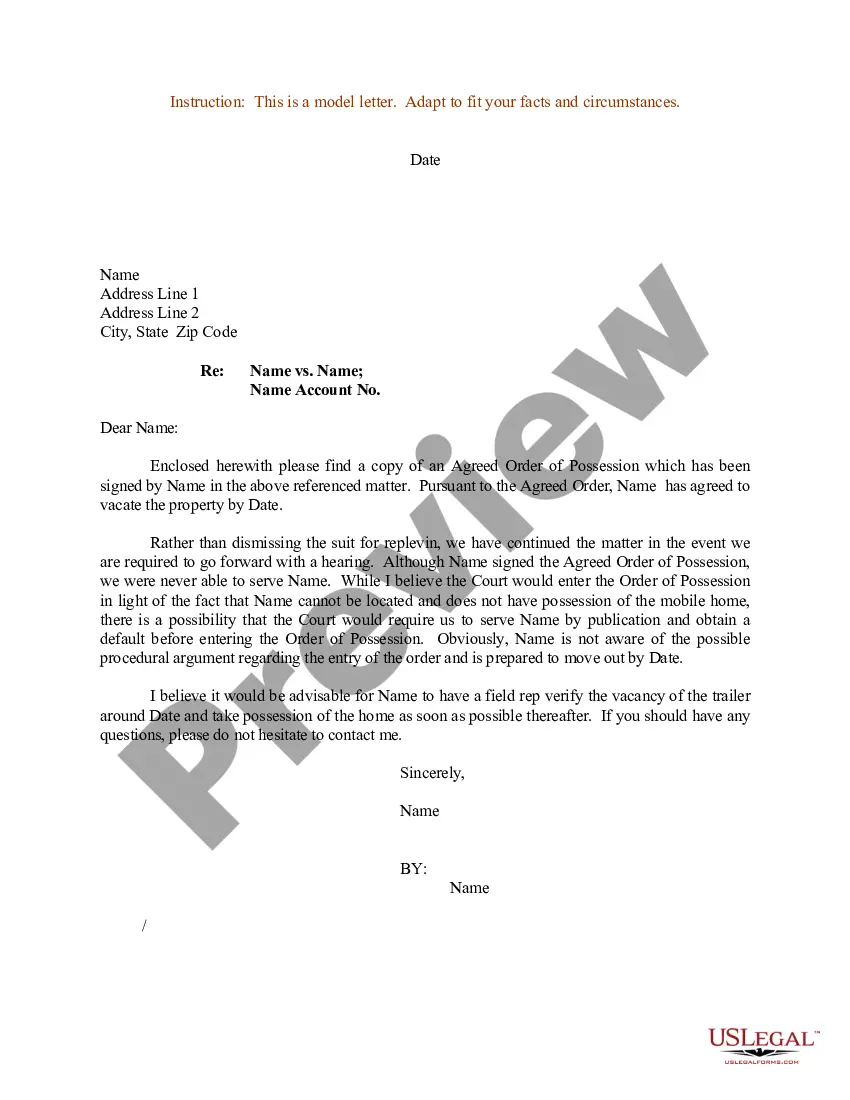
Get your form ready online
Our built-in tools help you complete, sign, share, and store your documents in one place.
Make edits, fill in missing information, and update formatting in US Legal Forms—just like you would in MS Word.
Download a copy, print it, send it by email, or mail it via USPS—whatever works best for your next step.
Sign and collect signatures with our SignNow integration. Send to multiple recipients, set reminders, and more. Go Premium to unlock E-Sign.
If this form requires notarization, complete it online through a secure video call—no need to meet a notary in person or wait for an appointment.
We protect your documents and personal data by following strict security and privacy standards.

Make edits, fill in missing information, and update formatting in US Legal Forms—just like you would in MS Word.

Download a copy, print it, send it by email, or mail it via USPS—whatever works best for your next step.

Sign and collect signatures with our SignNow integration. Send to multiple recipients, set reminders, and more. Go Premium to unlock E-Sign.

If this form requires notarization, complete it online through a secure video call—no need to meet a notary in person or wait for an appointment.

We protect your documents and personal data by following strict security and privacy standards.
Looking for another form?








Form popularity
FAQ
Be polite and professional start your letter with a formal salutation. Such as dear clerk of courtsMoreBe polite and professional start your letter with a formal salutation. Such as dear clerk of courts or Dear Mr Ms Clerk's. Last name maintain a respectful tone throughout the letter 6.
The case number typically appears in one of two formats, as shown in the following examples: CV 17-00010-PHX-DJH or cv00010 “CV” is the case type. Case types assigned by the Court include Civil (“cv”), Criminal (“cr”) and Miscellaneous (“mc”). The number 17 represents the year the case was filed.
Outside of the Supreme Court, always use “The Honorable (full name)” in your correspondence. STATE COURTS Note: States may vary on titles of judges. Check with court or various state court resources to determine proper address and salutation forms, particularly for Chief Judges/Chief Justices.
You start by addressing the letter to the Honorable Judge so and so, and begin with Your honor. You end with respectfully yours, and then sign your name (write your name in block letters underneath your signature.
Local Court Magistrates should be addressed as “Your Honour” in court, as “Magistrate …” outside of court. For the period that they are acting an Acting Judge should be addressed as “Judge.” An acting judge of a Superior Court should be referred to as “The Honourable Acting Justice …” in writing.
Magistrate Judges should have this title after their name (“The Honorable First M. Last, Magistrate Judge”). It will still be “Dear Judge Last” after that. Commissioners should also have this title after their name (“The Honorable First M.
Either “Judge” or “The Honorable” is acceptable. It's also acceptable to use “To Whom It May Concern.”
Write the Salutation If you are addressing it to a member of the court staff, type "Dear Ms. Smith:" and include a colon after the person's name. If you are addressing the letter generally, type "Dear Clerk of Court:" and include a colon after the last word.
The best bet is, ``Your Honor'' and if they ask you a question (any lawyer, any officer of the court), always address your answer to the judge, so, answer ``Yes, sir'' or ``Yes, ma'am'' or ``Yes, Your Honor.'' Sounds archaic, but really, this formal address is showing respect for the authority of the judge.

