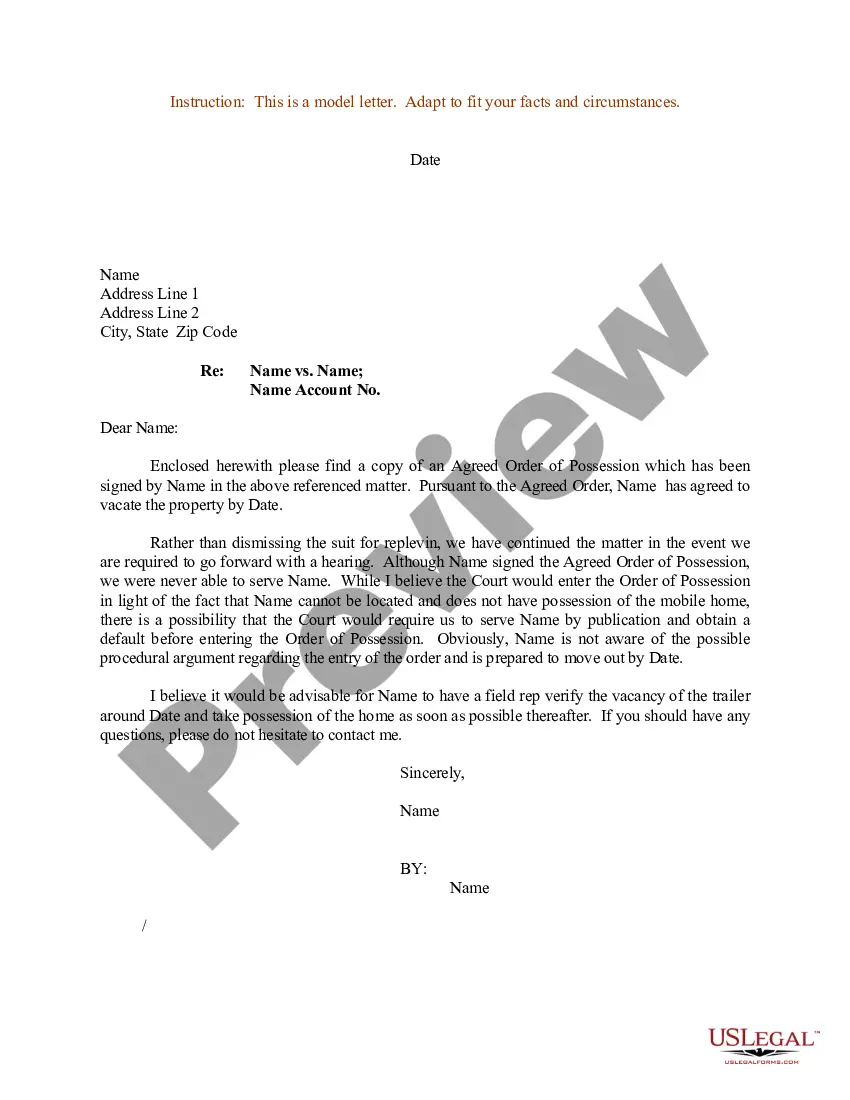
Court Letter Sample For Student In Nevada
Description



Get your form ready online
Our built-in tools help you complete, sign, share, and store your documents in one place.
Make edits, fill in missing information, and update formatting in US Legal Forms—just like you would in MS Word.
Download a copy, print it, send it by email, or mail it via USPS—whatever works best for your next step.
Sign and collect signatures with our SignNow integration. Send to multiple recipients, set reminders, and more. Go Premium to unlock E-Sign.
If this form requires notarization, complete it online through a secure video call—no need to meet a notary in person or wait for an appointment.
We protect your documents and personal data by following strict security and privacy standards.

Make edits, fill in missing information, and update formatting in US Legal Forms—just like you would in MS Word.

Download a copy, print it, send it by email, or mail it via USPS—whatever works best for your next step.

Sign and collect signatures with our SignNow integration. Send to multiple recipients, set reminders, and more. Go Premium to unlock E-Sign.

If this form requires notarization, complete it online through a secure video call—no need to meet a notary in person or wait for an appointment.

We protect your documents and personal data by following strict security and privacy standards.
Looking for another form?








Form popularity
FAQ
The Court grants summary judgment when there is no material issue of fact and it is required to enter judgment as a matter of law. A genuine issue of material fact exists when facts related to the specific legal claim are in dispute or when undisputed facts support different outcomes on an issue.
Personal injury lawsuits such as those stemming from car accidents, medical malpractice, or slip and fall incidents are a one type of civil suit. Other common civil lawsuits include breach of contract, product liability, divorce and family law, property disputes, and housing disputes.
What is summary judgment? Summary judgment is a way for one party to win their case without a trial. The party can ask for summary judgment for part of the case or for the whole case.
The odds of winning a summary judgment, known as the grant rate, vary widely by case type. The most common grant of summary judgment is in Title VII and employment cases. These are granted in whole in 49.2% of cases, in part in 23.3% of cases, and denied in 27.5% of cases.
A court will grant a summary judgment motion only if it finds (1) that there are no genuine issues of material facts to be resolved at trial and (2) that, when the law is applied to the undisputed facts, one party is clearly entitled to judgment.
HOW TO COMPLETE THIS ANSWER TEMPLATE Know your deadline. You have only 21 days after being served with the Summons and Complaint to file a response. Fill in the case information. On the top of the first page, write your name and address. Respond to each paragraph in the Complaint. Read each sentence of the Complaint.
The court shall grant summary judgment if the movant shows that there is no genuine dispute as to any material fact and the movant is entitled to judgment as a matter of law. The court should state on the record the reasons for granting or denying the motion.
In responding to a pleading, a party must affirmatively state any avoidance or affirmative defense, including: (A) and satisfaction; (B) arbitration and award; (C) assumption of risk; (D) contributory negligence; (E) discharge in bankruptcy; (F) duress; (G) estoppel; (H) failure of consideration; (I) fraud; (J) ...
Unless otherwise provided by these rules, service may be made on an individual: (1) by delivering a copy of the summons and complaint to the individual personally; (2) by leaving a copy of the summons and complaint at the individual's dwelling or usual place of abode with a person of suitable age and discretion who ...
Civil Statutes of Limitation Injury to Person2 yrs. §11.190(4)(e) Libel/Slander 2 yrs. §11.190(4)(c) Fraud 3 yrs. §11.190(3)(d) Injury to Personal Property 3 yrs. §11.190(3)(c) Professional Malpractice Accountant, Attorney, Veterinarian: 4 yrs.; Medical: 2 yrs. after discovery or 4 yrs. after act §25-2225 more rows

