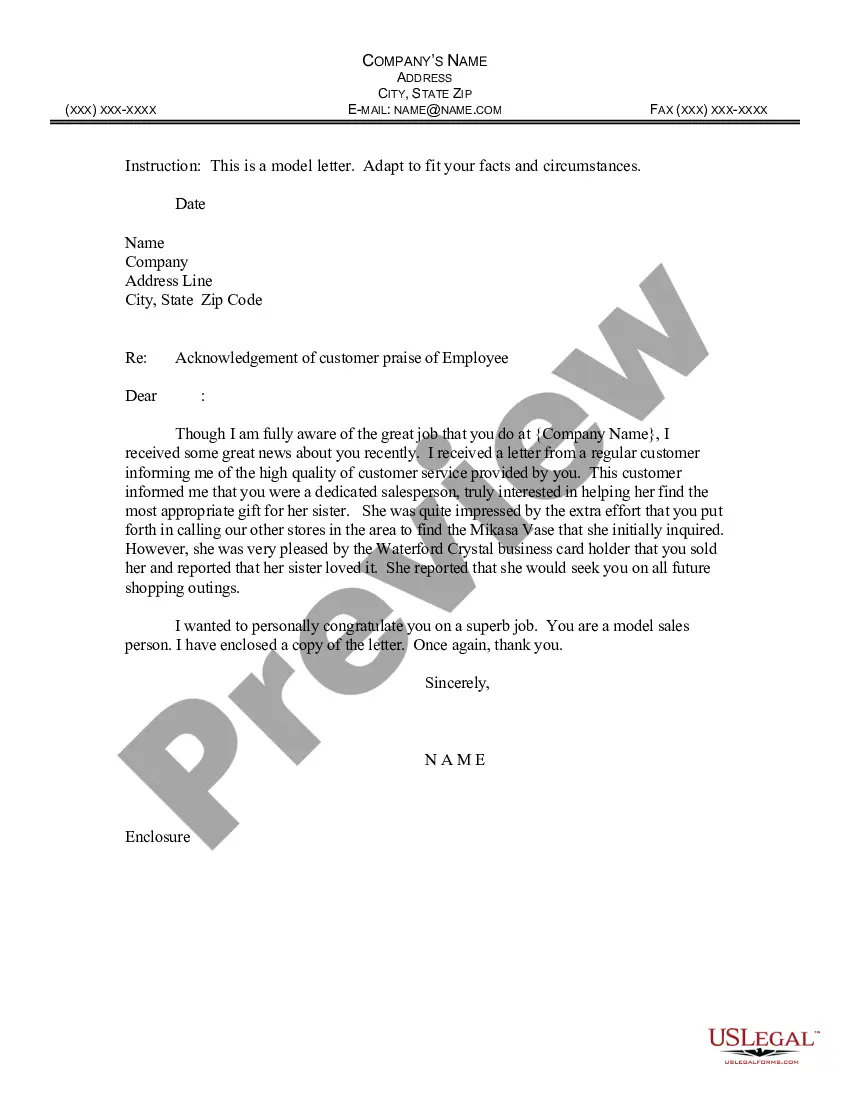
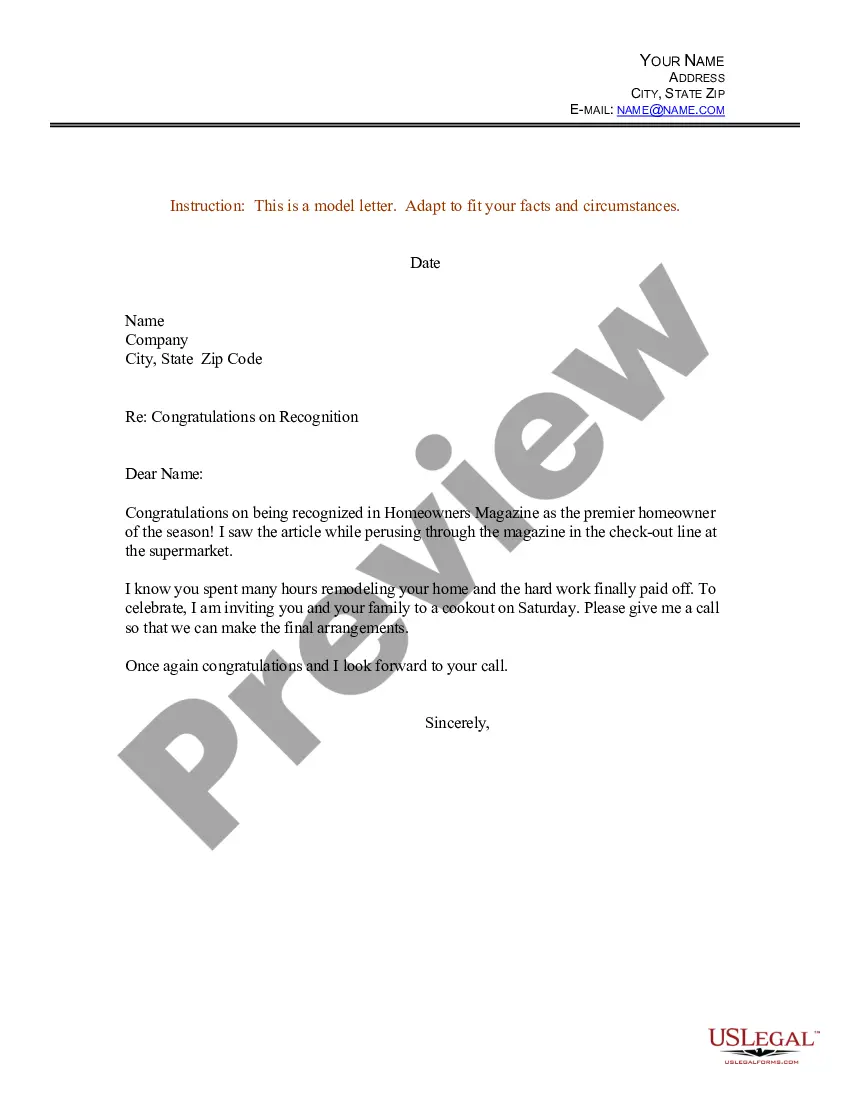
Employee Praise Letter Without Name In Montgomery
Description

Get your form ready online
Our built-in tools help you complete, sign, share, and store your documents in one place.
Make edits, fill in missing information, and update formatting in US Legal Forms—just like you would in MS Word.
Download a copy, print it, send it by email, or mail it via USPS—whatever works best for your next step.
Sign and collect signatures with our SignNow integration. Send to multiple recipients, set reminders, and more. Go Premium to unlock E-Sign.
If this form requires notarization, complete it online through a secure video call—no need to meet a notary in person or wait for an appointment.
We protect your documents and personal data by following strict security and privacy standards.

Make edits, fill in missing information, and update formatting in US Legal Forms—just like you would in MS Word.

Download a copy, print it, send it by email, or mail it via USPS—whatever works best for your next step.

Sign and collect signatures with our SignNow integration. Send to multiple recipients, set reminders, and more. Go Premium to unlock E-Sign.

If this form requires notarization, complete it online through a secure video call—no need to meet a notary in person or wait for an appointment.

We protect your documents and personal data by following strict security and privacy standards.
Looking for another form?







Form popularity
FAQ
An employment letter is a document written by a current or past employer that confirms the employment status of a former or current employee at an organization.
Ask your supervisor or manager. This is often the easiest way to request the letter. Just make sure to provide full details and context. Contact Human Resources.
There are different ways to request an employment verification letter from a current or former employer: Ask your supervisor or manager. Contact Human Resources. Get a template from the company or organization requesting the letter. Use an employment verification service.
Employee Recognition Message Template SENTENCE 1: I want to thank you for (what the employee did). SENTENCE 2: It really helped (how it helped/who it helped). SENTENCE 3: I really appreciate your (talent or skill, such as teamwork, leadership, etc.) SIGN OFF: (Thank you, Cheers, Sincerely, etc.)
20 Ways to say “Someone Left the Company” Professionally Has moved on to new opportunities. Has decided to pursue other interests. Has stepped down from their position. Has transitioned out of our team. Is no longer with the company. Has concluded their tenure. Has embarked on a different path.
I am writing to let you know that Exiting Worker's Full Name has decided to move on to an opportunity outside of Company Name. Their last day with the company will be Termination Date and their last working day will be Last Working Date. We will be hiring for their role, Role Name, over the next few weeks.
How to announce an employee's departure Address the office. Begin by addressing it to the appropriate party or department. State the purpose of the letter. List the leave date and other relevant details. Offer information for next steps. Include information about a farewell event. Express gratitude.
Less is more, so stick to simple language, such as “John no longer works here” or “It's Maggie's last day.” You can say that you wish the person well on their future endeavors, but don't praise their past performance. That would sound disingenuous, and you don't want to risk losing the trust of your team.
Here are nine key tips for writing an employee recognition letter: Choose the appropriate format. Personalize the message. Determine why you're writing the letter. Recognize specific achievements. Use active voice and positive vocabulary. Express your sincere appreciation. Share others' recognition.
How to write a termination letter to an employee Choose your tone carefully. Gather all necessary details. Start with basic information. Notify the employee of their termination date. State the reason(s) for termination of employment. Explain compensation and benefits going forward. Outline next steps and disclaimers.