Annual Meeting Shareholders With Manager In Bexar
Description


Get your form ready online
Our built-in tools help you complete, sign, share, and store your documents in one place.
Make edits, fill in missing information, and update formatting in US Legal Forms—just like you would in MS Word.
Download a copy, print it, send it by email, or mail it via USPS—whatever works best for your next step.
Sign and collect signatures with our SignNow integration. Send to multiple recipients, set reminders, and more. Go Premium to unlock E-Sign.
If this form requires notarization, complete it online through a secure video call—no need to meet a notary in person or wait for an appointment.
We protect your documents and personal data by following strict security and privacy standards.

Make edits, fill in missing information, and update formatting in US Legal Forms—just like you would in MS Word.

Download a copy, print it, send it by email, or mail it via USPS—whatever works best for your next step.

Sign and collect signatures with our SignNow integration. Send to multiple recipients, set reminders, and more. Go Premium to unlock E-Sign.

If this form requires notarization, complete it online through a secure video call—no need to meet a notary in person or wait for an appointment.

We protect your documents and personal data by following strict security and privacy standards.
Looking for another form?



Form popularity
FAQ
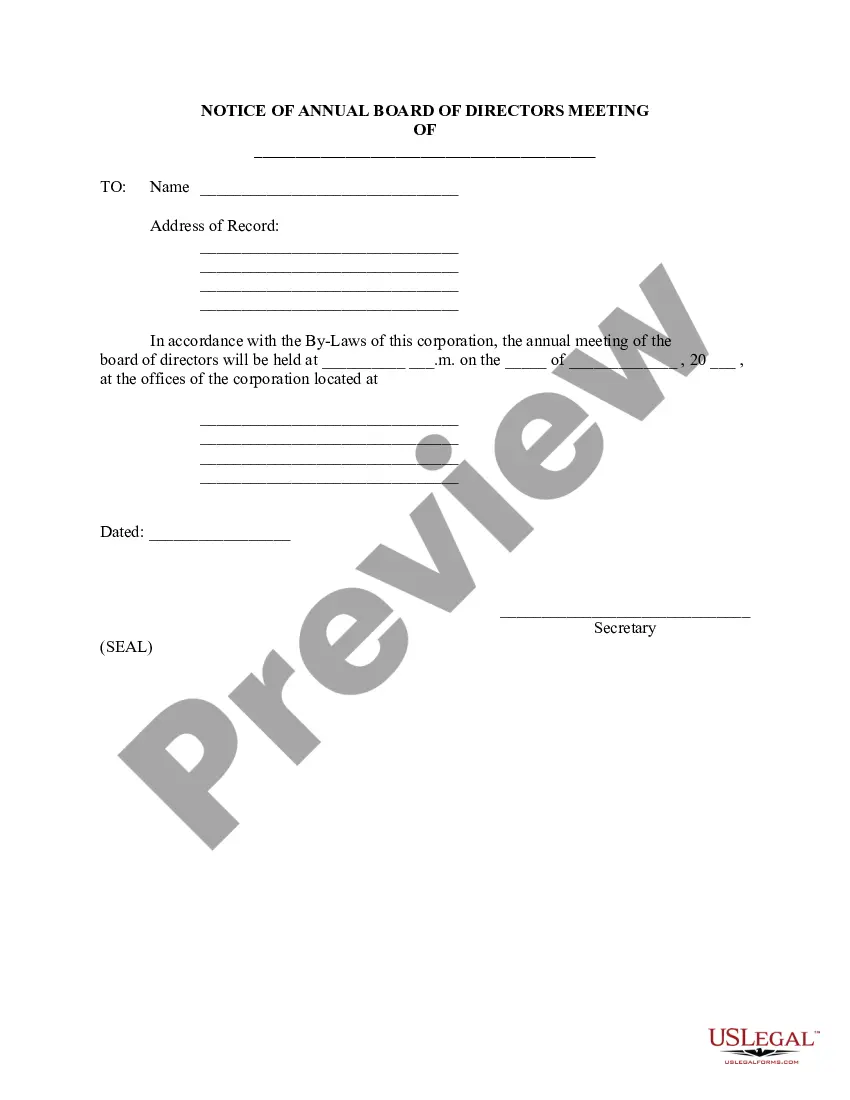
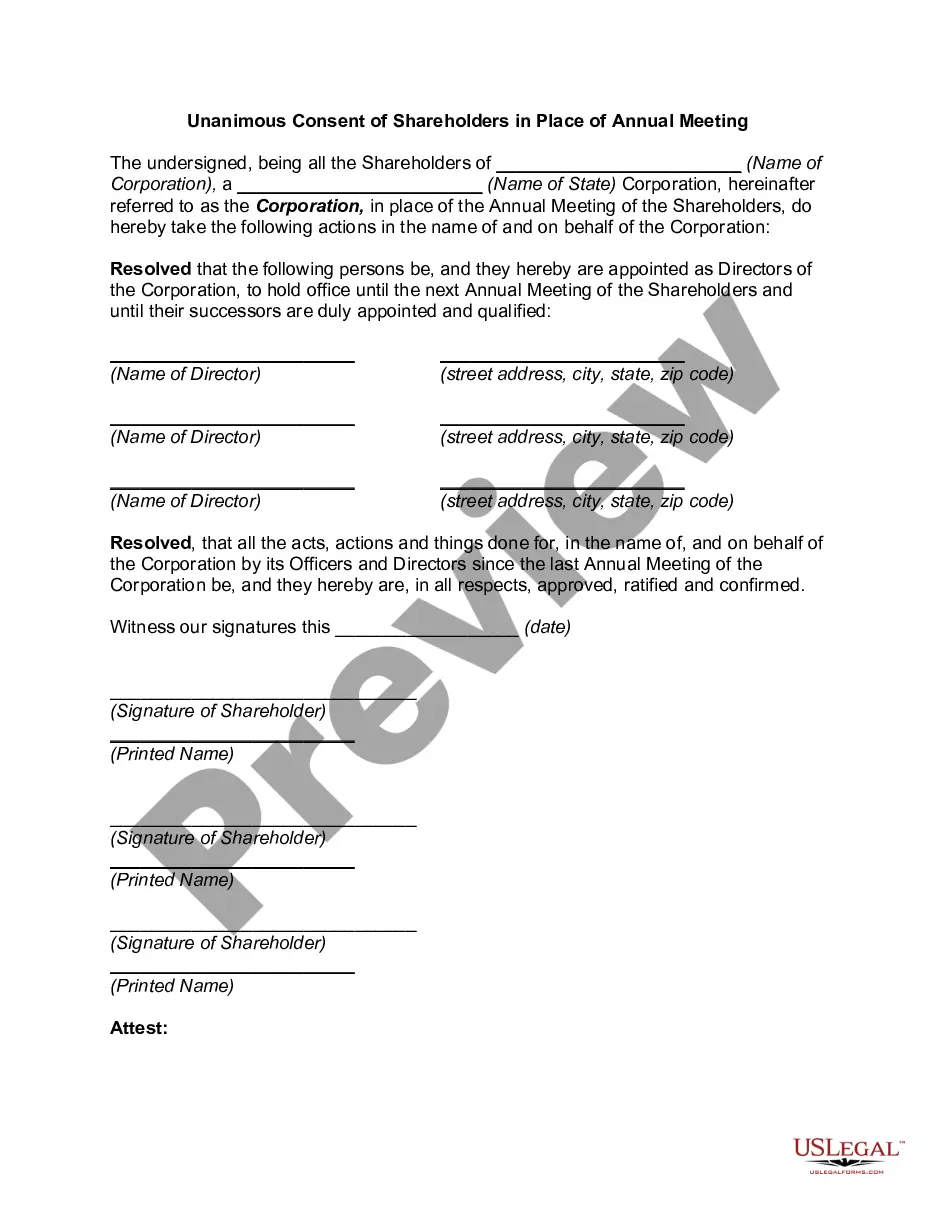
If your business is set up and registered as a Corporation, you're required by law to hold an annual shareholder meeting and to document the meeting with minutes.
There are two main types of shareholders' resolution: 'ordinary' and 'special'. An ordinary resolution is passed by a simple majority of members, while a special resolution requires not less than 75% of the total voting rights of eligible members.
The general meeting called within six months of the end of the previous fiscal year is known as the “annual” general meeting (or “AGM”). If a general meeting is held outside that time frame, it is “extraordinary” (“EGM”) and meant to address urgent or pressing matters that couldn't be settled at the AGM.
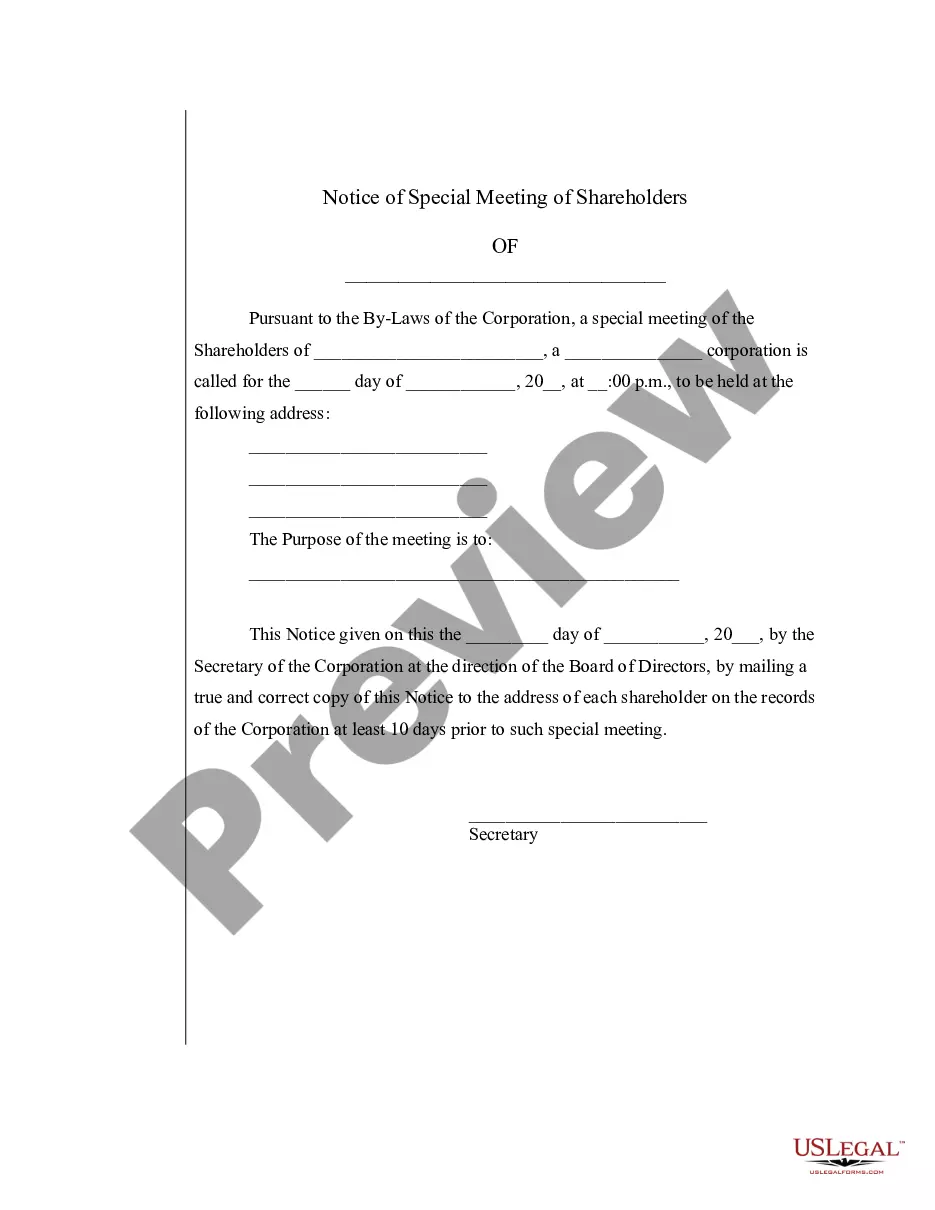
Section 601 - Notice of shareholders' meeting or report (a) Whenever shareholders are required or permitted to take any action at a meeting a written notice of the meeting shall be given not less than 10 (or, if sent by third-class mail, 30) nor more than 60 days before the date of the meeting to each shareholder ...
Menu Inversionistas. In ance with the current Statutes, two types of general assemblies can be held: ordinary and extraordinary. Ordinary general shareholders meetings are those convened to discuss any matter that is not reserved for extraordinary general shareholders meetings.
Menu Inversionistas. In ance with the current Statutes, two types of general assemblies can be held: ordinary and extraordinary. Ordinary general shareholders meetings are those convened to discuss any matter that is not reserved for extraordinary general shareholders meetings.
When should I hold a shareholder meeting? An annual shareholder meeting is typically scheduled just after the end of the fiscal year. This allows for the previous year's financial performance to be fully assessed and discussed.
Shareholders of a company are of two types – common and preferred shareholder. As their name suggests, they are the owners of a company's common stocks. These individuals enjoy voting rights over matters concerning the company.
(1) Subject to subsection (2), at least 21 days notice must be given of a meeting of a company's members. However, if a company has a constitution, it may specify a longer minimum period of notice.
A General Meeting is simply a meeting of shareholders and 21 days' notice must be given to shareholders, but this can be reduced to 14 days, or increased to 28 days, in certain situations.
