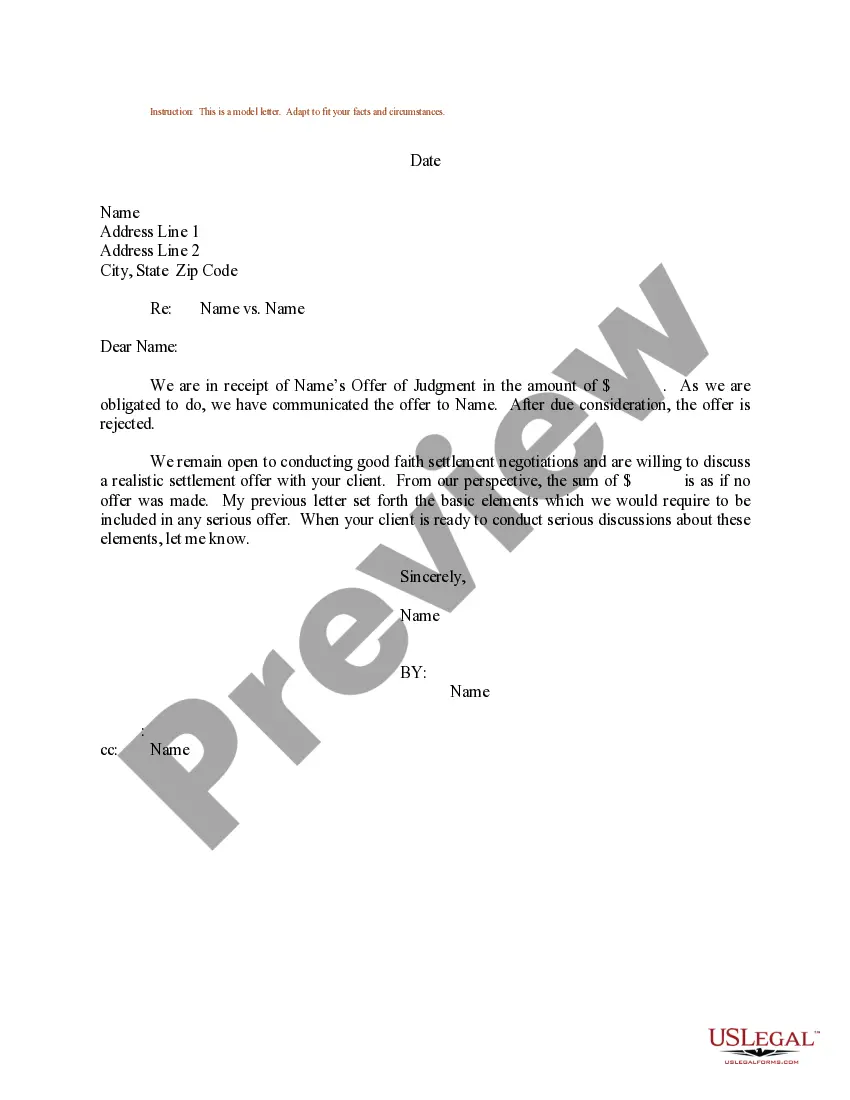
Sample Settlement Letter Without Prejudice In Utah
Description


Get your form ready online
Our built-in tools help you complete, sign, share, and store your documents in one place.
Make edits, fill in missing information, and update formatting in US Legal Forms—just like you would in MS Word.
Download a copy, print it, send it by email, or mail it via USPS—whatever works best for your next step.
Sign and collect signatures with our SignNow integration. Send to multiple recipients, set reminders, and more. Go Premium to unlock E-Sign.
If this form requires notarization, complete it online through a secure video call—no need to meet a notary in person or wait for an appointment.
We protect your documents and personal data by following strict security and privacy standards.

Make edits, fill in missing information, and update formatting in US Legal Forms—just like you would in MS Word.

Download a copy, print it, send it by email, or mail it via USPS—whatever works best for your next step.

Sign and collect signatures with our SignNow integration. Send to multiple recipients, set reminders, and more. Go Premium to unlock E-Sign.

If this form requires notarization, complete it online through a secure video call—no need to meet a notary in person or wait for an appointment.

We protect your documents and personal data by following strict security and privacy standards.
Looking for another form?








Form popularity
FAQ
A dismissal refers to the court's decision to terminate a court case without imposing liability on the defendant. The court may dismiss a case in response to a defendant's motion to dismiss or do so sua sponte.
Dismissed charges can be filed again because they were never tried in front of a judge. However, once you are acquitted those charges cannot be filed against you again, at least not pursuant to the same case. Both dismissed and acquitted charges may show up on your criminal record.
One of the most common reasons for the court to dismiss a criminal case is insufficient evidence.
A dismissal refers to the court's decision to terminate a court case without imposing liability on the defendant. The court may dismiss a case in response to a defendant's motion to dismiss or do so sua sponte.
In order for settlement discussions and agreements to be protected under the 'without prejudice' principle, there must be: an 'existing dispute' between the parties and a genuine attempt to settle that dispute, and • no 'unambiguous impropriety' in the conduct of the parties during the settlement discussions.
Dismissal without prejudice is a legal term indicating that charges have been dismissed but can be refiled at some point. Charges may be dismissed without prejudice at the prosecutor's request, or they may be dismissed at the judge's discretion.
The parties' stipulation to dismiss the remaining claims without prejudice is not a final order that may be appealed as of right; it does not resolve the merits of the remaining claims and, as such, those claims are “not barred from being resurrected on that docket at some future date.” Wickings v Arctic Enterprises, ...
This rule applies to the dismissal of any counterclaim, crossclaim, or third-party claim. A claimant's voluntary dismissal under paragraph (a)(1) must be made before a responsive pleading is served or, if there is no responsive pleading, before evidence is introduced at a trial or hearing.
Cases are almost always dismissed without prejudice if the plaintiff still has an avenue to sue later. For it to be with prejudice you would have to give the court a great reason why plaintiff cannot sue you again. Typically something like the statute of limitations running or if plaintiff fails to prosecute.

