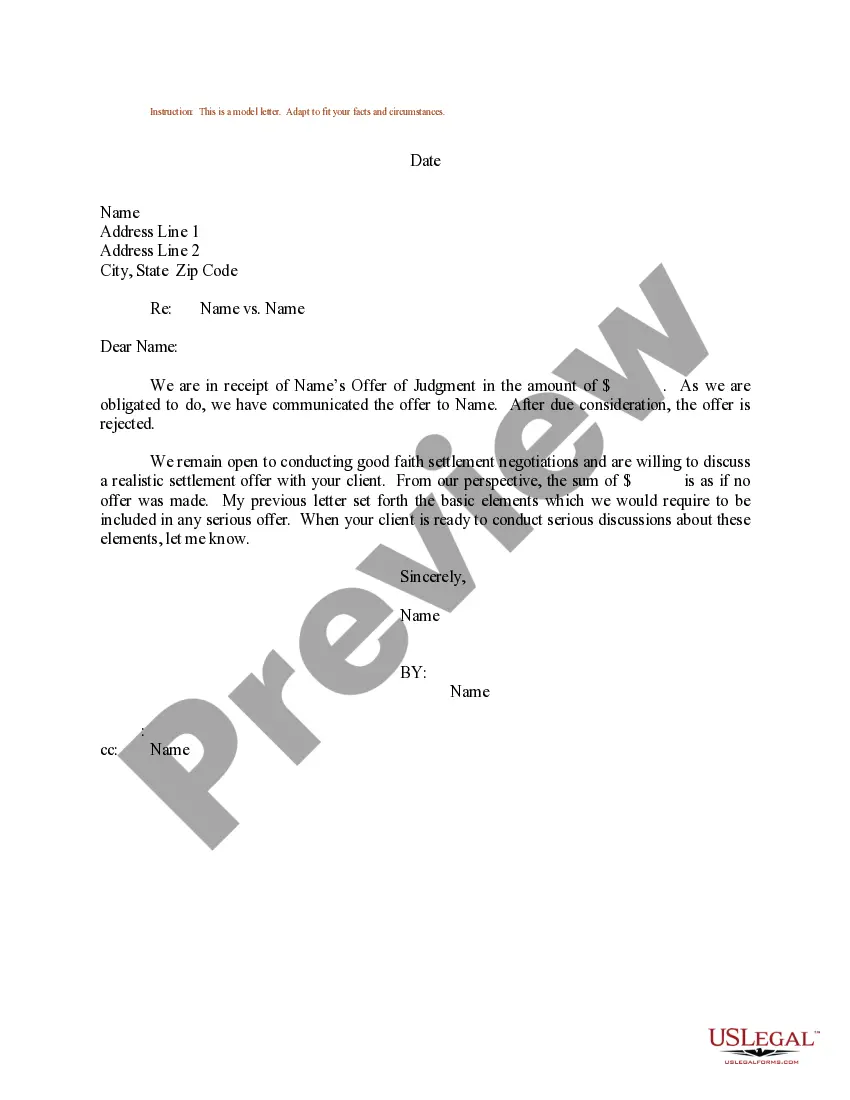
Settlement Offer Rejection Letter Sample With No Response In Texas
Description


Get your form ready online
Our built-in tools help you complete, sign, share, and store your documents in one place.
Make edits, fill in missing information, and update formatting in US Legal Forms—just like you would in MS Word.
Download a copy, print it, send it by email, or mail it via USPS—whatever works best for your next step.
Sign and collect signatures with our SignNow integration. Send to multiple recipients, set reminders, and more. Go Premium to unlock E-Sign.
If this form requires notarization, complete it online through a secure video call—no need to meet a notary in person or wait for an appointment.
We protect your documents and personal data by following strict security and privacy standards.

Make edits, fill in missing information, and update formatting in US Legal Forms—just like you would in MS Word.

Download a copy, print it, send it by email, or mail it via USPS—whatever works best for your next step.

Sign and collect signatures with our SignNow integration. Send to multiple recipients, set reminders, and more. Go Premium to unlock E-Sign.

If this form requires notarization, complete it online through a secure video call—no need to meet a notary in person or wait for an appointment.

We protect your documents and personal data by following strict security and privacy standards.
Looking for another form?







Form popularity
FAQ
Possible Legal Action: If negotiations don't yield a satisfactory offer, a lawsuit may become necessary, requiring additional time and resources. Risk of Lower Final Settlement: In some cases, litigation may lead to a settlement lower than the initial offer, depending on the court's decision.
How Should I Respond to a Low Settlement Offer? Try to remain calm and examine the offer. After receiving a low settlement offer, the most important thing to do is to stay calm. Provide a formal, written response. Formulate your counteroffer. Settle after you've recovered.
Possible Legal Action: If negotiations don't yield a satisfactory offer, a lawsuit may become necessary, requiring additional time and resources. Risk of Lower Final Settlement: In some cases, litigation may lead to a settlement lower than the initial offer, depending on the court's decision.
If you disagree with the offer, you can decline it. However, rejecting a settlement offer isn't as simple as saying, “Sorry, I won't accept it.” Instead, before rejecting a settlement offer, it's important to think through this decision.
A significant misconception needs addressing: you can't overturn a settlement agreement simply because you've changed your mind or found a better deal. The grounds for challenging these agreements are specific and limited: Fraud or misrepresentation. Actual duress or coercion.
name of claims adjuster, I received your letter dated date of written settlement offer. I have reviewed your letter very carefully, including your settlement offer. Unfortunately, I cannot accept your offer for the reasons discussed below.
A lawyer typically takes anywhere from a few days to a few weeks to draft a demand letter. However, this timeline can be influenced by factors pertaining to your case, as well as the workload of your attorney and their firm.
A final demand letter (before legal action) is a crucial step in the debt recovery process. It's your definitive attempt at resolution before considering legal action. While the Internet is flooded with templates and how-tos, the real power of a final demand letter lies in its strategic execution.
Under Rule 167, a "reasonable" settlement offer is one not "significantly less favorable" to the offeree than the actual judgment at trial. This means that for offers made by a defendant to a plaintiff -- a settlement offer is reasonable if the judgment is less than 80% of the offer amount.
However, refusing a settlement offer does extend the life of your claim and delays when you receive compensation. If you have pressing medical bills or other expenses, this is a factor to consider. You'll also need to invest more time and energy into your case, including providing more documentation of your damages.

