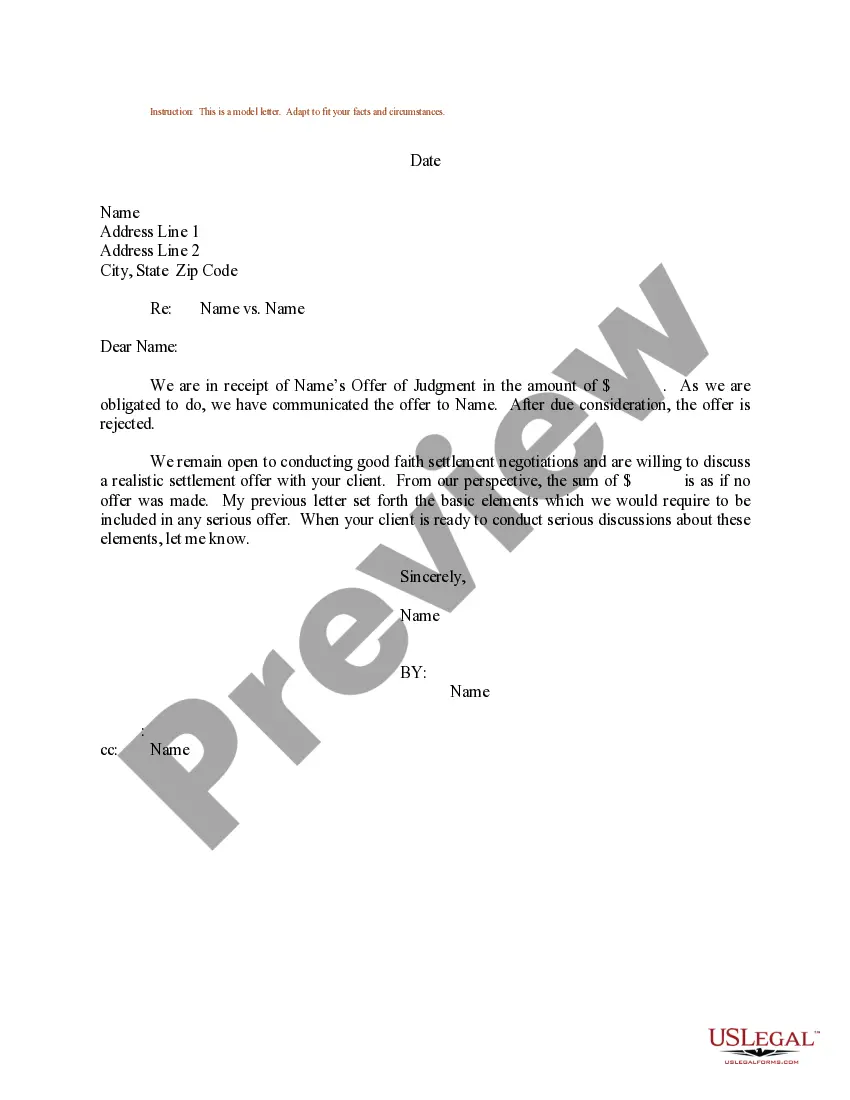
Sample Settlement Letter Without Prejudice In New York
Description


Get your form ready online
Our built-in tools help you complete, sign, share, and store your documents in one place.
Make edits, fill in missing information, and update formatting in US Legal Forms—just like you would in MS Word.
Download a copy, print it, send it by email, or mail it via USPS—whatever works best for your next step.
Sign and collect signatures with our SignNow integration. Send to multiple recipients, set reminders, and more. Go Premium to unlock E-Sign.
If this form requires notarization, complete it online through a secure video call—no need to meet a notary in person or wait for an appointment.
We protect your documents and personal data by following strict security and privacy standards.

Make edits, fill in missing information, and update formatting in US Legal Forms—just like you would in MS Word.

Download a copy, print it, send it by email, or mail it via USPS—whatever works best for your next step.

Sign and collect signatures with our SignNow integration. Send to multiple recipients, set reminders, and more. Go Premium to unlock E-Sign.

If this form requires notarization, complete it online through a secure video call—no need to meet a notary in person or wait for an appointment.

We protect your documents and personal data by following strict security and privacy standards.
Looking for another form?





Form popularity
FAQ
For example, an employer might admit in a without prejudice communication that it had failed to carry out certain procedures which might otherwise render a dismissal unfair, but the employee would normally not be able to show that admission to an Employment Tribunal to try and prove their claim.
Under New York law, and in other US jurisdictions, settlement agreements are treated like any other contract. ingly to establish the existence of a settlement agreement, “a plaintiff must establish an offer, acceptance of the offer, consideration, mutual assent and an intent to be bound” (Kowalchuk v.
What Should Be Included in a Settlement Agreement? Identifying information for all involved parties. A description of the issue you're seeking to settle. An offer of resolutions that both parties agree to. Proof of valid consideration from both parties without coercion or duress. Legal purpose.
Make sure the settlement agreement: is in writing. covers the specific dispute you're having. is made by a lawyer who's independent of your employer. gives the name of that lawyer. sets out what you and your employer agree to do. says that the agreement meets the rules about settlement agreements.
A settlement agreement should clearly outline the terms agreed upon by the parties. This includes specifying any financial settlements, such as lump sum payments or structured payments over time in cases like employment disputes or medical malpractice.
Settlement agreements are contracts. Although the law presumes that settlement agreements are valid, they generally are subject to contract defenses, including mistake, unconscionability, duress, undue influence, and fraud.
The 'without prejudice' label can be attached to any form of communication – letters, emails, phone calls, and meetings – whether online or otherwise. All that is required is that one or both parties state that the communication is 'without prejudice' before the communication occurs.
“Without Prejudice” means that you are sending a communication in an honest attempt to compromise a matter, in which you might make a concession (either expressly or implicitly) to the other side that cannot be later put into evidence in Court.

