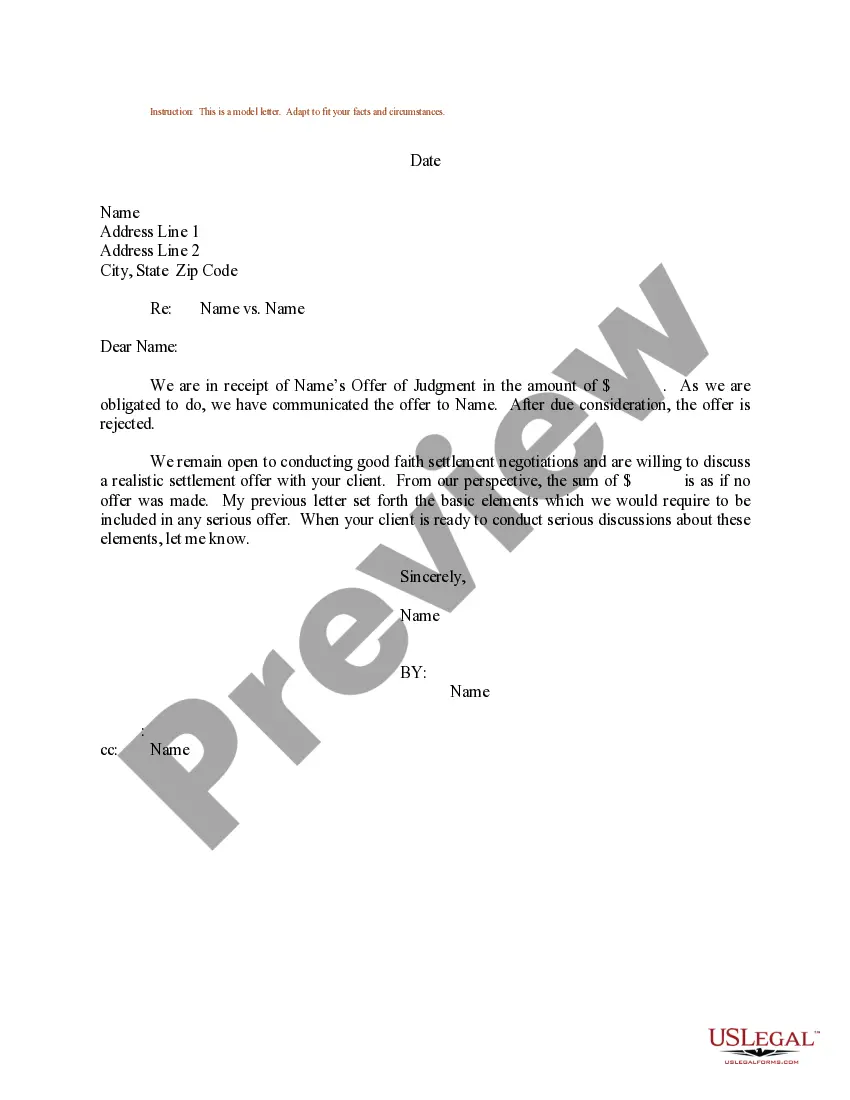
Sample Settlement Letter Without Prejudice In Minnesota
Description


Get your form ready online
Our built-in tools help you complete, sign, share, and store your documents in one place.
Make edits, fill in missing information, and update formatting in US Legal Forms—just like you would in MS Word.
Download a copy, print it, send it by email, or mail it via USPS—whatever works best for your next step.
Sign and collect signatures with our SignNow integration. Send to multiple recipients, set reminders, and more. Go Premium to unlock E-Sign.
If this form requires notarization, complete it online through a secure video call—no need to meet a notary in person or wait for an appointment.
We protect your documents and personal data by following strict security and privacy standards.

Make edits, fill in missing information, and update formatting in US Legal Forms—just like you would in MS Word.

Download a copy, print it, send it by email, or mail it via USPS—whatever works best for your next step.

Sign and collect signatures with our SignNow integration. Send to multiple recipients, set reminders, and more. Go Premium to unlock E-Sign.

If this form requires notarization, complete it online through a secure video call—no need to meet a notary in person or wait for an appointment.

We protect your documents and personal data by following strict security and privacy standards.
Looking for another form?



Form popularity
FAQ
A Stipulation for Settlement should contain a brief statement of the admitted material facts, a statement of the matters in dispute, the positions of the parties and supporting documentation, and the matters agreed upon by the parties.
Settlement agreements are contracts in which one party releases the other from liability in exchange for a financial payment. A settlement agreement is always in writing, and both parties must agree to the provisions in the settlement agreement.
As with contracts generally, the agreement need not always be evidenced by a writing, although a writing is preferable and sometimes required. Valid: A settlement agreement, as any contract, is of no use to a party wishing to enforce it unless it is valid.
Settlement agreements are contracts. Although the law presumes that settlement agreements are valid, they generally are subject to contract defenses, including mistake, unconscionability, duress, undue influence, and fraud.
A settlement is an agreement that ends a dispute and results in the voluntary dismissal of any related litigation . Regardless of the exact terms, many parties choose to keep their settlement agreements private. In business law, a settlement is the payment, satisfaction, and closing of an account.
Yes, once all the necessary written concurrences are obtained, a settlement agreement is binding on both parties.
The maximum amount you may recover through conciliation court is $20,000. (The maximum for consumer credit transactions is $4,000.) You cannot file a claim in conciliation court that exceeds the monetary limit set by law. If you reduce your claim to the limit of conciliation court, you cannot claim more later.
You don't have to have a minimum amount of monetary damages in order to go to court. Small claims court by definition will have a maximum amount of potential damages, but if you, say, promise a kid 50 cents if he brings you your mail, and he takes off with your two quarters, you can theoretically sue to get it back.
Rule 5 prescribes the procedure at the defendant's initial appearance. In most misdemeanor cases, the initial appearance will also be the time of arraignment and disposition. Rule 5.02 requires the appointment of a qualified interpreter for a defendant disabled in communication.
How do I start a civil lawsuit? To start a lawsuit and sue someone in MN, you must complete and serve a Summons and Complaint on the defendant(s). The summons and complaint are the papers (called pleadings) that start the lawsuit.

