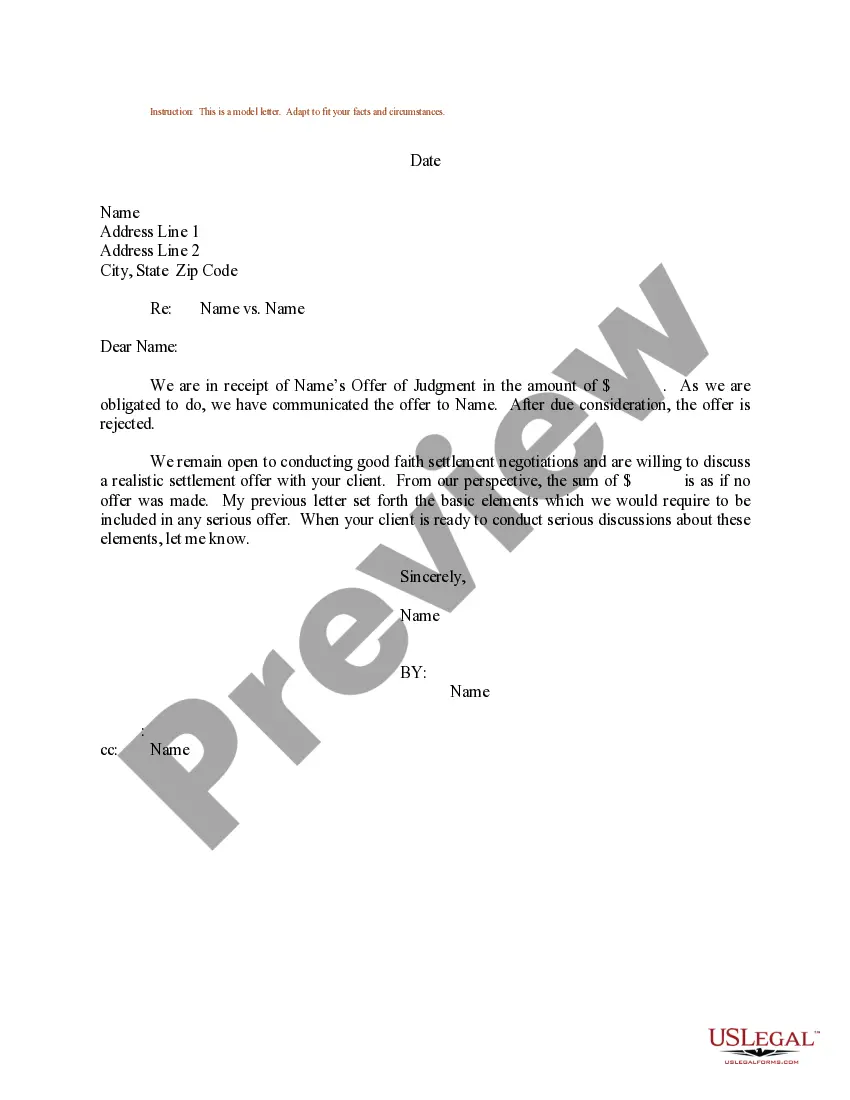
Settlement Offer Rejection Letter Sample With Attached Resume In King
Description


Get your form ready online
Our built-in tools help you complete, sign, share, and store your documents in one place.
Make edits, fill in missing information, and update formatting in US Legal Forms—just like you would in MS Word.
Download a copy, print it, send it by email, or mail it via USPS—whatever works best for your next step.
Sign and collect signatures with our SignNow integration. Send to multiple recipients, set reminders, and more. Go Premium to unlock E-Sign.
If this form requires notarization, complete it online through a secure video call—no need to meet a notary in person or wait for an appointment.
We protect your documents and personal data by following strict security and privacy standards.

Make edits, fill in missing information, and update formatting in US Legal Forms—just like you would in MS Word.

Download a copy, print it, send it by email, or mail it via USPS—whatever works best for your next step.

Sign and collect signatures with our SignNow integration. Send to multiple recipients, set reminders, and more. Go Premium to unlock E-Sign.

If this form requires notarization, complete it online through a secure video call—no need to meet a notary in person or wait for an appointment.

We protect your documents and personal data by following strict security and privacy standards.
Looking for another form?






Form popularity
FAQ
Acknowledge Your Error Send a follow up to the hiring manager or recruiter and explain what happened. The apology may not get you the interview or the job offer, but it will stop the damage straightaway. No matter how embarrassed you are about the situation, the best way to handle it is to address it head on.
Mistakes, typos, and grammar errors on a resume are pretty common. A single typo or two shouldn't be disqualifying, but typos throughout the document make it harder for a hiring manager to read a resume and understand the candidate's experience.
Should You Send Your Resume Again? The short answer is: it depends. If the error is minor, like a small typo, it's not worth drawing attention to it by resending your resume. But, if the error is noticeable – say, a wrong phone number or a missing section – it's usually a good idea to correct it and resend.
I sincerely appreciate the offer and your interest in hiring me. After careful consideration, I will have to decline this role/job offer as the salary is too far outside my expectations to leave my current position. Again, I would like to express my gratitude for the opportunity to interview and the offer.
Thank you for this opportunity to work for your company. I appreciate it very much, but I'm afraid I need to decline your offer at this time. Thank you for this offer, as well as the time you've invested in my candidacy. I'm afraid, though, after careful consideration, I've decided to stay in my current role.
You can either send an updated resume with a brief and polite explanation of the error, or you can bring it up during the interview and apologize for the inconvenience. Either way, you should be honest, humble, and professional, and focus on your qualifications and interest in the job.
Correcting and resending your resume is not a good idea because it will make your application seem sloppy and unprofessional. There is a good chance that the employer will not consider your application since you did not read and follow instructions.
I'm truly grateful for the opportunity. Unfortunately, I'm declining your offer as it's lower than my minimum salary expectations. I want you to know that if you're willing to negotiate the compensation for the role or if it increases in the future, I may consider the position again.
1. Thank the employer for the offer and express interest in the role. 2. Politely state that the salary offered is lower than expected based on your experience and market research. 3. Propose a higher salary range that you believe is more appropriate. 4. Reiterate your qualifications and enthusiasm for the role. 5.
How to Respond to a Low Settlement Offer Retain a Lawyer. A lowball offer is a red flag that the insurance company is not treating you fairly. Analyze the Offer. Reject the Offer. Wait to Settle Your Claim Until You Recover. Make a Counteroffer. File a Lawsuit.

